Search List show here

Back to news

22 December 2021

Joining the UN Global Compact Network UK

We are pleased to announce that we have joined the United Nations Global Compact and the UN Global Compact Network UK – a voluntary leadership platform for the development, implementation, and disclosure of responsible business practices. With this announcement, we are proud to join thousands of other companies globally and in the UK, committed to taking responsible business action to create the world we all want. 

The UN Global Compact is a call to companies everywhere to align their operations and strategies with ten universally accepted principles in the areas of human rights, labour, environment, and anti-corruption, and to take action in support of UN goals and issues embodied in the Sustainable Development Goals (SDGs). 

Launched in 2000, the UN Global Compact is the largest corporate sustainability initiative in the world, with more than 12,000 companies and 3,500 non-business signatories based in over 160 countries, and 69 Local Networks. We encourage you to visit the UN Global Compact Network UK website to learn more about their work-streams. To learn more about our latest sustainability work, visit their website here.

Steve Kenzie, Executive Director, UN Global Compact Network UK:

“The core of the United Nations Global Compact’s mission is to support companies doing business responsibly by aligning their strategies and operations with ten universal principles on human rights, labour, environment, and anti-corruption,” said Steve Kenzie, Executive Director, UN Global Compact Network UK. “We also support business taking actions to advance the Sustainable Development Goals. We are delighted and encouraged by Fieldwork Educations’ endorsement of our initiative.” 

Back to news

10 December 2021

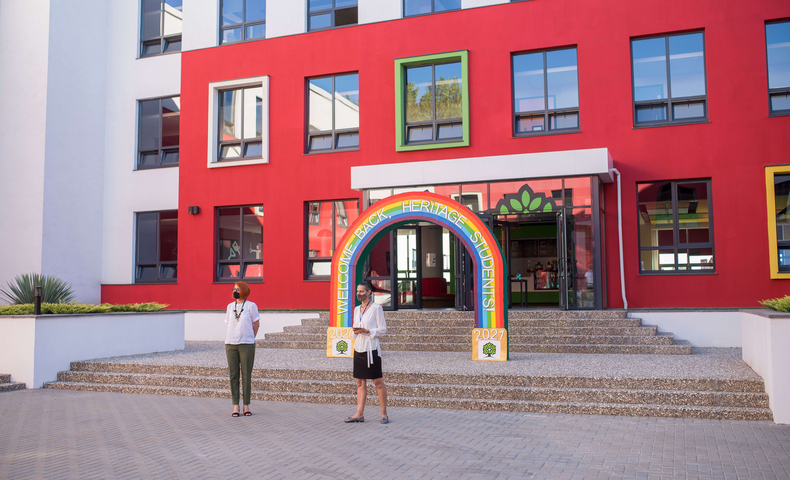
Heritage International School wins the School of Excellence award

Heritage International School won the “Climate Action Project Schools of Excellence” award this November 4th, 2021. The school was chosen out of 250 top institutions that all aim to vary students’ behaviour and societies’ mindset regarding climate through education.

The Climate Action Project is a free global climate initiative that allows students and teachers to collaborate on environmental topics. Involving 2,700,000 students, 146 countries and with 1 mission in mind, the project explores the causes and effects of climate change and helps students understand what steps we can all take to create climate solutions.

We were delighted to hear that one of our International Primary Curriculum schools won the School of Excellence award for their climate project. We couldn’t be prouder to shout about this accomplishment and how much the school deserves such an award. Hear from the teachers themselves who put the work in and lead the climate project.

Hear from Tatiana Popa, Head of Global Education and the Hybrid Learning Coordinator

Hear from Inga Corlateanu is an IPC Coordinator and English teacher 

Back to news

10 December 2021

Breaking boundaries: Teaching children the importance of living in a sustainable world

Delivering the best opportunities

Heritage International School is an institution where educational programmes get beautifully intertwined to deliver the best of opportunities to our disciples. We aim to develop the whole child here that will become a responsible citizen of the world, have a global view on things and will thrive in a diverse, colourful, and sustainable world. Heritage is the first and only school in Moldova that is part of Fieldwork Education, offering the International Primary Curriculum for our younger students. The curriculum offers educators the possibility to involve students in many global collaborative projects that would not only benefit the student, but also the environment.

How we began tackling Climate change

This year has been marked by important events for the future of our planet. The COP26 conference in Glasgow is one such example. Climate change is a topic discussed and acted upon in many spheres of our lives, and no single person can affirm that it is being tackled enough.

As the Climate Action Project country ambassador for Moldova, I spent the summer of 2020 promoting this important environmental project in the news media, on radio channels, getting official support of the Ministry of Education, as it was launched that summer in Moldova.

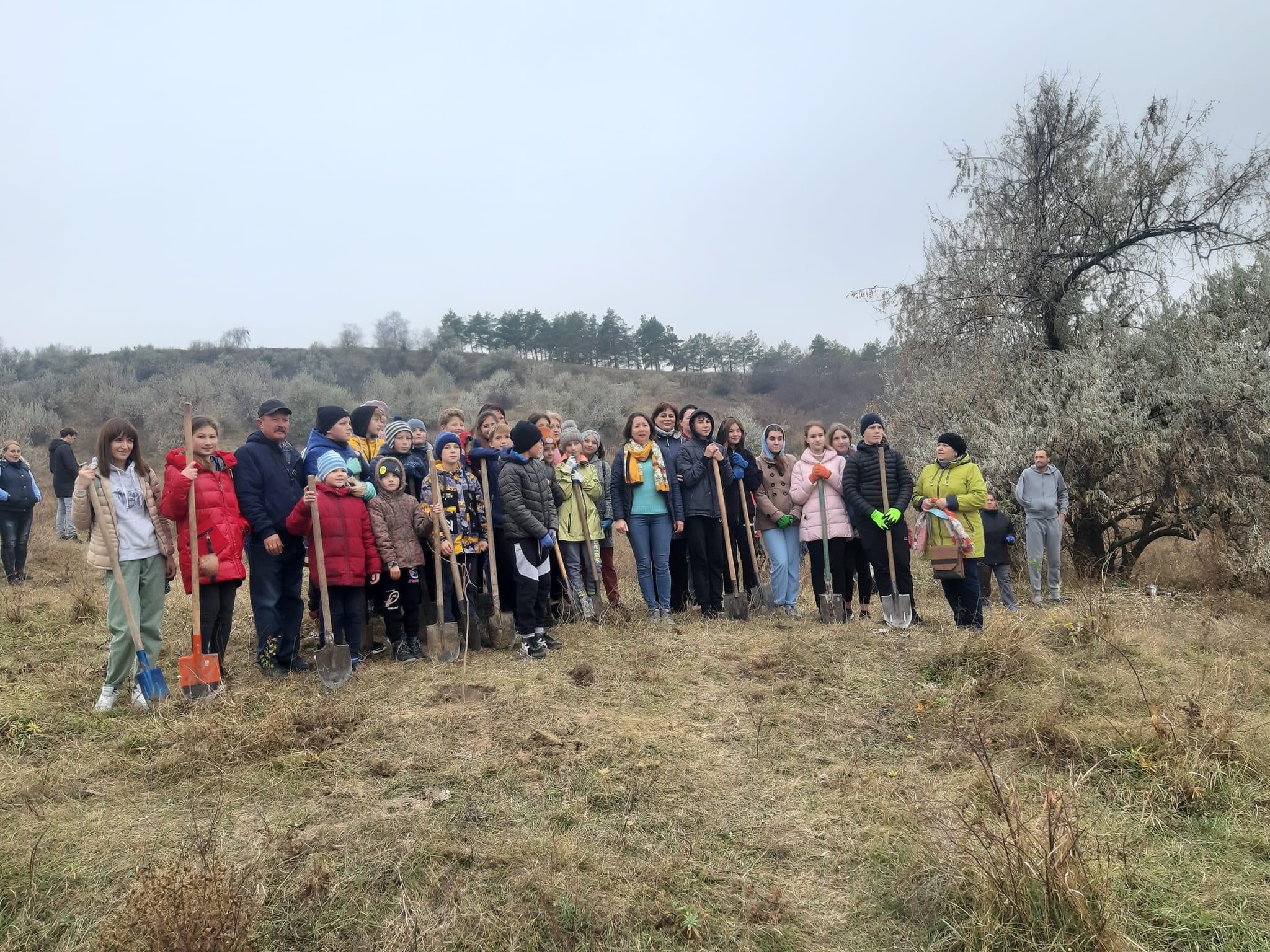
In our first year, there were around 120 Moldovan educators, and approximately 300 teachers that joined this global initiative in 2021. We contacted the Minister of Environment and President Maia announced a nationwide tree-planting campaign, inviting schools, students, and educators to be part of the movement.

Using the International Primary Curriculum to create awareness

As a school community, Heritage International School found it instrumental to have the right academic paths to integrate the Climate Action Project into everyday lessons, be it in primary, through the IPC or English lessons, Science, English, Biology, Civic Education, or other subjects in secondary.

Our students learned about the causes and consequences of climate change, they did research and shared with classrooms around the world, as well as with educators in global webinars, such as one for COBIS about sustainability projects at our school. The IPC curriculum offered a hands-on approach that allowed students to be creative when exploring the world around them, their outcomes are tangible, beautiful, and impactful.

They created courses of action, planted trees, designed flyers, shared with the community, wrote articles in the Heritage Globe newspaper, and our teachers shared the project during international conferences.

How our Climate Action Project soared

I was selected with a group of Heritage students to speak live in front of tens of thousands of attendees at the Climate Action Day 2020, one team from each continent. Six Heritage students represented Europe at the big event, speaking about their findings in the project and the climate situation in Moldova.

This year, our students wrote messages to world leaders, asking for climate education in schools and for actions to be taken globally. These messages were exhibited on a huge wall in the Blue Zone at COP26 conference in Glasgow, with the help of the World’s Largest Lesson. How proud we all were! They also interviewed family and friends, did research, and then shared findings with classrooms worldwide.

In tackling climate change, our students learned that sustainability starts with small steps, that’s why we implemented some changes in the school. We organised ‘Stop Plastics’ flash mobs, ‘Fridays for Future’ silent strikes, we banned the use of plastic cups in the school, only offering fresh water and invited students to bring in their reusable bottles.

Furthermore, we made a school survey and introduced meat-free Mondays, so we show more care for the planet. Also, we introduced the Earth Project app for the school which calculates our carbon footprint and avoided the use of plastic every week. Heritage students understand that it must be an overall commitment with everyone involved to make visible change.

Winning the Climate Action Project School of Excellence award

After two years of hard work in the Climate Action Project, we were thrilled to be selected among the 250 schools in the entire world to receive the title of Climate Action Project School of Excellence. With 2.7 million students and teachers in the project, our hard work paid off – after thorough evaluation, our school received this prestigious award, announced by Cartoon Network during the Climate Action Day 2021 webinar.

Heritage International School shares its commitment to make the world a better place for everyone now, but also for the future generations, and this award received in November 2021 only showcases our actions taken daily at our school.

Back to news

9 December 2021

Breaking boundaries: The Heritage International School and International Primary Curriculum

Developing creative learning skills

As teachers we help students understand the world in which they live, grow, and develop as personalities. We cannot detach kids from what is happening around us and them, just because they are too young, as these are issues that they will also one day face. We must teach children to be aware that what happens to the climate is a common problem of all mankind, regardless of age, nationality, religion, etc.

At Heritage International School, we began implementing the International Primary Curriculum (IPC) five years ago, right from the moment it first opened its doors to students. It was something new for the Republic of Moldova, as we are the first and until now the only one, that integrates this curriculum that comes to help students develop learning skills in an interactive, creative, and comprehensive way.

If we look at the units in the curriculum that Fieldwork Education offers us, we realise that many of them address the issue of global warming, climate change, deforestation, melting glaciers, and all those issues that are now so current and require the involvement of all of us.

Bringing the Climate Action Project and IPC together

Last year we saw a presentation on the Climate Action Project, and we realised that it fits like a glove, as we had already done so much research in this area and we know a lot about the stringent problem of climate change, plus we could participate with other schools from more than 140 countries – an impressive number. This also confirms that this is a global problem, we must all come together to solve and there is no country in the world that is not affected by the effects of climate change.

The learning objectives of the IPC and those of the Climate Action Project are very similar and aim at the same purpose: to raise awareness of the global problem, bring into school’s real-life situations and make students identify solutions. Therefore, there was no difficulty in integrating the proposed activities during the project into our classes.

The students found identifying the causes and effects of climate change much more interesting, and this meant it created higher impact on their awareness, because they were getting acquainted with the answers given by children from all around the world. They were able to see that the opinions, definitions, effects, and solutions are similar, and they complement each other no matter where you are from.

Interacting on a global scale with other schools

The students had the opportunity to discuss with their peers from Romania and India. They shared impressions, asked questions, drew conclusions, and tried to identify common solutions. What surprised me was that they really understood the gravity of the problem and that we humans, from youngest to oldest, are responsible for what is happening in the world related to climate change.

Participating in live events and listening to prominent personalities such as HRH Prince William and HRH Princess Esmeralda, helped them comprehend that climate change is everyone’s problem and only together there can be identified small steps that will bring major positive changes.

Consequently, by implementing the IPC and participating in such projects, we educate people who become aware and responsible people. From an early age, they begin understanding that they can do something to change because they are the change, we live in the same world, we are the people of the world.

Back to news

23 November 2021

The Role of Personal Learning Goals in the International Primary Curriculum

With a world that is increasingly volatile, uncertain, complex, and ambiguous, we know that our learners will grow up facing challenging circumstances. To enable them to flourish and overcome, their dispositional qualities must be a key area of focus for teachers and school leaders. Whether consciously or not, personal learning cultivates within us a mindset to approaching challenges, and they strongly shape our attitudes and capabilities as thinkers and learners.

As the International Primary Curriculum is used in over 90 countries, developing a common understanding of what the Personal Learning Goals look, sound, and feel like has been a key driver in our ongoing development of the curriculum. We have developed a matrix of indicators that describe each Personal Goal in relation to increasing maturity and breadth of experience. These provide learners and teachers with detailed illustrations of what is expected from each Personal Learning Goal.

Personal learning cannot be confined to curriculum specific activities or moments on the timetable. To be successful this learning needs to pervade across all aspects of the curriculum and the school community. Opportunities for learning about these attitudes and the behaviours that result from them should be capitalised on, as they provide models and exemplars that help children to develop their understanding of what is expected of them when they are learning to be adaptable, thinkers, respectful, empathetic, communicators, collaborators, ethical or resilient.

Learning about these qualities should be embedded in planned experiences. For instance, when learning about figures from the past, children could explore which ideals the person demonstrated and the challenges they also faced.

Children should understand that for most of us, constantly exhibiting these high standards is not realistic. Learning from our shortcomings through reflecting on what prevented us from making the best choice is essential for the ‘learning to be’ aspect and will contribute to our own self-awareness and personal development.

Unplanned opportunities to learn about these dispositions will occur regularly. This could be through current affairs or local and global events. Children may raise questions about who is and is not demonstrating the Personal Goals in the world beyond their classroom. For example, who at Cop 26 showed empathy, respect, or resilience to help improve our world?

‘Learning to be’ focuses on children practising and taking ownership of the Personal Learning Goals by aiming to be a communicator, resilient, ethical etc., both in the classroom and beyond. Personal learning is not confined to a specific time, place or subject. All 8 IPC Personal Learning Goals are applicable within all aspects of the curriculum, school, and life experience.

Whatever your vision for the people you are trying to develop, a description of what you are aiming for, and a plan for how you set about achieving this, are essential. It needs to be inclusive of all learners and all adults in the learning community.

Back to news

28 October 2021

Collaboration with childsafeguarding.com

ChildSafeguarding.com offers online child protection training that has been designed to support all staff in schools; from senior leaders and teachers to cleaners, security guards, and drivers; with the content universally accessible through their bespoke eLearning platform. Their course is used across 5 continents with content aligned to the International Task Force on Child Protection and the UN Convention on the Rights of the Child.

“We are thrilled to offer this practical and comprehensive child protection training to our community,” said Sarah Blackmore, Head of International Curriculum Association. “Child safeguarding is of the utmost importance to our community, and we feel it will help schools on a large scale as the course is offered in 23 languages.”

“The ChildSafeguarding.com course was designed using international standards of child protection, and built for global use, making it a natural fit for the Fieldwork Education’s needs,” said Matt Harris, Ed.D., CEO of ChildSafeguarding.com. “We are so pleased to help support this influential organization in its work around the world.”

Any member of staff within a school can complete the course online regardless of technical skills, device or geography and will receive a certificate on completion. Certificates are independently verifiable on ChildSafeguarding.com.

We have come together with ChildSafeguarding.com to provide our International Curriculum Subscribers with access to the safeguarding course at a special rate. To book spaces as an IEYC, IPC or IMYC subscribing school, please complete this form and a member of the team will be in touch.

To find out more about the course, please visit childsafeguarding.com.

Back to news

21 October 2021

Why teachers and students should know the neuroscience of learning

“I am an Education Specialist and as I work with teachers, I try to attach brain information so that they better understand why or how a particular activity/strategy will work in their classroom. I think if all teachers understood this, it would be the one thing that could make the most powerful impact in education.”

After receiving this from an attendee at one of my workshops, I set out to write down my thoughts about the “why” and “how” for educators to understand, and then teach their students the neuroscience of learning.

Teachers caretake the development of students’ highest brain as it undergoes the years of most profound change. When educators grasp this nexus of mind, brain, and education science, they acquire a rich toolkit of strategies. They add to their teaching and understanding of why their best strategies work, so they can expand them. In addition, sharing neuroscience with students reinforces their own brain’s powers and most effective strategies for learning.

Neuroscience research has given us the understanding of what sensory input has the greatest likelihood of passing through the brain’s emotional filters, transforming into short-term memory, and progressing to enduring understanding and long-term memory.  

The strategy correlations from neuroscience and cognitive science give us tools to promote learning consistent with the brain’s most effective and powerful processing now and in the future.

Top five things teachers should know and teach students

1. IQ is not fixed at birth

Brain development and intelligence are “plastic”, in that internal and environmental stimuli constantly change the structure and function of neurons and their connections. Teachers who understand neuroplasticity can help all children build their brains beyond what they previously believed to be limited in skill or intelligence based on past performance.  When teachers share the powers of neuroplasticity with students, they are encouraged that they can change their brains. Knowing that practice makes permanent, as neural networks of skills and memory are strengthened when used/applied, students are motivated to sustain effort and practice. Guiding students to recognize their progress with practice can encourage practice, and reverse negative expectations that often limit student achievement.

It was once believed that brain cell growth stops after age twenty. We now know that through neuroplasticity, connections (dendrites, synapses, and myelin coating) among neurons (brains cells) continue to be constructed in response to learning and experiences throughout our lives. These physical changes of brain self-reconstruction in response to experiences can fall under students’ control. The human potential for increased knowledge, physical skills, and “talent” in the arts could be considered essentially limitless.

2. High stress restricts brain processing to the survival state


Neuroimaging research reveals that a structure in the brain’s emotion system, the amygdala, is a switching-station that determines which part of the brain will receive the sensory intake (what is seen, heard, felt, smelled, touched, and moved) and where it goes. If in the state of high metabolism or overactivity provoked by anxiety, the amygdala restricts information passing onto the higher functioning memory system. Rather it diverts the experience into more primitive emotional centers. In school, these stressors can include fear of mistakes, frustration due to previous failures such that they believe the task is beyond their capabilities, and boredom when the information or skill has already been mastered but must be repeated for the class.

It is important for teachers and students to understand that reaction to stress shifts input away from the higher brains into the lower, reactive brains. This is part of the brain’s primitive control system, against a perceived threat is seen in animals as fight/flight/freeze. In students, it’s reflected as “acting out” and “zoning out”. When students understand that these are involuntary brain reactions to stress, that can be managed with strategies, they become less self-judgmental and pessimistic knowing that the past does not determine the future and they can build a new brain with their actions.

Strategies for achieving maximally potentiating emotional climates in the classroom or practice groups include strong group communities and teaching students (and practicing) stress reduction strategies such as mindfulness, calming breathing, thinking positive thoughts, and others. Recurrent practicing of these strategies is needed for neuroplasticity to solidify these circuits, so they are readily available to use when needed.

3. Achievable challenge

All learners are most motivated when they work and progress at their individual levels of achievable challenge while receiving feedback of ongoing goal progress. Recall that stress, such as a challenge perceived as too great or little, incites the amygdala memory blockade. To counter this, one goal is to plan individualized pathways to mastery best suited to learners’ Goldilocks zones…not too hard and not too easy, but just right. These can include variable practice modalities, reading levels, websites with practice and feedback, small flexible groups.

Scaffolding and enrichment can be offered through varied levels of models, rubrics, demonstrations, partner work, seeing or hearing examples of what they are expected to do at each progressive level. Exemplars of previous student work at the progressive levels can be used for this purpose. It is particularly important for learners to recognize evidence of their progress. This can be done by numbering each level, keeping visual or auditory records of their completion of each level, and conferencing.

4. Creating new memory


The brain is a pattern-seeker. It turns information that gets through the amygdala into short-term/working memory in the hippocampus. This encoding process requires activation of prior knowledge with a similar “pattern” to physically link with the new with the known in a pattern matching process. This is most successful when there is activation of the brain’s related prior knowledge before new information is taught. The probability of encoding increases, when teachers work to clearly demonstrate the patterns, connections, and relationships that exist between new and old learning (e.g., cross-curricular studies, graphic organizers, reminders of previous skills that are built upon by the new skill)

Embedding the art and music across the curriculum can increase memory and understanding because it gives the brain more opportunities to recognize and extend patterns.

With these experiences, the brain can pattern match by linking the new to incorporate new memory or skills into existing network-related memory circuits.

5. Long-term memory

Once encoded in short-term memory, the new learning needs mental manipulation to become durable, retrievable long-term memory and ultimately, understanding.  This produces the stronger connections from neuroplasticity that sustain the memory. Each time students participate in any endeavor; a designated number of neurons are activated. When they repeat the action, the same neurons respond again. The more times they repeat an action, the more dendrites and myelin grow and interconnect, resulting in greater memory storage and recall efficiency.

Mental manipulation involves reactivations of new learning and can be achieved in a variety of ways. One way is to further connect the new short-term memory with additional stored memories based on commonalities, such as similarities/differences, especially when students are guided to derive their own connections. Multisensory instruction, practice, and review also promote memory storage in multiple regions of the cortex, based on the type of sensory input by which they were learned and practiced. These distant storage centers are linked to each other such that triggering one sensory memory activates the others. This duplication of storage increases the efficiency of subsequent retrieval as a variety of cues prompt activation of different access points to the extended memory map.

The construction of extended or conceptual memory networks allows students to transfer learning beyond the contexts in which it is learned and practiced. When information is learned and stored in its own isolated circuit, it is only accessible by the same stimuli through which it was obtained. These transfer activities activate memories with additional stimuli. This can combine with other knowledge to promote solutions for novel problems or building related skills.

When students have opportunities to represent information in a variety of ways as foundational skills are building, they display greater engagement, discover relationships and patterns, and develop the power to apply new learning to creative innovations and unanticipated problems.


As neuroscience research about how the brain learns progresses, extensive information will emerge to further guide teachers. They will be further empowered to devise their own novel strategies to provide experiences best suited to maximize learning, proficiency, and to promote joyful learning for their students.

Find out more about neuroscience and the relevance to learning it has with Dr. Judy Willis in the first episode of our International Curriculum Specialist Series. WATCH HERE.

Back to news

21 October 2021

Introducing the International Curriculum Specialist Series

We’re excited to introduce you to our new Specialist Series, featuring interviews with educators on how best to improve learning. 

Experts in the fields of neurology and education explain how the design and development of the International Middle Years Curriculum (IMYC) impact learning and the learner in middle years. The series will also feature the curriculum in action with interviews, advice and stories from IMYC teachers around the world.

There will be 12 episodes in total, available to watch on YouTube or listen to as a podcast, with new episodes released periodically over the next 6 months. 

“I am really excited for the launch of this specialist series for the IMYC. The aim is to show Fieldwork’s research and impact on learning through the lens of the Process to Facilitate Learning. Not only are educational experts interviewed on their research in the series, but we also wanted IMYC educators to be featured, sharing their ideas and experience. The learning community will certainly benefit from the in-depth discussions in the series which may spark further engaging conversations online and in schools.” – Lee Hendricks, International Curriculum Manager – IMYC

EP.1: HOOKING THE LEARNER
The first episode explores the theory behind the Entry Point in the Process to Facilitate Learning. Neurologist and educator Dr Judy Willis is our feature guest, explaining the ways to get students engaged in their learning, how boredom affects the brain and behaviour in the classroom, and why teachers should pay more attention to the neuroscience of learning.

WATCH (Youtube)  |   LISTEN (Buzzsprout)

EP.2: THE ENTRY POINT IN PRACTICE
In our second episode, Lee Hendricks, Fieldwork Education’s International Curriculum Manager for the Middle Years, interviews teacher and IMYC Coordinator Leighanne Small from Hillel Academy in Kingston, Jamaica on the best ways to plan, organise, and successfully execute an IMYC Entry Point within a school. The Entry Point is the way to kick off learning in a unit that is engaging, fun, and experiential for students. It is also a way for teachers to collaborate, link concepts among subjects, and promote planning as a group, so that middle school teachers do not find themselves isolated in their practice.

WATCH (Youtube)  |   LISTEN (Buzzsprout)

EP.3: ASSESSING KNOWLEDGE AND MISCONCEPTIONS
In our third episode, Lee Hendricks, Fieldwork Education’s International Curriculum Manager for the Middle Years, interviews educational expert Jay McTighe. Jay discusses ways to differentiate in the classroom, how Understanding by Design can transform learning and teaching, and how important the Knowledge Harvest, or pre-assessment, is in the learning process. Jay also shares simple, effective strategies to assess knowledge along with misconceptions during the Knowledge Harvest.

WATCH (Youtube)  |   LISTEN (Buzzsprout)

EP.4: THE KNOWLEDGE HARVEST IN PRACTICE
In our fourth episode, Lee Hendricks, interviews teacher and IMYC coordinator Maria Koutsoupaki from Futuraskolan International School in Stockholm, Sweden. Maria shares what some of her best practices are in which to plan and implement a Knowledge Harvest, or what some may call a pre-assessment, within a school. Maria provides practical strategies on how to structure and incorporate technology with the Knowledge Harvest. She also addresses common errors that teachers typically make in the Process to Facilitate Learning and highlights the importance of revisiting

WATCH (Youtube)  |   LISTEN (Buzzsprout)

EP.5: RESEARCH, RECORD, REFLECT, AND REPEAT
In our fifth episode, Lee Hendricks, Fieldwork Education’s International Curriculum Manager for the Middle Years, interviews educational expert Malcolm Nicolson to further explore the IMYC Process to Facilitate Learning, particularly with the mini-cycle of Research, Record, and Reflect that can be repeated several times to deepen knowledge, skills, and understanding. Malcolm talks about the importance of agency in the learning process, so students, according to him, feel that education is something done with them in mind rather than to them.

WATCH (Youtube)  |   LISTEN (Buzzsprout)

EP.6: THE SUBJECT LEARNING ACTIVITY CYCLE IN PRACTICE
In our sixth episode, Lee Hendricks, Fieldwork Education’s International Curriculum Manager for the Middle Years, interviews interviews IMYC coordinator and teacher Danielle Mashon from the Nord Anglia International School of Rotterdam (NAISR) in The Netherlands. Danielle breaks down how the mini-cycle of Research, Record, and Reflect in the Process to Facilitate Learning looks and feels like in the classroom and why it should be repeated for students to gain more depth and understanding. Danielle’s thoughts and analysis are insightful as she shares her experiences and ideas of how you can better scaffold learning and encourage student agency within the classroom.

WATCH (YouTube)  |   LISTEN (Buzzsprout)

EP.7: ON FURTHER REFLECTION                         

In our seventh episode, Lee Hendricks, Fieldwork Education’s International Curriculum Manager for the Middle Years, interviews educator, author, and the founder of the Freedom Writers Foundation Erin Gruwell about the power of reflection, relationships, and relevance in education. With her passion and commitment, Erin transformed her students’ lives – by picking up pens, reflecting on their own struggles and experiences, and capturing them in writing. This ultimately led to the successful publication of her students’ stories in a book called the Freedom Writers Diary and then in 2007, became the basis for a feature film starring Hillary Swank playing Erin Gruwell.

WATCH  |   LISTEN (Buzzsprout)

EP.8: OVERARCHING REFLECTION IN PRACTICE
In our eighth episode, Lee Hendricks, Fieldwork Education’s International Curriculum Manager for the Middle Years, interviews teacher and IMYC coordinator Maurissa Horne at Precious Treasures International School in Turks and Caicos. Maurissa talks about the necessity of constant reflection and how it should be continuous both in the Research, Record, and Reflect mini-cycle to link subject tasks in the Process to Facilitate Learning along with the Overarching Reflection for each Big Idea. Reflection may not always come easy for students, as Maurissa points out, but with the right guidance, they can discover how concepts and ideas interlink, find personal meaning, and be agents in their own learning.

WATCH  |   LISTEN (Buzzsprout)

EP.9: EXITING WITH VALUABLE, BEAUTIFUL WORK
In our ninth episode, Lee Hendricks, Fieldwork Education’s International Curriculum Manager for the Middle Years, interviews educational expert, Ron Berger, to find out why his passion has been focused on creating quality student work over many decades and the impact Ron’s famous video of Austin’s Butterfly has had as a symbolic model for critique and descriptive feedback in the classroom.

WATCH  |   LISTEN (Buzzsprout)

EP.10: THE EXIT POINT IN PRACTICE
In our tenth episode, Lee Hendricks, Fieldwork Education’s International Curriculum Manager for the Middle Years, interviews teacher and IMYC coordinator Amanda Hart at the Khartoum International Community School in Sudan about the Exit Point. Amanda stresses the importance of planning for the Exit Point in advance, even before the unit begins, and how using collaborative technology tools and effectively organising the school timetable for meeting times are key to making the Exit Point a success.

WATCH  |   LISTEN (Buzzsprout)

EP.11: GETTING RIGOUR RIGHT
In our eleventh episode, Lee Hendricks, Fieldwork Education’s International Curriculum Manager for the Middle Years, interviews educational expert Dr. Barbara Blackburn to find out what rigour is and what it looks and feels like in a classroom. Barbara provides great strategies to instantly use with students, particularly with a focus on the mathematics classroom, and debunks the myth that “rigour is not for everyone.” With rigour, according to Barbara, the expectations and support we set for students are paramount for results.

WATCH  |   LISTEN (Buzzsprout)

EP.12: IMYC MATHEMATICS IN PRACTICE
In our twelfth episode, Lee Hendricks, Fieldwork Education’s International Curriculum Manager for the Middle Years, interviews educators Colin Gear and Pam Naylor who have been instrumental in designing and writing new creative tasks in mathematics to provide authentic links to nine Big Ideas in the IMYC. Pam and Colin explain what Model-Eliciting Activities (MEAs) are, how and when teachers should use them in the classroom, and ways to promote more rigour in the mathematics classroom.

WATCH |  LISTEN (Buzzsprout) 

Enquire now

Find out more about ICA products and services!