
 Español
 Nederlands
 Chinese Mandarin
By Debie Nobles, Grade 4 Homeroom Teacher, Hope International Academy, Okinawa
The International Primary Curriculum (IPC) has provided our school, Hope International Academy Okinawa (HIAO), with an opportunity for student-centered, real-world learning that is fun and engaging, making learning more meaningful and relevant to our students’ everyday lives. To increase engagement, we purposely “Glocalise” our units, which means adapting the global context of the IPC units to include the local community and environment. Connecting learning to familiar places and experiences has built a deeper understanding of concepts, led to a boost in student motivation and engagement, and built long-lasting learning that has left our students and the community asking for more!
How do we adapt our units?
There are many ways we have “Glocalised” the IPC units. The community is welcomed into our classrooms through guest speaker opportunities who share their real-world knowledge and experiences with the learners, often through hands-on learning opportunities. We take our learners into the community where we spend time outdoors engaging with the local environment. We organise field trips to visit local areas and organisations, often as an opportunity to reflect on the learning that has taken place and deepen their connection by engaging with the people and organisations within their community. We also place value in sharing our learning with families through weekly newsletters and Exit Points to keep them informed and connected to our classrooms.
How do we plan for adaptations?
When planning for IPC units, it is important to review the unit planner and identify the Learning Goals that provide the learner with clear and actionable goals that are measurable. Partnered with clear mastery criteria found in the form of learner rubrics, these provide a map of what progress will look like, making learning more visible to the learner. Cross-curricula connections are made with Sustainable Development Goals (SDGs) and Personal Learning Goals that also aim to support the learning within the unit. Once these connections are made, a search for local opportunities begins. We contact local organisations as well as seeking out events that support the Learning Goals. Often, this requires reaching out to organisations to ask if they provide guest speakers or can support group visits which is often met with great enthusiasm. We have made many lifelong partnerships with outside organisations who are becoming repeat guest speakers and a cherished part of the HIAO community. Community connections also exist within the school through teachers and their partners, or parents and families who offer a vast network of opportunity.
What does this look like in Action?
The Holiday Show
The Holiday Show is a fun and engaging unit about tourism where our Grade 4 class focused on “Sustainable Tourism in Okinawa”. We live on a popular sub-tropical Island, admired for its coral reefs, natural beauty, and deep historical relevance during WWII. Okinawa has an ever-increasing tourist population that has provided both positive and negative effects within our community and the environment.
Before learners could take sustainable tourism to global destinations, it was important for the learners to understand the impact within their own back yard. Learning about Sustainable Tourism in Okinawa meant we could include several community connections:
- Learners worked on persuasive writing and speaking tasks convincing our school community to reduce their consumption of natural resources to protect the future of our planet. To culminate the learning, Grade 4 created an SDG video, filmed on and off-campus requesting community action.
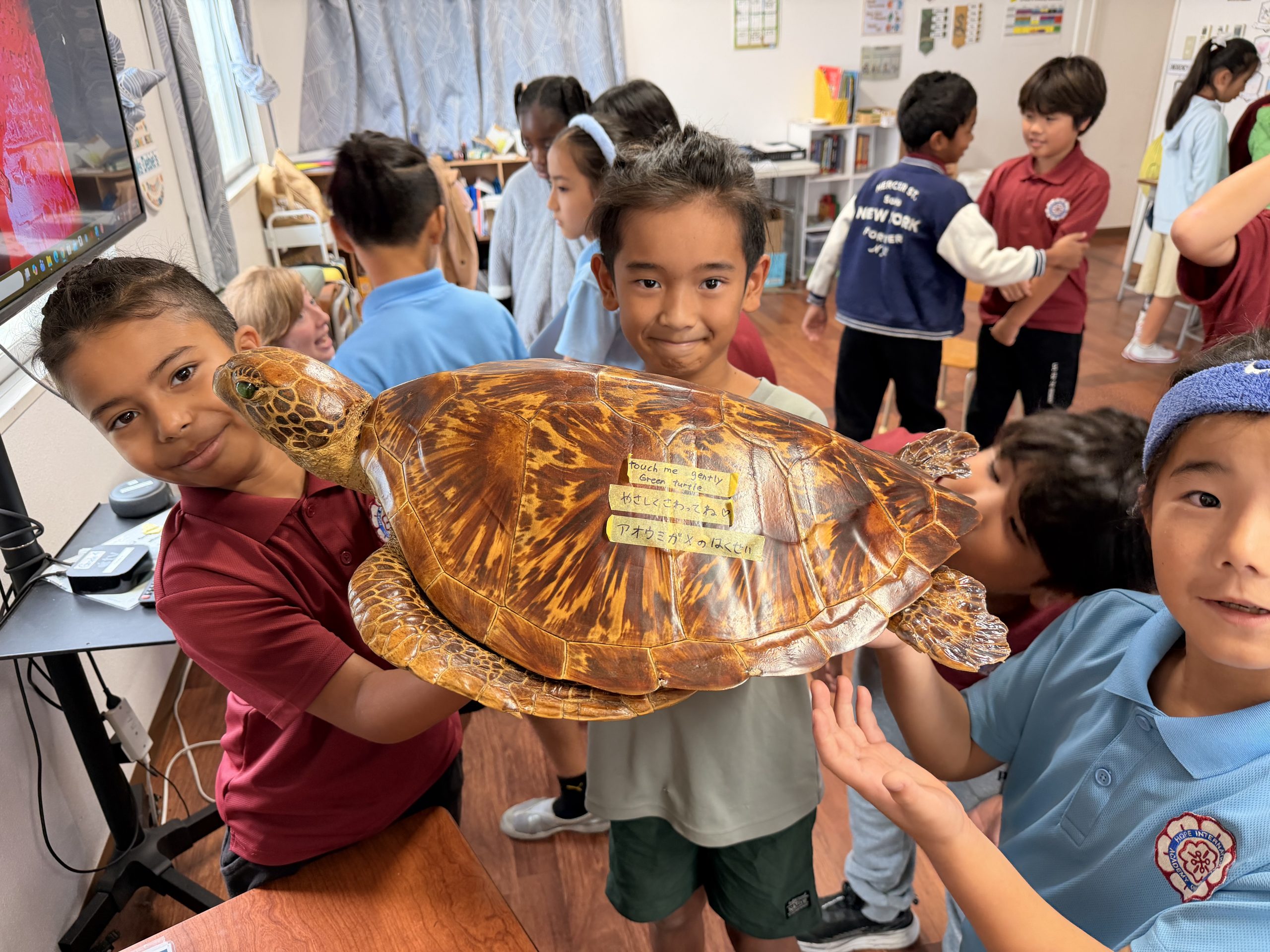
- A local non-profit organisation, Churamura Sea Turtle Conservation, provided two guest speakers who brought a wealth of knowledge to our classroom about the impacts of tourism on sea turtles living around Okinawa and how we can protect these beautiful sea creatures from harm, even bringing in a taxidermy sea turtle to bring the learning to life.
- A field trip was organised to a popular tourist destination, Cape Zanpa Lighthouse and Parklands that has deep historical significance from the Ryukyu Kingdom era, The Battle of Okinawa from World War II, as well as geographical landforms such as cliffs and volcanic rock formations that surround a non-operational lighthouse, providing 360 degree views of the western coast of Okinawa.

- A field trip visit to a local, non-profit organisation called Sango Batake which translates to Coral Farm. Students toured this local coral farm that is dedicated to restoring the coral reefs around our beautiful Island. They learned about the positive changes Sango Batake have made, providing proof about the important work they do to support the protection of marine life in Okinawa.

The impact on Student Learning
When we made these adaptations to our units, we saw our students using scientific vocabulary more confidently, we saw increased curiosity with more meaningful questions being asked, improved assessment of Learning Goals as they made real-world connections to their learning, and the most important, learners are actively taking action within their community by talking to other grades about living a more sustainable life. Every day, grade 4 learners are picking up trash and talking to their family and friends about protecting their planet! It has truly been a life-changing experience for many learners.
These are some of the many positive statements I have received over the 6 weeks we spent on this one unit!
“It is important for people to learn about the impact of tourism on Sea Turtles because if many people learn, then we can help more and more beach and sea turtles” Riyun – Grade 4.
“My daughter has been coming home everyday telling me about Okinawa History. I am so happy!” – Grade 4 parent during PTC.
“Thank you for the opportunity to share what we do. You are all absolutely wonderful” Victoria – Volunteer from Churamura Sea Turtle Conservation.
If we continue to make learning more meaningful by taking into consideration the real-life opportunities students have to make connections with the world around them, we will create well-informed global citizens who are filled with the Knowledge, Skills and Understanding to make a real difference in the world! I truly believe this is the way forward, so get out there and start “Glocalising”!

