Search List show here

Back to news

24 January 2024

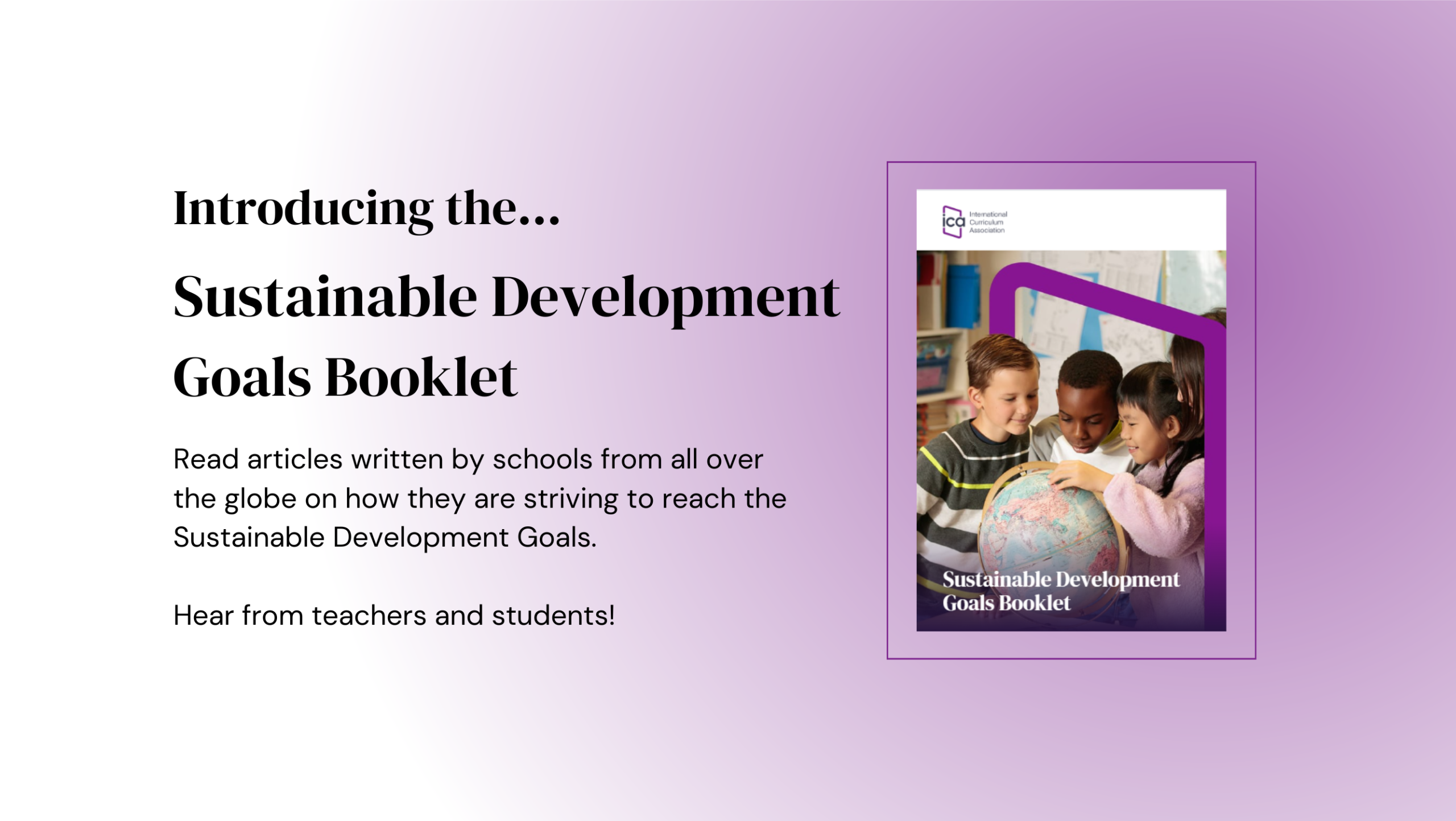
Introducing the Sustainable Development Goals Booklet

Are you looking for a comprehensive resource to learn about the Sustainable Development Goals? Look no further than the Sustainable Development Goals Booklet by the International Curriculum Association!

This flipbook, available on Issuu, is a must-read for anyone interested in understanding and striving for the Sustainable Development Goals. But what sets this booklet apart from other resources on the SDGs? Firstly, it is beautifully designed and presented in a flipbook format, making it engaging and easy to navigate. Each page is filled with vibrant images and concise explanations of the SDGs, making it suitable for a wide range of readers – from students to professionals.

The booklet includes real-life examples and success stories of individuals and organisations working towards the SDGs, inspiring readers to take action and make a difference in their communities. Delving into the interconnectedness of the SDGs and how they work together to achieve a sustainable future for all. This holistic approach is crucial in understanding the complexity of sustainable development and how we can all contribute to its attainment.

Whether you are new to sustainable development or a seasoned advocate, this booklet is a valuable resource that will deepen your understanding and spark your passion for a more sustainable world. So, why not take a few minutes to flip through the Sustainable Development Goals Booklet and be inspired to join the global movement toward a better future for all.

View the Sustainable Development Goals Booklet

Enquire about the International Curriculum Association

Back to news

9 January 2024

Nurturing a Culture of Wellness: A Case Study

How can we help teenagers and adults alike understand that mental health matters, and encourage an open discussion around it? What tools do teenagers need to cope with the physical and emotional changes and challenges in their lives? These questions, though always important, became more prominent when looking at the results of a survey we conducted at Futuraskolan International School of Stockholm, aiming to explore the relationship between achievement and well-being among middle schoolers. 


The responses expected: the older the learners, the higher the stress levels they reported, and this was often accompanied by poor sleeping habits and increased exposure to social media. However, the results of the survey also told another story, one that we often forget about. Teenagers have a hard time talking to adults about their feelings; they either think they might be a burden on their parents, or that adults might not take them seriously. 


Looking for ways to address these issues, it was clear that the action plan should not only involve teachers, the school counsellor, and the leadership team but most importantly, learners. This was something we also realised at the end of the last academic year when considering how to navigate the new reality facing schools. In preparation for World Mental Health Day, two dynamic Grade 9 learners took the initiative to raise awareness about mental health in our middle school and encouraged others to join a student Wellness Committee! Through videos, further surveys, and interactive activities, the learner-leaders of our committee have taken action to help us answer the questions posed at the start of this article. 


Among their many creative and meaningful ideas, two should be highlighted. The first was the introduction of the Safe Place App, designed by Save the Children Sweden (Rädda Barnen), and a plan to integrate it into all classes. What the app offered was a structured way to incorporate breathing, calming exercises, brain breaks, and stretching when needed in lessons. Learners of the Wellness Committee visited every middle school class and demonstrated ways teachers and students can use the app in class and at home. Most importantly, they encouraged their peers to reflect, identify their needs, and be open with teachers when they feel overwhelmed or simply need a brain break!


This was followed up by weeks of working on our upcoming Brain Awareness Week, which will mark the start of the Spring Term at our school. Our Wellness Committee volunteered to plan activities for their peers, ranging from yoga, mindfulness sessions, and power naps, to finger knitting, origami, and games about the brain. The collaboration, organisation, decision-making, and enthusiasm they demonstrated were a reminder of why listening to student voices and giving them agency is so important in fostering a healthy and forward-thinking school culture. 


“Mental health is a universal human right” was the theme the World Health Organisation decided on in 2023, in celebration of World Mental Health Day. By prioritising mental health and wellbeing this year, and by taking the time to drive actions that promote it, we are hoping to continue creating a safe and open environment where adolescents understand the changes they are undergoing, realise the importance of talking about their emotions, and graduate with the tools and strategies to cope with the challenges of an ever-changing world.

International Middle Years Curriculum

Back to news

19 December 2023

Dear Freedom Writer: Stories of Hardship and Hope from the Next Generation

More than twenty years ago, millions of readers were introduced to the Freedom Writers and teacher Erin Gruwell. Their stories, featured in the #1 New York Times bestseller The Freedom Writers Diary, captured the hearts of readers everywhere and later became a major motion pictureFreedom Writers. What began in Room 203 in 1994 with a first-time teacher and 150 “unteachable” high-schoolers, would go on to build a lifelong community of students and educators working together, driven by the purpose of innovative learning.

In Dear Freedom Writer: Stories of Hardship and Hope from the Next Generation, set to be published by Penguin Random House on March 29, 2022, their legacy continues as readers are introduced to a new league of Freedom Writers—fifty students from around the globe—sharing deeply personal and powerful stories in letters addressed to the original Freedom Writers and dedicated Freedom Writer Teachers.

Original Freedom Writers and Freedom Writer Teachers answer each letter with a message of compassion, understanding, and profound advice as someone of similar plight, but who has come out on the other side. For the reader, the result is an intensely poignant experience of witnessing these young authors bare their truths to a mentor, friend, liberator, and in some ways, their future selves.

Did you know?

You may be surprised to learn that Gruwell, the Freedom Writers, the Freedom Writer Teachers, and the students began and completed writing this book at the height of the pandemic. As the world shut down, students were some of the most impacted among us, with increased risk of depression, anxiety, and suicidal ideation.

The Freedom Writers realized that now more than ever, the need for community and emotional release would be too great to ignore. So, how do writers from around the world co-author a book in the middle of a global health emergency, economic crisis, and civil unrest? Simple… by any means necessary. From students across the United States, to war-torn regions of the Middle East, and to young Kurdish refugees in Germany, our global Freedom Writer Teachers and virtual tools allowed the Freedom Writers to reach across borders to engage in an unforgettable learning experience and bring this book to life.  

Bringing together different voices

In these fifty letters and their corresponding replies, the Freedom Writers and Freedom Writer Teachers address issues that span generations and still impact young people today, such as struggles with abuse, racism, discrimination, poverty, incarceration, teen parenthood, mental health, self-harm, imposed borders, LGBTQIA+ identity, and police violence. Dear Freedom Writer brings together different voices to share experiences of grief, pain, triumph, healing, and solidarity, with each story so bravely written that it demands the reader’s attention.

In honour of World Storytelling Day this Sunday, March 20, read an excerpt of the Dear Freedom Writer: Stories of Hardship and Hope from the Next Generation. Letter 8—Buck Stops Here: Cost of the American Dream is an incredible piece on poverty and progress.

Bring World Storytelling Day into your classroom
  • Join the official World Storytelling Day on Facebook to see what is happening this week and if there is a storytelling event near you.
  • Every year there is a theme to World Storytelling Day. This year’s theme is “Lost and Found” which could be tied into the reading and discussion of excerpt from Dear Freedom Writer and with connections to financial literacy activities in the Health and Wellbeing IMYC Big Idea unit of Responsibility.
  • Check out professional storyteller Rudolf Roos and his International Storyteller website for more ideas and activities on how to incorporate storytelling into your school.
  • Visit the Freedom Writers Foundation and listen to their podcast series which tells compelling stories through interviews with educators, activists, and social justice advocates making an impact in their communities.
Back to news

23 November 2023

Top 10 Reasons Why Teachers Love the IMYC

In our quest to deliver exceptional education, the International Middle Years Curriculum (IMYC) emerges as a transformative force for both learners and teachers, paving the way for a dynamic, engaging, and effective educational environment.

Here are the top ten reasons why teachers around the world find the IMYC an irresistible choice for their classrooms:

  1. Holistic approach: Teachers appreciate how the IMYC emphasises Personal, International, and Subject Learning Goals, allowing them to cultivate a well-rounded educational experience that goes beyond traditional academics.

  2. Skill development: The curriculum’s focus on rigorous skill progression ensures that teachers can guide their students towards mastery of essential skills, fostering both confidence and competence in the classroom.

  3. Structured flexibility: The IMYC offers a clear framework for learning that teachers can adapt to suit their teaching styles and students’ learning needs, blending structure with the flexibility to innovate.

  4. Progressive pedagogy: Teachers value the progressive pedagogical strategies aligned with the six needs of the teenage brain, which enables them to engage students effectively during these critical learning years.

  5. Supporting educators: With a wealth of units and resources, the IMYC continues to support both experienced and less-experienced teachers, ensuring that they have the content and strategies they need to succeed in the classroom.

  6. Connected Learning: With the use of the ‘Big Ideas’, the IMYC encourages teachers to plan beyond traditional subject boundaries, promoting interconnected learning for students as they move between classrooms and content.

  7. Well-being focus: Including health and well-being in the IMYC and collaborating with MindUP provides a significant advantage, giving teachers the tools to embed these essential practices into learning and promoting a healthier classroom environment.

  8. Global competence: Educators are enthusiastic about the curriculum’s integration of Sustainable Development Goals, which provides them with content to foster global competence among students, making learning meaningful and relevant.

  9. Collaborative community: The IMYC promotes a strong community of practice, encouraging teachers to collaborate throughout the school year, share best teaching practices, and continually develop professionally.

  10. World-ready learners: The curriculum enables teachers to equip students with the knowledge, skills, and understanding to be informed, active, and future-ready, ensuring they are ready to lead in a future that demands global understanding.

Embracing the IMYC is more than adopting a curriculum; it’s about joining a movement that champions progressive education. Teachers who choose IMYC are not just educators but architects of the future, laying the foundations for a generation of well-informed, skilled, and globally competent citizens.

The IMYC is not just changing the way students learn; it’s transforming the way teachers teach, with each benefit opening a door to new possibilities in the classroom.

To become a part of this transformative educational experience and for a deeper insight into the IMYC, visit the International Curriculum Association’s Middle Years Curriculum page. Let’s shape the future of education together.

Learn more about the International Middle Years Curriculum

Back to news

29 September 2023

Growth Mindset with IMYC

Our recent International Middle Years Curriculum (IMYC) infographic on growth mindset can ignite potential for classroom dialogue and hands-on activities related to the concept.

Here are 6 creative ways to engage with each growth mindset characteristic:

View the infographic here.

1. Embracing change

Reflective questions: Can you recall a moment in your life when you were faced with a significant change? How did you feel, and what did you do?

Activity: Seasons of Change
Have students create art or write short stories capturing the four seasons, reflecting on the natural changes in our environment and drawing parallels to their personal experiences.

2. Showing persistence

Reflective questions: Was there a task or project you almost gave up on? What kept you going?

Activity: Persistence Journaling
For one week, have students maintain a journal of challenges faced, noting when they persisted and the outcomes of doing so.

3. Being resilient and adaptable

Reflective questions: When did you last face a setback or disappointment? How did you adapt or find another way?

Activity: Resilience Role Play
Have students act out scenarios where they are faced with an unexpected obstacle and demonstrate resilience in overcoming it.

4. Being receptive to feedback

Reflective questions: Can you remember a piece of feedback that initially stung but proved invaluable? How were you receptive to the feedback?

Activity: Feedback Discovery
Students in groups of 3-4 first discuss the difference between generic and constructive feedback. They then exchange work and, using their new understanding, provide thoughtful comments. After sharing, groups reflect on how it feels to both give and receive truly constructive feedback, and the importance of being receptive to it.

5. Setting long-term goals

Reflective questions: Why do you think it’s essential to have goals for the distant future? How might they guide our daily actions?

Activity: Goal Tree
Students sketch a tree on paper or digitally. The roots symbolize their present strengths and challenges, anchoring them in the present. The trunk outlines medium-term goals, illustrating growth and their journey. Lastly, the branches stretch out, capturing long-term aspirations, each leaf representing a distinct dream or milestone. Once completed, students can discuss their trees, providing insight into their current state and future ambitions.

6. Being Inspired by the success of others

Reflective questions: Who in your life or in history has achieved something that truly inspires you? Why is this?

Activity: Inspiration Gallery Walk
Students create posters or digital slides about individuals who inspire them. These are then displayed, and students tour the “gallery,” discussing and sharing stories of inspiration.

Learn more about the International Middle Years Curriculum

Back to news

30 August 2023

AMLE50

November 1-4, 2023 | National Harbor, Maryland

AMLE is the only international organization of its kind for middle school educators. With a community more than 35,000 members strong, AMLE is committed to helping middle school educators reach every student, grow professionally, and create great schools. Join the Head of the International Middle Years Curriculum (IMYC) at the AMLE50 annual conference – the world’s largest conference for middle school educators – for the below session:

Be the Bridge – Using the Needs of the Teenage Brain to Improve Learning

Start Time – 2nd November 2023 10:15 AM End Time – 2nd November 2023 11:15 AM

This session will focus on how the brain learns and develops during adolescence and how to better support learning through this critical time. The Head of the IMYC will explain the current research in adolescent brain-based learning and what strategies can effectively work best to meet the needs of middle school learners.


International Middle Years Curriculum

Back to news

22 August 2023

7 Ways the IMYC Boosts Engagement with Learners

Learning should be at the core of what every good school does, and one overarching question to ask is, ‘How can we boost student engagement?’

Your students benefit from an environment where learners are co-constructors rather than passive objects of their education. Including the IMYC pedagogy and philosophy in your school’s learning environment (and spaces beyond) has the potential to stimulate and inspire curiosity and engagement among the school’s learners.

Below are 7 Ways the IMYC Boosts Engagement with Learners. 

  1. Offers an interdisciplinary approach to learning: The IMYC links subjects together under a Big Idea, allowing students to see the connections and relevance between different subject areas. This holistic approach can help students understand the bigger picture and connect what they learn.

  2. Focuses on holistic learning. The IMYC also emphasizes students to progress across three areas – Subject, Personal, and International – with learners gaining knowledge, mastering skills and deepening and broadening understanding. 

  3. Encourages personal reflection: Throughout their learning, students are encouraged to reflect on their understanding and progress. This helps them think about their mistakes, how to learn from them, and what approaches may be done differently. The IMYC embeds moments of reflection through discussion and journaling—whether in a journal, with audio or by video.

  4. Allows for flexibility: The IMYC allows for flexibility, which means teachers can adapt the curriculum to suit the specific needs and interests of their students, making lessons more engaging and relevant.

  5. Promotes global competence: IMYC promotes global competence by exploring issues and topics that are significant worldwide. This helps students understand their place in the world, fosters a sense of curiosity about different cultures and global issues, and encourages them to take action to make a change in their world, however big or small.

  6. Emphasises the process of learning: The IMYC not only focuses on the outcomes through learning goals but emphasises the importance of the learning process itself. By helping students appreciate the journey of discovery, they are more likely to stay engaged, enjoy their learning, and become more aware of how they are learning through metacognition.

  7. Addresses the needs of the teenage brain: The IMYC recognizes that the teenage brain undergoes significant developmental changes, and it is structured to address these through its unique model named IMPART. By weaving the IMPART principles into its framework, the IMYC ensures a holistic learning experience tailored to the specific needs of adolescents.


The International Middle Years Curriculum

Back to news

22 August 2023

Navigating the New Normal: Challenges in Education Beyond the COVID-19 Pandemic and the Rise of Generative AI

When asked to write this article, I was well aware that, as a teacher working in Sweden, a country that faced no lockdowns during the COVID-19 pandemic, my experience would probably not be representative of the reality facing schools around the world. However, conversation about the new reality teachers face now, made me realise that our struggles, thoughts, and lessons learned here at Futuraskolan International School of Stockholm do not differ significantly from those shared by other educators. 

‘It is like teaching two academic years in one’


June 2023 marked the end of another school year, a year when we thought everything had gone ‘back to normal’, or, at least, to a new ‘normal’. Despite lessons not having gone fully remote for us back in 2020, the few weeks of online learning, which entailed an increase in screen time, and the social isolation paired with more opportunities for teenagers to use social media, had a noticeable impact on learner wellbeing and social skills. Although we gradually started seeing the results of this in 2021-22, it wasn’t until this past academic year that this new reality became evident.

To me, it felt that supporting learners to achieve the same results as before required twice the effort and energy; in other words, it was like teaching two academic years in one. 


Topics, teaching approaches, and lesson plans from the years before did not seem to have the same appeal or yield the same results any more. Simultaneously, learners showed even less interest in reading widely and for pleasure outside of school, while they became increasingly aware of the negative effects of social media. The first term of the school year for teachers meant reading and researching, adapting, changing, or completely scrapping lesson plans more than ever before. Knowledge Harvests and other forms of formative assessment were crucial steps in redesigning units that no longer worked. Using the Six Key Needs of the Adolescent Brain as a framework to reevaluate teaching approaches was a useful tool along the process. 

And yet, it felt harder than ever before to establish a genuine connection with learners. Having discussed this with colleagues and educators outside of Sweden, I understand that this has been quite a heavy mental and emotional burden to bear for many of us. 

Transitions and the rise of AI


The International Curriculum Association defines transitions as “changes experienced by a learner as a result of progressing from one learning context to another” (IMYC Curriculum Guide, pg. 16). Supporting learners in their transition from childhood into adolescence, and from primary to secondary education, always requires socioemotional support, a focus on Health and Wellbeing, scaffolding, encouragement, space for safe risks, and room for learner agency. All these are invaluable tools for teachers and student support teams, and they might need to take an even more central stage for us to successfully navigate this new reality.  

However, there is one more type of transition that needs to be considered. One cannot discuss the challenges of this past academic year without reflecting on the rise of AI. The incredible capabilities of AI text, image, and music generators raise the question of whether we need to transition into a new way of working and assessing or back to more traditional methods such as books and exams. No matter what decisions and policies are made, the reality is that generative AI is here to stay and there is a tendency to turning a blind eye towards it or trying to completely ban it. Instead, at least at this early point, it feels like the one thing schools and educators can do is teach learners how to use it rather than abuse it. 

Moving forward

A new school year is starting here in Sweden, and it is crucial to reflect on new or improved ways to move forward – for the sake of our learners as well as for us teachers. The reality remains that there are curriculum plans and standards to meet, but this can surely happen in different ways. These are a few things I look forward to seeing the results of:

  • Planning lessons for learners with learners, as a way to reconnect, to build a new and stronger trust relationship, and to give them space to exercise agency. 

  • Exploring the capabilities and limitations of generative AI together with learners and agreeing on ways to use it as a learning tool; involving learners in a discussion around assessments and academic integrity. 

  • Increasing focus on mental health and socioemotional challenges through discussions and mindfulness sessions.

I have a feeling that, despite the challenges, this mindset shift could lead to less mentally and emotionally taxing years ahead. 


The International Middle Years Curriculum

Enquire now

Find out more about ICA products and services!