Can people share similar interests and lifestyles even if they live in different parts of the world?
That was the Big Question guiding Grade 2 students at the Overseas Family School in Singapore as they explored their recent International Primary Curriculum unit, “Different Places, Similar Lives”.
Through inquiry, discussion, and discovery, students learned that while people may live in different countries and cultures, many of the things that matter – family, hobbies, routines, and interests – can be surprisingly similar. The unit encouraged students to think beyond borders and recognise the connections that bring people together around the world.
In this article, Shyella De Silva shares how this Big Question shaped the students’ learning journey and helped them develop a deeper understanding of both diversity and shared human experiences.
The International Curriculum Association (ICA) brings together the three age ranges of the International Curriculum: the International Early Years Curriculum (IEYC) for learners aged 2-5+ years old; the International Primary Curriculum (IPC) for learners aged 5-11 years old; and the International Middle Years Curriculum (IMYC) for learners aged 11-14 years old, with Professional Development for teachers and leaders and a two-stage Recognition and Accreditation process for schools, to ensure that with teachers, leaders and schools, we are improving learning, together.
By Debie Nobles, Grade 4 Homeroom Teacher, Hope International Academy, Okinawa
The International Primary Curriculum (IPC) has provided our school, Hope International Academy Okinawa (HIAO), with an opportunity for student-centered, real-world learning that is fun and engaging, making learning more meaningful and relevant to our students’ everyday lives. To increase engagement, we purposely “Glocalise” our units, which means adapting the global context of the IPC units to include the local community and environment. Connecting learning to familiar places and experiences has built a deeper understanding of concepts, led to a boost in student motivation and engagement, and built long-lasting learning that has left our students and the community asking for more!
How do we adapt our units? There are many ways we have “Glocalised” the IPC units. The community is welcomed into our classrooms through guest speaker opportunities who share their real-world knowledge and experiences with the learners, often through hands-on learning opportunities. We take our learners into the community where we spend time outdoors engaging with the local environment. We organise field trips to visit local areas and organisations, often as an opportunity to reflect on the learning that has taken place and deepen their connection by engaging with the people and organisations within their community. We also place value in sharing our learning with families through weekly newsletters and Exit Points to keep them informed and connected to our classrooms.
How do we plan for adaptations? When planning for IPC units, it is important to review the unit planner and identify the Learning Goals that provide the learner with clear and actionable goals that are measurable. Partnered with clear mastery criteria found in the form of learner rubrics, these provide a map of what progress will look like, making learning more visible to the learner. Cross-curricula connections are made with Sustainable Development Goals (SDGs) and Personal Learning Goals that also aim to support the learning within the unit. Once these connections are made, a search for local opportunities begins. We contact local organisations as well as seeking out events that support the Learning Goals. Often, this requires reaching out to organisations to ask if they provide guest speakers or can support group visits which is often met with great enthusiasm. We have made many lifelong partnerships with outside organisations who are becoming repeat guest speakers and a cherished part of the HIAO community. Community connections also exist within the school through teachers and their partners, or parents and families who offer a vast network of opportunity.
What does this look like in Action? The Holiday Show The Holiday Show is a fun and engaging unit about tourism where our Grade 4 class focused on “Sustainable Tourism in Okinawa”. We live on a popular sub-tropical Island, admired for its coral reefs, natural beauty, and deep historical relevance during WWII. Okinawa has an ever-increasing tourist population that has provided both positive and negative effects within our community and the environment.
Before learners could take sustainable tourism to global destinations, it was important for the learners to understand the impact within their own back yard. Learning about Sustainable Tourism in Okinawa meant we could include several community connections:
Learners worked on persuasive writing and speaking tasks convincing our school community to reduce their consumption of natural resources to protect the future of our planet. To culminate the learning, Grade 4 created an SDG video, filmed on and off-campus requesting community action.
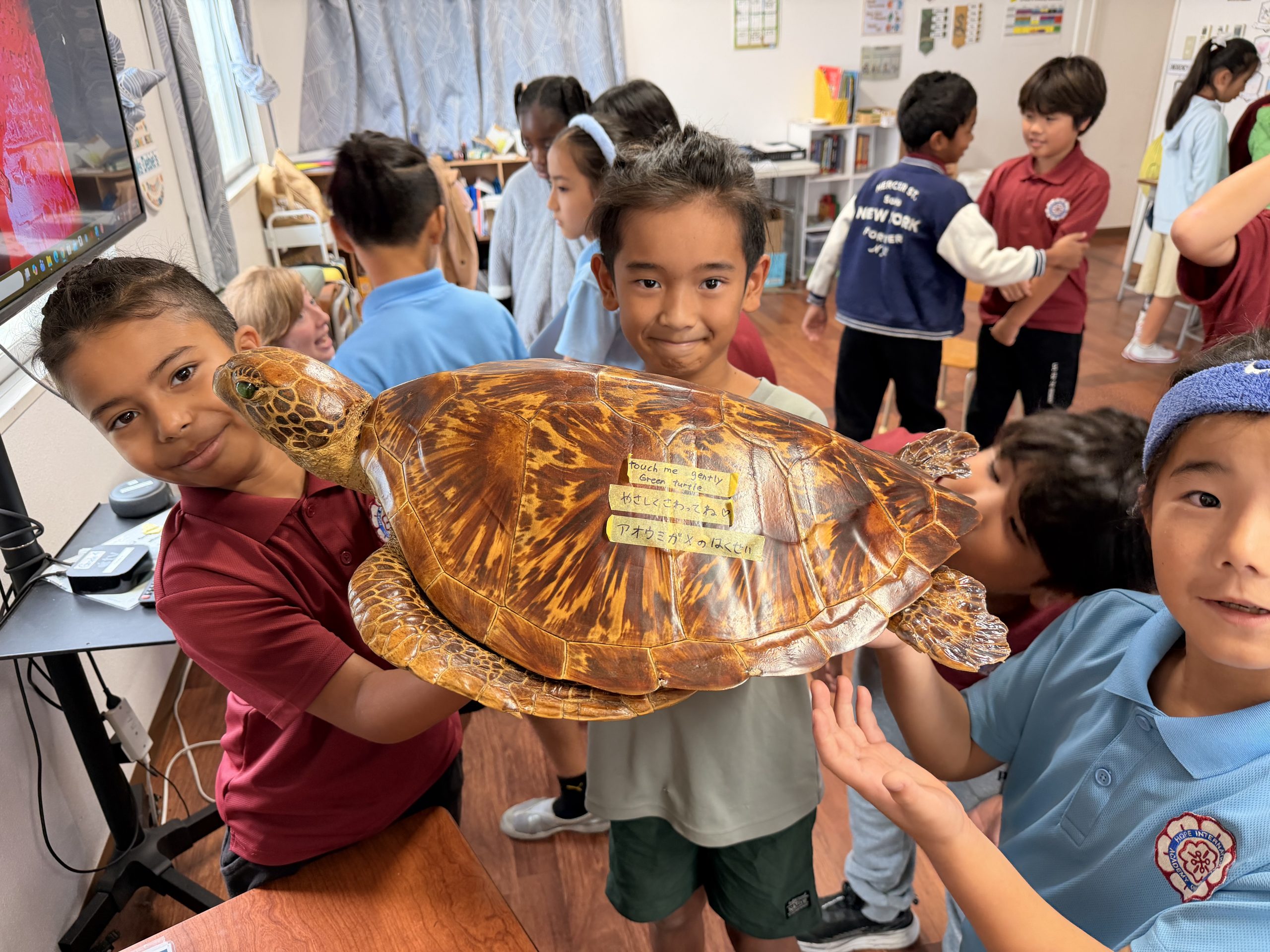
A local non-profit organisation, Churamura Sea Turtle Conservation, provided two guest speakers who brought a wealth of knowledge to our classroom about the impacts of tourism on sea turtles living around Okinawa and how we can protect these beautiful sea creatures from harm, even bringing in a taxidermy sea turtle to bring the learning to life.
A field trip was organised to a popular tourist destination, Cape Zanpa Lighthouse and Parklands that has deep historical significance from the Ryukyu Kingdom era, The Battle of Okinawa from World War II, as well as geographical landforms such as cliffs and volcanic rock formations that surround a non-operational lighthouse, providing 360 degree views of the western coast of Okinawa.
A field trip visit to a local, non-profit organisation called Sango Batake which translates to Coral Farm. Students toured this local coral farm that is dedicated to restoring the coral reefs around our beautiful Island. They learned about the positive changes Sango Batake have made, providing proof about the important work they do to support the protection of marine life in Okinawa.
The impact on Student Learning When we made these adaptations to our units, we saw our students using scientific vocabulary more confidently, we saw increased curiosity with more meaningful questions being asked, improved assessment of Learning Goals as they made real-world connections to their learning, and the most important, learners are actively taking action within their community by talking to other grades about living a more sustainable life. Every day, grade 4 learners are picking up trash and talking to their family and friends about protecting their planet! It has truly been a life-changing experience for many learners.
These are some of the many positive statements I have received over the 6 weeks we spent on this one unit!
“It is important for people to learn about the impact of tourism on Sea Turtles because if many people learn, then we can help more and more beach and sea turtles” Riyun – Grade 4.
“My daughter has been coming home everyday telling me about Okinawa History. I am so happy!” – Grade 4 parent during PTC.
“Thank you for the opportunity to share what we do. You are all absolutely wonderful” Victoria – Volunteer from Churamura Sea Turtle Conservation.
If we continue to make learning more meaningful by taking into consideration the real-life opportunities students have to make connections with the world around them, we will create well-informed global citizens who are filled with the Knowledge, Skills and Understanding to make a real difference in the world! I truly believe this is the way forward, so get out there and start “Glocalising”!
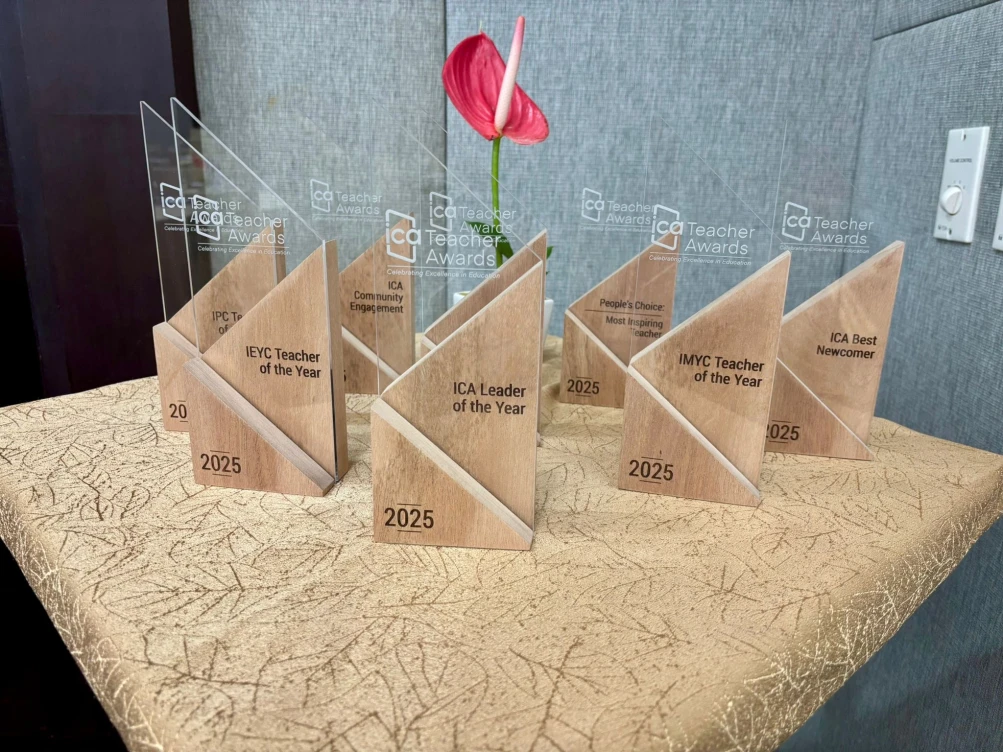
It’s the moment we’ve all been waiting for – it’s time to reveal the winners of this year’s ICA Teacher Awards! With applications received from outstanding educators and schools from all over the world, it’s been a joy to analyse the impact of our ICA community and learn how they continue to champion the future of education.
This year’s winners are dedicated trailblazers driving forward our ICA vision of inclusive, inspiring education. From an incredible early years teacher to an outstanding education leader, we’re proud to call all of our winners members of the ICA community.
Your 2025 winners are:
Best Newcomer of the Year: Deepti Sharma from Nehru World School
Community Engagement Award: Parmeet Kaur Jindal from Nehru World School
IEYC Teacher of the Year: Swaranjali Masih from Healthy Planet TGA School
IPC Teacher of the Year: Anastasia O’Hare from Shanghai United International School
IMYC Teacher of the Year: Jay-R Evangelista from Hope International Academy Okinawa
Leader of the Year: Jolinda Groothedde from Holland International School
Team of the Year: Sekolah Cita Buana
People’s Choice Award: Arlene A. Toquero from Seri Mulia Sarjana School
Thank you and congratulations to every educator and school that was shortlisted. You are all making vital contributions to the education evolution.
Author
International Curriculum Association
The International Curriculum Association (ICA) brings together the three age ranges of the International Curriculum: the International Early Years Curriculum (IEYC) for learners aged 2-5+ years old; the International Primary Curriculum (IPC) for learners aged 5-11 years old; and the International Middle Years Curriculum (IMYC) for learners aged 11-14 years old, with Professional Development for teachers and leaders and a two-stage Recognition and Accreditation process for schools, to ensure that with teachers, leaders and schools, we are improving learning, together.
The wait is nearly over! With just one month to go until our vibrant global community joins us in sunny Bali for the International Curriculum Conference 2025, we are beyond excited to announce our partnership with The Association of National and Private Schools (ANPS) and introduce our second keynote speaker, Wayan Sutrisna.
Welcoming visionary leader, Wayan Sutrisna, as our second keynote speaker
We are thrilled to introduce our second keynote speaker, Wayan Sutrisna, who is one of Bali’s leading practitioners in Maharishi Transcendental Meditation and Director of Education for World Peace.
Wayan Sutrisna’s career in education spans over 20 years, focusing on the use of Transcendental Meditation techniques to empower his student to become better learners through promoting clearer thinking, better focus, and increased self-confidence. Sutrisna’s innovative approach to learning highlights that by helping to shape peaceful brains, we create peaceful students, and in turn actively contribute to creating a peaceful world. Sutrisna’s dedication to the practice of Transcendental Meditation has shaped the lives of thousands of students in becoming the open-minded and empathetic leaders who are equipped to respond to the challenges of the modern world. We can’t wait to hear his insights!
Forging new paths with ANPS
This year, we are delighted to announce that we have partnered with ANPS for the final day of the Conference. We are excited to be enhancing our Conference further through partnering with a vibrant community of educators committed to best practices in teaching and learning in Indonesia.
As part of our ongoing commitment to inclusive and sustainable education development, we will be hosting a parallel Early Years Education Convention on day three, designed specifically for Indonesian early years educators. This special programme will be delivered in collaboration with the ANPS and will feature its own keynote, focused workshops and access to network opportunities.
The Convention runs in parallel with the main Conference programme and will provide a meaningful platform for local educators to engage with best practices, practical innovations, and peers across the sector.
Learn from our global community
Alongside our guest keynote speaker, we are also hosting a variety of thought-provoking and inspiring workshops facilitated by our dedicated educators across the ICA community.
Across the weekend, ICA educators will be leading a wide range of interactive, hands-on workshops to enhance your communication skills, pedagogy styles, and approaches to the curriculum to create thriving, dynamic, and inclusive learning environments in your schools. From Mathematics in everyday contexts, embedding cultural responsiveness in the classroom, to utilising your professional voice as teachers in the 21st century, there will be a variety of sessions to spark meaningful dialogue and develop your skills to adapt, thrive, and transform with the ICA.
There are a limited number of tickets available for those wanting to secure a spot to this year’s Conference, which focuses on the theme: ‘Education Evolution 25: Adapting, Thriving, and Transforming’. This celebrates 25 years of the International Primary Curriculum and champions our collective commitment to the ICA in the past, present, and future. To secure a last-minute place at the International Curriculum Conference before the price increase on 30 September, click here.
We can’t wait to see you in Bali on the 16 to 18 of October! Sampai jumpa di sana!
The ICA is excited to announce the launch of our new play-based learning development programme, the Play Hub.
All the evidence points towards play as an essential tool for learners of all ages, but implementation often fizzles out after the early years. The Play Hub courses are a series of workshops designed to guide educators and school leaders in finding ways to bring play into the classroom and beyond.
With workshops covering everything from EdTech to play as an approach to leadership, the Play Hub will help beginners and experienced play-based educators to cultivate a playful mindset and break down dichotomies between work and play in education.
Laura James, who will be leading the Play Hub workshops, said: “Play is so often left behind in childhood, but it’s something that can help us throughout our lives. The Play Hub workshops have been designed to help educators view play, not as a trivial pastime, but as an approach to life.
“Teachers are often expected to lead from the top, but play can help us turn our students into self-led learners for life. Likewise, government-imposed curriculums and standards can drown out local voices, but a playful approach can help us to use these structures as a launchpad from which we can address our students’ specific needs. The Play Hub embraces paradox and celebrates contradiction to foster a dynamic approach to education and leadership.”
Highlights from the Play Hub workshops include:
• ‘Play is the Language’, a dive into the challenges posed by multi-lingual classrooms and how play can bridge barriers to language learning.
• ‘Play is Child-led’, which will explore how play can encourage child-led learning
• ‘Play is Reflective’, which will consider how play can be used to rethink assessment and capture learning authentically.
• ‘Play is for Change’, which has been created in collaboration with the Center for Theater of the Oppressed (CTO) in Rio, Brazil, focuses on the ways play is used by educators and activists to challenge injustice and build community.
In today’s complex yet still interconnected world, educators across the Middle East are working within a powerful paradox: how do we prepare students for a global future without disconnecting them from where they come from?
At the International Curriculum Association (ICA), we’ve come to understand that this is not a problem to solve, but a tension to embrace. When we approach it not with rigidity, but with curiosity, with play and passion, we discover that national identity and international mindedness are not opposites, but partners.
Across the region, we work with schools that are navigating this balance every day – meeting international benchmarks while also delivering national subjects like Arabic and Islamic Studies in the Middle East. The challenge is real, but here’s what we see time and again: it’s not only possible to do both – it’s essential.
Holding the Paradox: Identity and internationalism
It affirms language, culture, values and belonging. It gives students a stable footing from which to step into the wider world. But when taught in isolation – outside of real-world context or connections – it risks becoming static, disconnected from a student’s lived experience.
That’s where the power of integration – and the playful lens of possibility – comes in.
At ICA, our approach to curriculum is built around themes, concepts and connections. Through the International Early Years Curriculum (IEC), International Primary Curriculum (IPC) and International Middle Years Curriculum (IMYC), we help schools embed national identity within global learning journeys. Not as an add-on, but as a central thread that strengthens the whole. For example,
A unit on migration becomes more meaningful when paired with Arabic oral histories.
A global study of governance deepens when it includes local civic traditions.
A conversation about culture becomes alive when students see themselves in it.
When students engage with heritage in context—not as a standalone subject but as part of an integrated journey—it becomes relevant. It becomes respected. It becomes real.
Passion in Practice: What this looks like in Schools
This isn’t just theory – it’s happening.
At Brighton College Dubai, the leadership team recognised that certain UK Curriculum topics didn’t resonate with their students’ lived realities. Through the IPC they chose units like Moving People, highly relevant in a region shaped by migration. What started as a curriculum choice became something more: a spark for deep discussion, connection, and a student-led action project. This is what happens when curriculum becomes a space for play, not just performance.
At Al Basma British School in Abu Dhabi, IPC Exit Points became a transformative tool. These celebratory moments allow students to show what they’ve learned in their own way – through storytelling, performance and cultural presentation. Teachers report a visible shift: more engagement, more pride, more passion. When students see their identity not as something outside the curriculum, but inside it, they connect with the learning with a greater sense of purpose and voice.
The Golden Thread: Paradox, Play and Passion
These stories show us what’s possible when we stop choosing between the global and the local—and instead, weave them together.
Paradox invites us to hold complexity with confidence.
Play helps us reframe it, explore it, and move creatively within it.
Passion keeps us anchored to purpose.
Together, they form a golden thread—one that runs through the most vibrant, inclusive, and transformative learning environments.
The Future We’re Building
International education should never mean losing identity. In fact, the best global citizens are often the ones most deeply rooted in who they are. Our work at ICA is to help schools build bridges, not binaries. To lead with nuance. To learn with curiosity. To teach with heart.
We believe every child deserves to see their identity reflected in the classroom—and to see their world expanded by it.
Because when we flip the paradox, when we let play in, and when we lead with passion, education doesn’t just prepare students for the future. It helps them shape it.
To explore how your school can integrate national identity education into its international curriculum, please get in touch with us directly by emailinginfo@internationalcurriculum.comor booking a meeting with Alex Johnson.
Author
Sarah Blackmore
Director, International Curriculum Association (ICA)
In our discussions with international schools around the world, we often hear something like this:
“We do phonics. We do a bit of this approach and a little bit of something else.”
But fidelity to a phonics scheme requires a serious, long-term commitment—much like a marriage or lifelong partnership!
The Science of Reading emphasises the importance of sticking with a single, consistent approach, stating that “fidelity to a programme is critical for success.” By following a programme faithfully, schools can avoid the confusion that arises from mixing methods, enabling students to develop a clear, consistent foundation in phonics. This consistency allows children to “practise, apply, and embed their skills without distraction or contradiction.”
Think about a strong, lasting relationship. It’s built on trust, consistency, and a genuine investment in growth, and phonics is no different. When schools flit from one approach to another, it’s like speed-dating in the educational world, and it rarely leads to the happy ending we all want for our young learners.
The Keys to Phonics Fidelity
Invest in TrainingJust as you wouldn’t expect to run a marathon without preparation, effective phonics requires time, expertise, and dedication. Regular CPD ensures that all staff, including new team members, are confident and consistent in their practice. As the Reading Framework notes, “high-quality training, consistent across all staff, is essential for success.”
Show You CareWe all know relationships take work, and it’s no different in phonics. Supporting those who struggle means acting early, tracking progress, and never letting a learner slip through the net. Nurture, adapt, and respond.
Stay AlignedFidelity refers to the alignment of teaching, resources, assessment, and language. It’s not just about starting strong—it’s about maintaining a shared commitment over time. The Reading Framework recommends schools “avoid mixing different programmes” to ensure every child gets a coherent, joined-up experience.
Get the Family on BoardNo relationship thrives in isolation. Engaging parents builds a powerful home-school connection that boosts progress and reinforces phonics practice beyond the classroom.
ICA Schools: You’ve Already Said “Yes”
ICA schools don’t need to worry about finding the right phonics partner—they already have the free love of Monster Phonics!
The International Curriculum Association looked at every programme on the market and chose to partner with us for a reason: our enhanced, inclusive, and research-based approach stood out. As part of this partnership, every ICA member school now has full access to the complete Monster Phonics programme, along with substantial training and support. To find out how to access these resources, head over to the ICA Portal!
It’s a wonderful addition to the ICA offer—and a true example of what phonics fidelity looks like in action. With our shared commitment, we’re not just delivering a phonics programme—we’re giving children the joyful, confident reading start they deserve.
Founder & Chief Executive Officer at Monster Phonics
As a phonics expert, founder, and educationalist, Ingrid’s mission is to enhance children’s reading skills worldwide, accelerate their progress in literacy and promote equitable access to education.
We are delighted to bring back the ICA Teacher Awards for a second year! This year, we have introduced 2 new categories and changed the nomination process. Please ensure you have read through the submission guidelines, key dates and FAQs before you submit your nomination.
About the Awards
The ICA Teacher Awards are dedicated to recognising and celebrating excellence, innovation, and transformative impact across the educational landscape. With 8 categories, these awards shine a spotlight on the groundbreaking work being done by individuals and institutions that are truly making a difference in the lives of learners. Our judging process ensures that outstanding contributions are honoured.
Who can apply?
The ICA Teacher Awards are open to our ICA Subscribers! The person making the nomination and the nominee must be part of an ICA Subscribed School to enter.
Award Categories
We are delighted to add 2 new award categories for the ICA Teacher Awards 2025! Please see the 8 categories below and what they highlight.
Best Newcomer Award: Recognises an exceptional teacher in their first two years of teaching.
Community Engagement Award: Celebrates an educator who fosters strong school-community ties.
IEYC Teacher of the Year: Recognises excellence in Early Years.
IPC Teacher of the Year: Celebrates exceptional practice in Primary.
IMYC Teacher of the Year: Acknowledges excellence in Middle Years.
Leader of the Year: Celebrates transformational leadership.
Team of the Year: Celebrates an exceptional team within a school.
People’s Choice: Most Inspiring Teacher: Voted by the global community.
Submission Guidelines
We are thrilled to invite you to submit nominations for the ICA Teacher Awards 2025, celebrating excellence and innovation in education! Please read the following guidelines carefully before submitting your entry.
Key Dates:
Submissions Open – Monday 9 June 2025
Submission deadline – Thursday 31 July 2025
Judging period begins – Friday 1 August 2025
Public voting open (People’s Choice: Most Inspiring Teacher category only) – Friday 1 August 2025
Finalist announcement – Monday 22 September 2025
Award ceremony date – Friday 17 October 2025
How to Submit
All entries must be submitted exclusively via the Awards Platform (click to view the main Awards platform). The platform will be live for submissions from Monday 9 June 2025 for all categories (except People’s Choice: Most Inspiring Teacher) submissions must be a third-party nomination (e.g. by a colleague or school leader).
For the People’s Choice: Most Inspiring Teacher category, self-nominations are permitted. Please click the button below to find out how to enter this category. Keep reading to find out the requirements for the other categories.
The awards are open to all teachers and leaders working in an ICA Subscribed School. Educators from any country, regardless of school size or setting, can apply.
Multiple Entries: Schools may submit multiple entries, but a maximum of one entry is allowed per individual award category, including the Public Vote category. Note: To ensure fair representation, the Public Vote category will be limited to 100 entries.
Entry Format (standard Requirements for all categories, unless specified):
Nominee Information: Provide the nominee’s full name, school, location, role, and contact information.
Category Selection: Select one award category for the entry. If eligible for multiple categories, a separate entry must be submitted for each.
Round 1
Written Submission (750 words maximum): A structured narrative about your nominee using the following prompts as your outline:
*Entries can be submitted in the submitter’s native language. However, please be aware that a digital tool will be used for translation, this may cause some loss in clarity and readability.
Supporting Evidence
Provide relevant and compelling evidence to support your nomination. This may include:
Photos of classroom work or displays
Video snippets (ensure permissions are obtained)
Lesson plans or planning documentation
Testimonials from students, parents, or colleagues
Letters of support (with necessary permissions)
Round 2
Video Introduction (Maximum one minute): A short video where the nominee answers the question: “What does it mean to be an ICA educator?”. You will be scored on the below:
Relevance to the question “What does it mean to be an ICA Educator?”
Clarity and cohesion of the message
Impact and inspiration
Specific Requirements for People’s Choice: Most Inspiring Teacher Category
The entry must be a one-minute video explaining why you should win this category that is suitable for publication on ICA platforms (e.g., Awards platform and social media). For this entry, think about ‘inspirational impact and relatability’. We will ask the public to consider your ability to genuinely inspire and connect with the audience, as well as how effectively you articulate your passion for education and what it truly means to be an inspiring educator. This video will be used for public voting. Submit for this category here.
Judging and Vetting Process Overview
Each category (excluding Public Vote) will have a dedicated judging panel of 3-5 members, including ICA Steering Committee representatives, ICA Ambassadors, 2024 ICA Teacher Award winners, and ICA team members. The shortlisting stage will be blind judged (names and schools redacted). Finalists will undergo vetting for eligibility, conduct, and adherence to ICA values. Background references will be requested from school leaders.
Who can apply for the ICA Teacher Awards? The ICA Teacher Awards are open to our ICA Subscribers! The person making the nomination and the nominee must be part of an ICA Subscribed School to enter.
How many categories are there, and how do I choose the right one? There are 8 award categories, each designed to recognise excellence in specific areas of education. We recommend carefully reviewing each of the categories to determine which best aligns with the nominee’s achievements and the focus of your submission. You may submit multiple entries for multiple nominees, but please note that only one entry is permitted per individual award category, including the Public Vote category.
Is there a fee to submit an entry? No, there is no fee to submit an entry for the ICA Teacher Awards.
What is the submission process? All entries must be submitted online through the awards portal. You will be required to complete an application form, provide a detailed narrative addressing the award criteria, and upload supporting evidence. Please ensure that all required fields are completed and that the supporting documents meet the specified format and size requirements.
What kind of supporting evidence should I provide? We encourage you to provide rich, diverse, and relevant supporting evidence that demonstrates the nominee’s impact and innovation. This can include, but is not limited to, student work samples, testimonials (from students, parents, colleagues), data on learner outcomes, photos, videos, lesson plans, project documentation, or relevant research. Ensure all evidence directly supports the claims made in your narrative.
If I’m nominated, will I have to do anything? Yes! If your submission advances to Round 2, you will be contacted to provide a one-minute video introduction answering the question: “What does it mean to be an ICA educator?”. Please have your video ready, as you will have only two weeks to submit it. Submissions received after this deadline cannot be accepted.
How are entries judged? Entries undergo a rigorous 3-round judging process. In the first round, a panel of judges evaluates submissions based on criteria such as impact on learners, innovation in practice, alignment with ICA values, evidence and documentation, professional growth, and student voice and agency. We will then request a Video introduction (max one minute): Answering “What does it mean to be an ICA educator?” from the nominated candidate. Shortlisted entries then proceed to a final round where the supporting evidence provided helps determine the winners.
Who will be on the judging panel? Once confirmed, the judging panel will be published. This panel will consist of your educational peers, members of the ICA Team, ICA Ambassadors, and the 2024 ICA Teacher Award winners.
Can I be nominated if I am on the judging panel? To ensure impartiality, you are eligible for nomination in any category where you are not a member of the judging panel, given that each category has its own distinct panel.
When will the finalists and winners be announced? Please refer to the key dates outlined above. Finalists will be announced in September 2025.
What do finalists and winners receive? Finalists and winners will receive significant international recognition, including features on our website and social media channels, as well as an award certificate and trophy. Winners may also be invited to present their work at future ICA events or webinars, further amplifying their impact.
Can I get feedback on my submission? Due to the high volume of entries, we are unable to provide individual feedback on submissions. However, we encourage all applicants to carefully review the judging criteria before submitting to ensure their entry is as strong as possible.
Who should I contact if I have further questions? If you have any questions not covered in this FAQ, please do not hesitate to contact us by emailing jade.driver@internationalcurriculum.com or clare.sutton@internationalcurriculum.com for ICA Teacher Awards queries. For any technical queries, please email info@zealous.co.
Author
International Curriculum Association
The International Curriculum Association (ICA) brings together the three age ranges of the International Curriculum: the International Early Years Curriculum (IEYC) for learners aged 2-5+ years old; the International Primary Curriculum (IPC) for learners aged 5-11 years old; and the International Middle Years Curriculum (IMYC) for learners aged 11-14 years old, with Professional Development for teachers and leaders and a two-stage Recognition and Accreditation process for schools, to ensure that with teachers, leaders and schools, we are improving learning, together.

 Español
 Nederlands
 Chinese Mandarin