Search List show here

A Rewarding Journey Teaching Young Entrepreneurship

As I begin my second year teaching the “Young Entrepreneurs” unit to my Year 3 students, I’m excited by the journey we’ve embarked on together. I’ve witnessed my students discovering their passions and embracing creativity to craft distinctive business ideas. It’s been truly fulfilling to see them harness their enthusiasm and translate it into tangible impact, using our earnings to create a meaningful difference in our community. This experience has not only shaped them as budding entrepreneurs but has also highlighted the deep satisfaction that comes from applying their skills to help others.

Cultivating Interest and Engagement

Initially, I was pleasantly surprised by the enthusiasm and creativity my students brought to the unit. What stood out most was their eagerness to delve into the world of business, from understanding basic financial literacy to crafting intricate business plans. This unit has not only nurtured their entrepreneurial spirit but has also instilled invaluable life skills.

Tailoring the Curriculum

While following the recommended curriculum, I made deliberate adjustments to cater to the unique needs and interests of my students. I firmly believe that introducing concepts of financial literacy early in primary education is crucial yet often overlooked. By customising lessons and activities, we ensured that every student could actively participate and thrive.

From Ideas to Action: Practical Learning in Action

Throughout the unit, students engaged in a variety of hands-on activities that bridged theoretical knowledge with practical application. From designing business plans and creating marketing strategies to executing sales events, each step was meticulously planned to provide a comprehensive learning experience. One notable project involved students forming groups to produce items such as comic books, artwork, and handmade crafts. Another initiative included a recycled book drive, where books were sold at affordable prices, promoting both sustainability and entrepreneurship.

Integrating Learning Across Subjects

 The unit was thoughtfully integrated with Geography, History, Mathematics, and English, enhancing students’ understanding across disciplines. Geography lessons explored global markets and currencies, while history sessions traced the evolution of commerce and currencies. In mathematics, students applied their skills to calculate profits and create statistical data, essential for business analysis. English activities involved writing a story then creating a storybook on Canva, detailing the entrepreneurial journey of a young entrepreneur, which was shared with parents. During the culminating Big Sales Day, Year 2 and Year 4 students participated as customers, offering feedback that enriched our learning experience and provided valuable insights for future iterations of the project. Here is a story written by a student – https://www.collab-education.com/wp-content/uploads/2024/07/Luken.pdf

Impact Beyond Profit: Fostering Compassion and Community

The highlight of our journey was not just the financial gains but the empathy and social responsibility demonstrated by my students. Inspired by their learning about refugees and their challenges for their class assembly presentation this term, The children decided to contribute their earnings to Fugee School, supporting refugee children. I’ve created a curriculum for the Fugee School to learn financial literacy and potentially start their own businesses, aiming to inspire them in entrepreneurship. This act of generosity underscored the broader lesson of using business as a force for positive change in the community.

Reflections and Future Prospects

Reflecting on their experiences, students shared profound insights about money management, making responsible choices, and the holistic role of businesses in society. Their newfound understanding extended beyond financial literacy to encompass values of empathy, sustainability, and community engagement. Looking ahead, I envision expanding these units to include all primary school grades, adjusting the difficulty level to suit the age of each group. Additionally, parents can also play a role in teaching these skills, making it an ideal activity during extended breaks such as approaching summer or winter holidays.

Author

Picture of Pearline Silvanathan

Pearline Silvanathan

Year 3 Homeroom and IPC Coordinator at Straits International School Rawang

Ms. Pearline has been teaching in international schools for the past 11 years as a Primary Teacher. She holds Bach. Hons in Education from the University of Roehampton, UK and PGCEi from the University of Nottingham, UK. Previous to teaching in Straits International School, Rawang, Malaysia she worked in a British School in Cairo, Egypt. She is now responsible for leading the IPC at her current school in Malaysia as well as teaching a Year 3 class.

Back to news

17 June 2024

The International Curriculum Association partners with 8billionideas to launch ‘The Critical Curriculum’

The International Curriculum Association (ICA) has partnered with ed-tech and services company, 8billionideas, to further enhance its International Curriculum and launch ‘The Critical Curriculum.’ The partnership will bring together the ICA’s rich educational resources and expertise with 8billionideas’ cutting-edge approach to prepare students for the challenges and opportunities of the future.

The ICA and 8billionideas are collaborating to work with schools in reshaping their curriculum landscapes with curriculum enhancements aimed at equipping students with essential future skills. The ‘Critical Curriculum’ will be structured around a suite of learning pillars.

The first learning pillar to be introduced will be focussed on Entrepreneurship and it will help learners to build a solid, holistic foundation of entrepreneurial skills. It will build an initial understanding of value and worth in the early years through introducing learners to the ideas of commerce in their communities through play-based learning. This will then be developed further in the primary years through idea-to-execution-based challenges. Learning will continue to be refined in the middle years via the means of interactive problem-solving challenges exploring crisis’ on a macro and micro level.

Sarah Blackmore, Director of the ICA, said: “We recognise the need for a comprehensive and innovative approach to teaching that stretches far beyond traditional academic learning. In a fast-changing world, skills such as critical thinking, creativity, collaboration and adaptability have an increasing significance. We are excited to be working together with 8billionideas to provide young learners with the opportunity to develop the skills they require for future success.”

David Harkin, CEO and Founder of 8billionideas, said: “At 8billionideas, we believe in empowering students to think creatively, act entrepreneurially, and prioritise their wellbeing. This collaboration with ICA enables us to amplify our impact, reaching a wider audience with our mission to revolutionise education for the betterment of individuals and society as a whole. We’ve worked closely with the ICA for 12 months to understand deeply its vision for education. In 2024, we will begin by offering all ICA schools a developed and bespoke learning pathway around our entrepreneurship pillar and expand in the years ahead.”

To find out more about how you can integrate entrepreneurship into your curriculum, visit: https://page.8billionideas.com/8billionideas-ica-partnership

Back to news

22 April 2024

Spotlight: Being an education mentor

The transition from education to employment can be a daunting one.  A lot of young people face challenges like unemployment, lack of experience, or are simply not sure what direction to take. The Prince’s Trust, a youth charity founded by His Majesty King Charles III, is here to help bridge that gap and empower young people.

For over 40 years, The Prince’s Trust has been offering young people the support, guidance, and resources they need to thrive. They recognise the unique obstacles young people face in today’s world, and through a variety of programs, they equip them with the confidence, skills, and experience to build successful futures.

Lucy Gray who is a valued part of the International Curriculum Association team, took part in The Prince’s Trust’s Mosaic Mentoring Programme, an initiative designed to connect young people with experienced professionals who can offer invaluable guidance and support. We hear from Lucy about her experience!

1. What initially motivated you to volunteer as a mentor with the Prince’s Trust Programme?

I have always held a strong belief in the possibility and importance of social mobility- knowing that if I had met someone I could look up to at a young age, my journey of upward mobility would have been less scary and more efficient/ effective. My primary motivations were to give back, to do something different/ learn something new, and to utilise my unique skills to help others.

2. What did you do to prepare for your first mentoring session?

Preparing for my mentoring session was enjoyable (22  students – 12ish years old)! As an ESOL teacher (in a past life) I was used to creating lesson plans that were high energy and held attention, this helped me to have a clear plan that was easily followed and impactful. It also meant I was comfortable managing a large class and could monitor/ provide feedback effectively. For the content itself, I utilised the Prince’s Trust recommended materials and adjusted these to fit the classroom dynamics and my style. The session itself focused on personal strengths and why these are important – activities included: definition matching, self-assessment, mentor presentations, and more! Key skills focused on: being sensitive, enthusiastic, brave, creative, adaptable, expressive, curious, gentle, generous, adventurous, spontaneous, and kind.

2.  What are some of the biggest challenges you’ve faced as a mentor, and how did you overcome them?

When you’re a new teenager and go to a large co-ed school, there are many social barriers to being true to yourself, courageous about yourself and making the most of a new and unfamiliar programme. The biggest challenge I found was the social unfamiliarity and inability to find group consensus among the students. As the students were chosen across the year by multiple different teachers based on their untapped potential – this meant that many of the students didn’t have a relationship with one another and were very socially withdrawn especially in the first half of the programme – all figuring out their place and what they needed to embody in this new situation. Thankfully time improved this, as trust was built with the mentors and other students week-by-week. We were also able to better personalize our lessons to the needs and temperaments of the students, focusing on more individual tasks, and building up to the group activities instead of jumping right in.

4. What would you say to someone who was thinking about volunteering to mentor?

Making someone feel of value is the name of the game. From this experience, I have realised that the students who get the most out of mentoring are the students who feel seen and know you are interested in them (especially if they haven’t felt like this before). I would recommend having 10+ open questions up your sleeve to facilitate conversation, 100% engagement and a genuine smile.

5.  What do you enjoy the most about mentoring with this program?

It has been a unique opportunity to meet young people and hear about how they interpret and interact with the world. I have enjoyed getting to know the mentees, teachers, and fellow mentors who all come from different backgrounds – policewoman, investment banker, software engineer, and psychology student to name a few. It has been great to expand my knowledge of the world and the others who are sharing it with me, especially knowing that the Prince’s Trust Mosaic Programme is shining a light on the possibility and positivity of tomorrow to the young people who need it.

About: The Prince’s Trust, Mosaic Mentoring Programme:

The Prince’s Trust is a leading UK charity founded in 1976 by King Charles III (the then Prince of Wales) and offers vital support for young people aged 11-30 years through multiple initiatives such as the Mosaic Mentoring Programme. The programme itself pairs disadvantaged youth with inspiring mentors, providing guidance and real-world insights together with a focus on employability skills and confidence building. The programme aims to empower students to overcome obstacles, pursue their dreams and reach their potential.

You can find out more about the Prince’s Trust here: https://www.princes-trust.org.uk/.

Back to news

20 March 2024

Exit Points- A Celebration of Learning

Exit points are the final step in the student’s learning journey during an International Primary Curriculum unit of study. The Exit Point has two main purposes: to help children pull together their learning from the unit and to celebrate the learning that has taken place. At Nadeen, we have had a wonderful start to our IPC learning journey with three extremely successful Exit Points across primary since the introduction of the International Primary Curriculum this year. These have ranged from trips to exhibitions and museums. These celebrations of learning have included parents, teachers, and students from other year groups. 

Students in Year 6 embarked on an enchanting journey about myths and legends from their own country. Students presented their myths and legends through performances, artwork, and storytelling. In Year 5, students created their museum, exploring the theme of “The Great, The Bold, and The Brave.” Transforming their Year 5 and 6 collaborative areas, students showcased artifacts, and interactive displays, and delivered informative tours to year groups in the school. 

“I’m very proud of the Year 5 students. They did independent research prior to the Exit Point and on the day they were able to share their knowledge confidently and with loads of enthusiasm.“ Ms Karlien Year 5 Teacher. “We prepared for the Exit Point by designing things like plates, jewellery, shields, vases and many more things” Hitisha in Year 5 

In Year 4, our students explored the Stone Age, delving into the lives of scavengers and settlers who roamed the earth thousands of years ago. Students immersed themselves in hands-on activities that brought history to life from designing Stone Age paintings to crafting Stone Age necklaces. 

“I enjoyed making Stone Age jewellery and playing interactive games with my mum” Minahil in Year 4.

“It was great to see the children teaching the parents what they had learned in the Stone Age IPC topic. The children showed great enthusiasm showing the parents what life was like thousands of years ago and demonstrated good knowledge of the unit. Parents enjoyed joining the children for a quiz at the end of the exit point to test their Stone Age knowledge. ” Ms Nicole Year 4 Teacher.

In Year 3’s Mummification Exit Point, students engaged in a hands-on exploration of ancient Egyptian culture. They learned about the mummification process, wrote hieroglyphics, sketched ancient designs, and constructed miniature pyramids. This immersive experience deepened their understanding of ancient civilizations and fostered creativity.

In Year 2, our students completed an observational walk to our local mall of Dilmunia, where they found inspiration in their surroundings. Through observational drawing, students captured the beauty of some of the local buildings and created stunning artworks that reflected their observations and experiences while also enjoying a picnic.


“On our way back to school, the buzz of conversations among students and parents about the day’s experiences was heartwarming. Their drawings, each unique and insightful, reflected their keen observations and what they had learned about Art.“ Mr Joseph Year 2 Teacher.

“For our Exit Point, we went on a walking trip to Dilmunia Mall to sketch Dilmunia Mall, the canal or Nadeen School. The walk from school was exciting, we walked in pairs and enjoyed looking around the street.” Shanzey Jahanzeb in Year 2

Year 1 explored the world of buildings and studied various structures in towns and cities globally, drawing inspiration from projects from our local surroundings. Additionally, students explored the concept of recycled buildings, broadening their understanding of sustainability. 

Exit Points offer parents a firsthand glimpse into their children’s learning experiences and achievements. By attending exhibitions, performances, and presentations, parents gain insight into the curriculum and see how their children are applying their knowledge and skills in creative and meaningful ways. Exit Points is a celebration of learning that enriches the educational journey of our students while strengthening the bonds between our school and the wider community.

Back to news

13 March 2024

A Teacher’s Journey with ChatGPT and Beyond

Over the past 4 decades, I have seen some remarkable shifts in the resources available to teachers.  Recently a new tool has arrived with great potential to enhance the lives of teachers and students alike, if not revolutionise education itself – artificial intelligence.

As an early adopter of ChatGPT at the beginning of 2023, I was quickly impressed by some of its education-related capabilities. It was able to provide levelled-texts on demand on any subjects I could think of.  It could also create a variety of receptive and productive tasks for students for those same texts that focused on specific chosen aspects of learning. It could help redesign a lesson to increase student engagement, suggesting ideas for variety and dynamism. It could simplify existing planned tasks providing opportunities for differentiation. It could redesign a lesson while still adhering to the stated Learning Goals. And a lot more.

How ChatGPT Became a Game-Changer in My Classroom

Being the Academic Director at Tonkla School Chiang Mai, I quickly saw the potential for it to help both experienced teachers and newer teachers by providing ideas for planning, teaching, and assessment. I am trying to encourage differentiation across all grade levels and I found that ChatGPT could play a complementary role in teacher development by suggesting various approaches to modifying content, tasks, instructions, and seating, for example, that follow up on or prepare for face-to-face PD sessions. I have held several PD meetings with IPC and English teachers to explore the potential benefits, always headlining with the reminder that human oversight is essential every time it is used. It can quite confidently make mistakes and needs correcting at times. While a few staff members seemed almost suspicious of it, as if I had just shown them a conjuring trick, many teachers have embraced it and recognised the positive impact it can have on their planning and teaching.

New websites and applications making use of this technology have been appearing almost weekly, offering help with everything from curriculum planning and assessment, to slide creation from a video, and interviewing famous people from the past about their lives. Towards the end of 2023, OpenAI, the makers of ChatGPT, launched a significant upgrade, only currently available to subscribers, that not only allowed GPT to search the internet in real-time but also to produce high-quality custom images, all from one prompt box. But perhaps the most valuable aid for teachers was the introduction of custom-made GPT bots.

The Rise of Custom-Made GPT Bots: Putting AI Expertise at Every Teacher’s Fingertips

This new feature allows anybody to custom design a bot, or AI assistant, in a few minutes for any purpose that they need, without any technical know-how. You simply need to type what you want in clearly labelled boxes. So, what does that mean? One of the first things I made was an IPC Learning Navigator bot for Primary 1 teachers who were using the ‘A Day in the Life’ unit. To save a lot of time writing long prompts in regular ChatGPT, I simply instructed the bot with the teaching context – age and level of students – and what I wanted it to do – help with all aspects of lesson planning, teaching, and assessment – in the instructions box. I then uploaded the ‘A Day in the Life’ unit to the bot’s knowledge base. An important step here is to uncheck the box that says ‘Use conversation data in your GPT to improve our models’. This ensures the protection of copyrighted material. Uploading files to the knowledge base means that whatever you ask, it will first go straight to that uploaded file and search. The teacher now has an IPC expert planning assistant specifically for that unit. An example of some prompts I gave it were: ‘Simplify History task 2’, ‘How can I integrate Music learning goals more fully in my lessons?’, ‘Provide five level-appropriate video clips, with links, that relate to Geography task 1’. The latter prompt sent it to the internet to search websites for suitable clips with links that took you directly to the sites. In theory, every teacher could have one of these ‘teaching assistants’ at hand to use whenever needed for each unit they were using. These bots do not have to be IPC specific but can offer more generic help with planning and teaching including bots that are designed to help teachers teach students with ADHD, dyslexia, and autism, for example.

Beyond ChatGPT: Exploring the Future of AI in Education

As a primary school, we can focus on the benefits to students via the teachers’ use. The challenges of students using AI in their course work is a warmly discussed topic on many AI educator forums and undoubtedly in many staffrooms around the world and that subject is best kept for another post. One aspect that holds great potential is the idea of AI tutor assistants. These are bots that can be embedded into learning websites (Khanmigo with Khan Academy Kids, for example) or used independently by students, and rather than give answers, they are trained to guide the students on how to solve problems in whatever subject they are focusing on.

Being a proponent of teachers exploring the benefits of AI, I am acutely aware of other voices that speak against its use. There are certainly conversations to be had, standards to be set, and policies to be formulated. However, I believe that things are only going to accelerate in this area in the coming years and as educators, we should, at the very least, educate ourselves about the use of these new tools so we can adapt effectively.

International Primary Curriculum

Back to news

28 February 2024

Virtual Drop-In Sessions

Dive into the Curriculum with our Free Virtual Drop-in Sessions (for subscribers only!)

To help you explore and discover the magic of the International Curriculum, we’re pleased to announce a series of FREE virtual drop-in sessions covering all three International Curriculums:

What to expect
  • Interactive sessions: Ask questions, share experiences, and connect with other ICA educators from around the world.
  • Curriculum insights: Gain valuable knowledge from the heads of each curriculum who will guide you through topics you would like to learn more about. If you would like to find out about a specific topic or area of the curriculum, please submit your questions in advance here.
  • Global timing options: Join live sessions at a convenient time for you.
Who should attend
  • ICA Subscribers looking for ideas and teaching strategies that work for others.
  • School leaders interested in learning more about how other schools implement the curriculum.
  • ICA Subscribers who are passionate about sharing what they know about improving learning.
Ready to join the virtual drop-in sessions? Here’s how:
  1. Click one of the links below. These links will take you through to our Professional Development Hub which is a platform to access a range of free and paid courses to support your implementation of the IEYC. If you haven’t already, you will need to sign up. Don’t worry it’s completely free to register.
  2. Once you have filled out your details, a member of our team will approve your registration. Make sure to sign up ahead of the start time of the drop-in session you want to attend!
  3. You will then receive a confirmation email.
  4. If you belong to a subscriber school, you will find access to the Drop-in Sessions on your ‘HOME’ page, which you can access after logging in to the PD Hub.
  5. You can look for the Drop-in Session in the ‘More Courses to Choose From’ search bar, by selecting keywords ‘IEYC’ or ‘Free’, or by clicking the link in the ‘Upcoming Events’ image carousel at the bottom of the page.
Click on the links below to register for the sessions that interest you:
Session Dates and Times

IEYC Drop-in Sessions:

  • Tuesday March 26, 10:00am and 16:00pm UK
  • Tuesday April 25, 10:00am and 16:00pm UK
  • Tuesday May 28, 10:00am and 16:00pm UK
  • Tuesday June 27, 10:00am and 16:00pm UK

IPC Drop-in Sessions:

  • Thursday March 13, 9:00am and 16:30pm UK
  • Thursday May 9, 9:00am and 16:30pm UK

IMYC Drop-in Sessions:

  • Wednesday March 6, 9:00am and 18:00pm UK
  • Wednesday April 10, 9:00am and 18:00pm UK
  • Wednesday May 5, 9:00am and 18:00pm UK
  • Wednesday June 5, 9:00am and 18:00pm UK

Don’t miss this opportunity to connect with a global community of educators!

Back to news

29 January 2024

Fostering Resilient Learners: Embracing a Growth Mindset in the IPC

Fostering resilience in learners is vital to students’ holistic development and future success. In recent years, we have witnessed a substantial decrease in children’s ability to overcome setbacks and hurdles, both academically and socially. This can be attributed to the dynamic nature of the 21st century. Dependence on technology has increased; decreasing the amount of time spent creating and maintaining social connections. Parents have become more protective; allowing less time for unstructured play, thus limiting the opportunities to learn from experiences and failures. Most importantly falling under the pressures of modern society to unrealistically succeed across all disciplines, stigmatizing failure rather than learning from it (Weir, 2017).

Children learn how to become resilient from observing their environments. Since children spend most of their days at school, it is only logical to assume that a school environment that promotes resilience will positively affect their development of the skill. Schools play a significant role in advancing resilience in children by providing supportive environments, implementing interventions to develop essential skills, and providing training to handle adversities. (Cesarone, 1999) During the planning phase at Eternity International School, when deciding on a curricular framework to adopt, we were adamant about employing a framework that would allow us to create such an environment for our students. After thorough research, we decided to use The International Primary Curriculum (IPC) as it places significant emphasis on fostering resilience in learners as an integral aspect of its educational philosophy. Founded on a holistic approach to education, the IPC prioritises the development of the child as a whole rather than merely focusing on academic achievements. From the IPC perspective, resilience is viewed as a crucial life skill that empowers students to navigate a rapidly changing world (International Curriculum Association, 2022).

Resilience, in the educational context, refers to the ability to bounce back from setbacks, navigate challenges, and develop coping mechanisms for stressors. Resilient learners are able to maintain a positive outlook when faced with academic, social, or personal challenges. Resilience also equips students with essential life skills such as problem-solving and emotional intelligence (Condly, 2006).

On paper, fostering resilience seems like a straightforward endeavor, however, how does one practically teach children such a crucial life skill is a question that is raised by many educators. Educators must first examine how students think and react to situations, understanding how their mindset works. When a student has a fixed mindset; the belief that one’s qualities, such as intelligence, for instance, cannot be developed, (Central Washington University, n.d.), they automatically limit their ability to learn new skills such as resilience. Accordingly, embracing a growth mindset in the IPC can significantly contribute to fostering resilient learners.

The concept of a growth mindset was popularised by American psychologist Carol S. Dweck who believes that an individual’s personal qualities are dynamic and can be developed through practice, training, and determination (Dweck, 2006). In today’s day and age, the opportunities for learning and growth are boundless. Embracing a Growth Mindset allows students to see challenges as opportunities for learning rather than obstacles. Great teachers believe that all their students can experience intellectual growth and thus strive to encourage them to question assumptions, make mistakes, and learn from them.

The interdisciplinary nature of the IPC, which integrates various subjects and real-life contexts, provides opportunities for students to face challenges and reservations through their learning experiences. This curriculum encourages learners to approach problems as opportunities for growth, promoting a growth mindset that aligns with the principles of resilience.

Some of the benefits of adopting a growth mindset at schools includes; enhanced learning experiences, students are encouraged to explore and examine without fearing being right or wrong. Another benefit is decreasing anxiety, students with a growth mindset tend to perform better in difficult tests, they no longer fear failure and see difficulties as opportunities to apply more effort or try new strategies, rather than a sign of their inability. Accordingly, they have increased motivation to discover and learn, further developing their skills and ability to cope with challenges. Most importantly, students with a growth mindset become resilient children who are able to overcome setbacks and are empowered to take charge of their own learning.

If children are taught how to adopt a growth mindset from early on, this thought process will become embedded in their brains, making it easier for them to adopt it as their permanent mindset. The challenge here lies in the ability to change one’s mindset. Shifting from a fixed mindset to a growth mindset proves to be particularly challenging for older students and teachers; requiring making a conscious decision to think and act differently.

Moreover, home-school collaboration is essential to ensure that students continue to have the same mindset outside the school boundaries. Accordingly, parental awareness and acceptance of the ideology behind having a growth set is imperative. Students who are berated by their parents for not meeting specific academic expectations or are scolded for their behaviour will most definitely have a shift in mindset.

By adopting and implementing a growth mindset through the IPC, we are raising resilient learners who will grow up to be adaptable, capable, creative adults. Adults who confidently tackle life’s challenges, demonstrate readiness to embrace change and approach life’s setbacks with a positive and determined mindset.

International Primary Curriculum

Reference list

Central Washington University (n.d.). CWU Learning Commons. [online] Available at: https://www.cwu.edu/academics/academic-resources/learningcommons/_documents/cwu-growth-vs-fixed-mindset-lc.pdf.

Cesarone, B. (1999). ERIC/EECE Report: Fostering the Resilience of Children. Childhood Education, [online] 75(3), pp.182–184. doi:https://doi.org/10.1080/00094056.1999.10522011.

Condly, S.J. (2006). Resilience in Children. Urban Education, 41(3), pp.211–236. doi:https://doi.org/10.1177/0042085906287902.

Dweck, C.S. (2006). Mindset: The new psychology of success. New York: Ballantine Books.

International Curriculum Association (2022). IPC Curriculum Guide. [online] Available at: https://internationalcurriculum.com/. Weir, K. (2017).

Maximizing Children’s Resilience. American Psychological Association. [online] Sep. Available at: https://www.apa.org/monitor/2017/09/cover -resilience

Back to news

24 January 2024

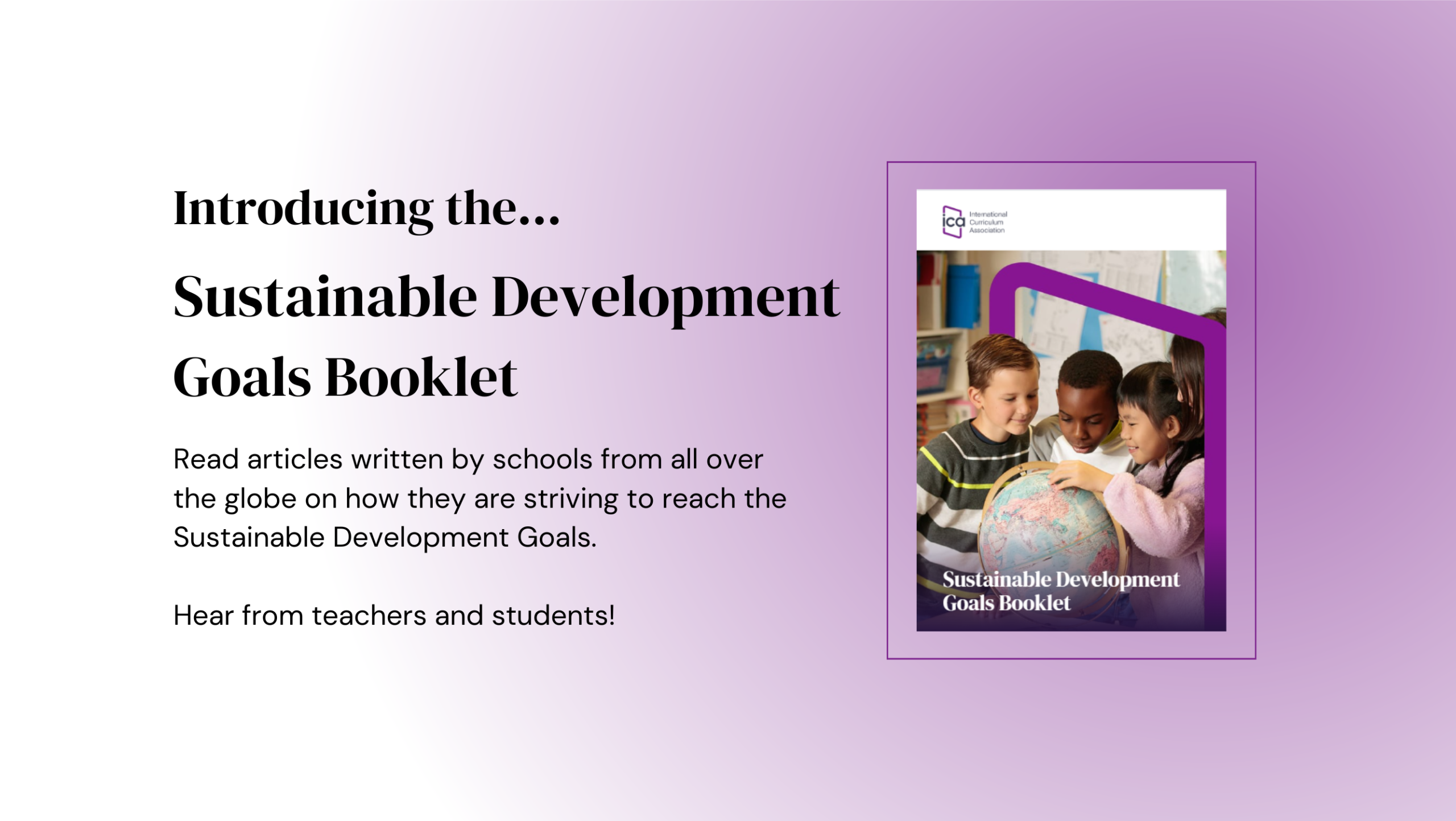
Introducing the Sustainable Development Goals Booklet

Are you looking for a comprehensive resource to learn about the Sustainable Development Goals? Look no further than the Sustainable Development Goals Booklet by the International Curriculum Association!

This flipbook, available on Issuu, is a must-read for anyone interested in understanding and striving for the Sustainable Development Goals. But what sets this booklet apart from other resources on the SDGs? Firstly, it is beautifully designed and presented in a flipbook format, making it engaging and easy to navigate. Each page is filled with vibrant images and concise explanations of the SDGs, making it suitable for a wide range of readers – from students to professionals.

The booklet includes real-life examples and success stories of individuals and organisations working towards the SDGs, inspiring readers to take action and make a difference in their communities. Delving into the interconnectedness of the SDGs and how they work together to achieve a sustainable future for all. This holistic approach is crucial in understanding the complexity of sustainable development and how we can all contribute to its attainment.

Whether you are new to sustainable development or a seasoned advocate, this booklet is a valuable resource that will deepen your understanding and spark your passion for a more sustainable world. So, why not take a few minutes to flip through the Sustainable Development Goals Booklet and be inspired to join the global movement toward a better future for all.

View the Sustainable Development Goals Booklet

Enquire about the International Curriculum Association

Enquire now

Find out more about ICA products and services!