This session will explore how international learning can permeate all aspects of the curriculum. I will explain the importance of international learning and the impact of all children seeing themselves in the curriculum. We will discuss expanding beyond international mindedness to global competence which should lead to taking action. The SDGs provide a context for further exploration of international learning. I will also explain the strategy of home, host, heritage and adopted countries to enhance the curriculum. The iceberg model will help us understand how we can go deeper with cultural exploration and learning.
If you are a FOBISIA Member School please registerhere.
This October we are at two events! Jacqueline Harmer, Head of the International Primary Curriculum (IPC) is presenting at both. Please see the details for both events below. If you would like to arrange an appointment to have a chat with Jaqueline at GESS Dubai, please email to make a request via our contact page here.
2023 Research Conversations Conference
Saturday 28th October | 8.30am – 12.30pm (AEST) | Virtual
Jacqueline will be sharing two approaches to action research to help teachers get started.
Keeping your teachers and students engaged right up until the end of the school year is often a consideration for many school leaders. What can you do to ensure that the whole school is working in harmony together to improve learning?
Judy Dawson from Greengate’s school in Mexico shares her solution and the process of Accreditation for them.
Entry Point:
At the beginning of the school year, in August, our curriculum coordinator announced that in June we would be considered for Accreditation. He shared a beautifully colour–coordinated Teaching and Learning policy in preparation, however, it still seemed such a long time away. There were students to settle, displays to mount, and Brainwave units to delve into.
Knowledge Harvest:
What followed was a series of staff meetings to gauge where we were as a staff. We reviewed our practices; the school’s vision and definitions for learning, international mindedness, and teachers’ understanding of the process to facilitate learning. After a long day of teaching, we were faced with a match the definitions activity where the answers were presented in a lightly veiled manner. “You just put most of this on your classroom walls last month,” he encouraged, sighing as someone spilled coffee over the carefully collated posters and another stuck a Post-it on their forehead. Still, with eight months to go, he was confident we could get there.
Explaining the theme:
And onto the action plan. In science, we would be consolidating planning, teaching, differentiation, and interventions. In English, we would be learning how to free up time by embedding the language goals into our unit lessons. In Geography, we would learn how to negotiate the best spaces around the school for the most effective entry and exit points and how to collaborate with our collogues. In Health and Wellbeing, we would, of course, carry out an investigation into which parents provided the best-themed snacks and when the laminator might be free.
Research and record:
The curriculum coordinator provided us with bite-size pieces of information during weekly staff meetings and working parties throughout the year. By this point all the students could recite the school’s vision, ‘CHILI: characterful, independent learners who are internationally minded’, but the teachers still struggled to name all eight Personal Learning Goals without a hint. We continued to be resilient but what we really needed was a nap!
We struggled with cohesive answers to questions such as, ‘How can we plan for and use a variety of classroom approaches? How do you know what your students are learning?’, even though we were sure we were doing it. We unpacked the assessment policy and revisited the latest research on progressive pedagogy. ‘How internationally minded are we?’ our school leader asked. ‘Does eating samosas at the international fair count?’ someone countered. ‘Yes, yes, but maybe we can go deeper,’ he suggested. The worry in his eyes was palpable. It was already February.
Reflect:
Reflection is a deep-seated part of our student journey. Children in the IEYC learn to think about their learning and successes. Students throughout the school reflect on classes using a traffic light system and exit tickets. Children’s reflections serve to make teaching better. If the exit point from a lesson on Darwin reads, “I learned about the theory of revolution,” there is a good chance something needs to be clarified. More and more we find that children are natural at metacognition, while adults find it much harder. During the final stages of preparation for accreditation, we had walk-throughs and a variety of adults observed our process. When a student asked how they reflect on their learning in class answers, “zero,” this is a win, not a loss. After all, we have been using Harvard’s Project Zero to encourage reflection and they are referring to the Thinking Routine used for that unit.
Exit Point:
The accreditors viewed the school virtually. It was strange to be observed from a computer. The work and enthusiasm sparkled. The children congregated around introducing themselves but then were quick to forget that the computer was there. The week whizzed by, and the students were used to seeing management carrying around a laptop with an accreditor staring out. Meetings were fulfilled and lists were completed, the curriculum coordinator breathed a sigh of relief. We, his ‘class’ of errant adults, managed to shine. In retrospect that is because while we were busy complaining and trying to dodge staff meetings, he was sharing best practices and embedding practice throughout the years to reach this point. It was an interesting and challenging school year. But the process never stops and although the report clearly recognizes the knowledge, skills, and understanding of learners, teachers, leaders, and the community this will also drive a new action plan with innovations and exciting directions. As an old foot soldier, this is what keeps me going, we never stop learning and we can always get better. Thank you to Anthony Crewdson for helping us through the accreditation process. After a summer of reflection, I will now be stepping into his big shoes and taking on the IPC curriculum lead at school. I look forward to seeing some of you at the IPC conference in October where I will be sharing our journey, and ways to embed the IPC in a whole school approach and offer practical tips.
Through conducting a thorough Accreditation self-review Greengates School was able to gain a deeper understanding of their own implementation of the International Primary Curriculum, unique to their school’s context, that will guide the process for continuous improvement.
Accredited schools are invited to participate in International Curriculum Steering Groups and Advisory Boards to help steer the direction of the International Curriculum, ensuring the International Curriculum continues to be for schools, by schools for the future.
Learn more about the International Primary Curriculum
The Head of the IPC will be presenting at the research Conversations Conference. As a research-influenced curriculum, the ICA are excited to be engaging with professional conversations worldwide. The International Curriculum Association encourages educators to connect with current research and to undertake their own research into what works for them, in their context. Jacqueline will be sharing two approaches to action research to help teachers get started.
I am looking forward to this opportunity to talk about teachers researching in schools.
The St Andrew’s Cathedral School’s Research Conversations Conference aims to provide high-quality, teacher-driven professional development that makes connections between educational research and teaching and learning.
Nestled in Brazil’s diverse and vibrant landscape, we are lucky at The British School of Rio de Janeiro, to have such an engaging stage in which to deliver our International Primary Curriculum (IPC). As the Upper Primary Coordinator, I have observed the IPC to serve as a versatile framework that not only encourages active learning but also nurtures reflective learners. This aligns well with modern pedagogical practices, as I discuss in my blog, Technology for Learners—a platform I originally created to continually refine my teaching practice while staying current with curriculum and pedagogical changes. In this article, therefore, I wish to share how our school’s pedagogy has been positively influenced by the IPC.
Guiding Students Towards Reflective Learning with the IPC
One of the aspects I most appreciate about the IPC framework is that it places a strong emphasis on guiding students to become reflective learners. Through the structured approach of the IPC Learning Process and its emphasis on Learning Goals, we have developed more of a culture of self-reflection among both our teachers and students.
In fact, we kickstart the academic year by teaching the Brainwave unit to all year groups, which helps children across the school to reflect more about how they learn and what things they can do to improve their learning. Having this unit at the beginning of the academic year creates a foundational understanding of how learning happens. Brainwave demystifies the learning process for students, inviting them to think about how they acquire new knowledge and what strategies can make this acquisition more effective. (Incidentally, for those who may find the extra resources useful, I have collated our Brainwave planning and resources for MP3 here, which is freely accessible via a dedicated Google Drive folder.)
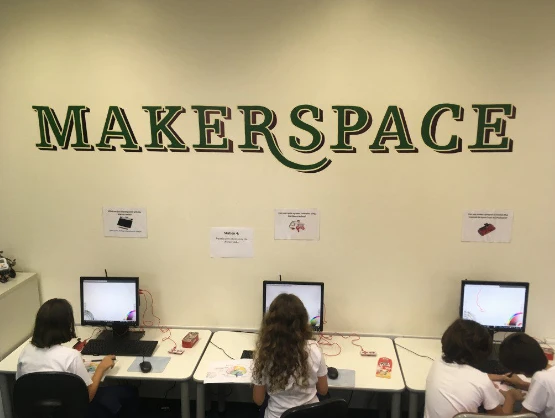
Students immersed in STEAM activities during their Brainwave unit, sparking curiosity and laying the foundation for lifelong learning.
Across all of the units, through “Looking for Learning” questions, for example, we also regularly challenge our students to delve deeper into the ‘why’ and ‘how’ of their learning experiences. We use questions like “Why are you learning this?” or “How will you know if you have been successful in this learning?” to assess students’ knowledge and understanding while helping to ignite their own curiosity. This is not merely an academic exercise; it’s an important life skill that prepares students for an increasingly complex world.
Using Bloom’s Taxonomy
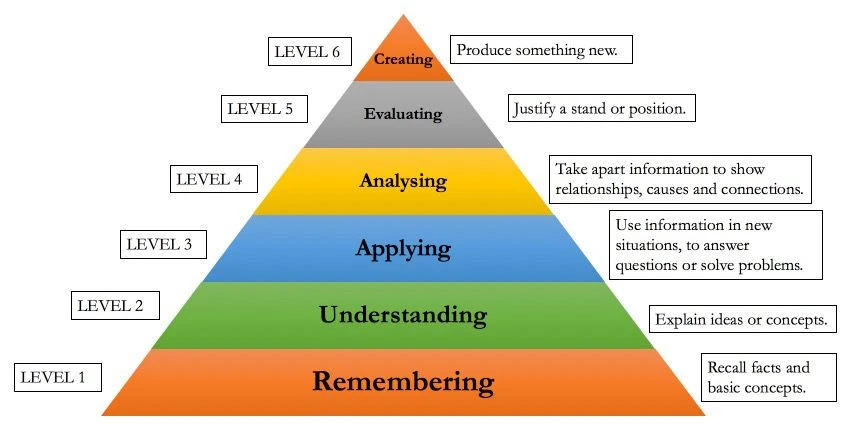
In particular, the IPC has led us to look more closely at Bloom’s Taxonomy, a framework that categorises cognitive skills into six different levels, starting with basic recall (Remembering) and moving up to complex tasks like evaluation (Evaluating) and creation (Creating). In educational settings, it serves as a guideline for teachers to structure lessons that gradually engage students in higher levels of cognitive thinking.
The IPC’s focus on reflective learning inherently asks students to engage in the higher levels of Bloom’s hierarchy. When students are prompted to reflect on why a particular lesson is significant or how it builds on their previous knowledge, they are participating in analysis and evaluation—two of the higher cognitive skills on Bloom’s ladder.
The reflection demanded by IPC exercises links with Bloom’s categories of ‘Analysing,’ ‘Evaluating,’ and even ‘Creating.’ Students are not just rote-learning facts during their IPC lessons; they are actively synthesising information, critiquing their own understanding, and even generating new ideas based on their reflections.
Experiential Learning: The Climate Control Unit
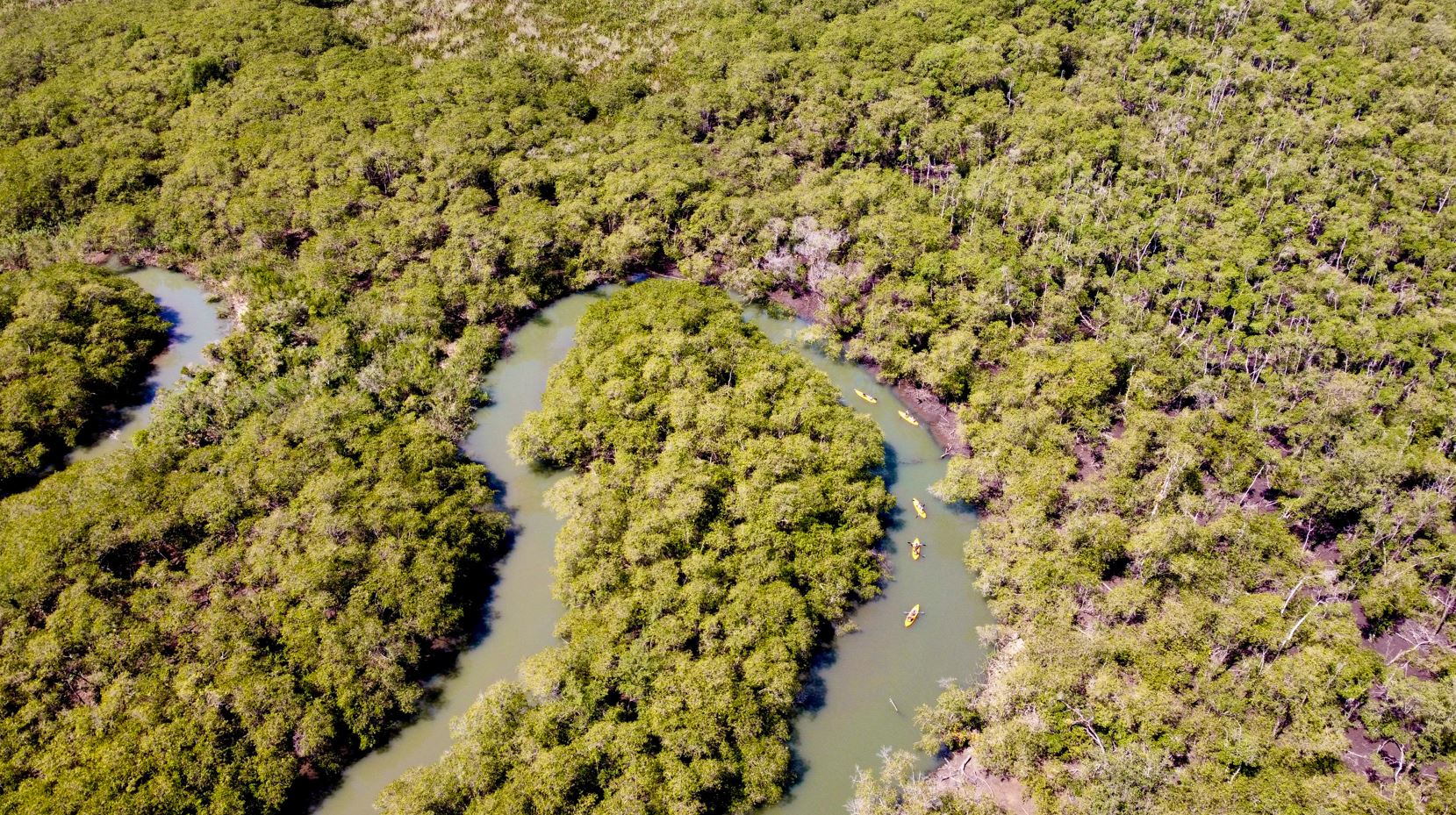
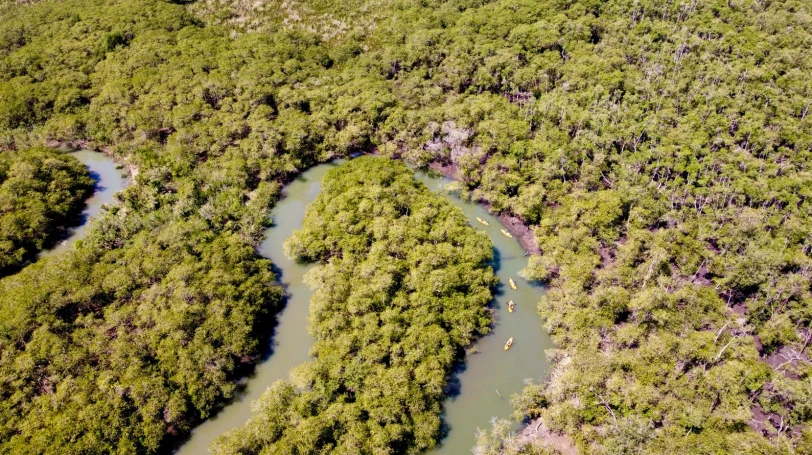
As just one example, during the Climate Control unit, our Class 4 students participate in a trip to Paraty, a historic town, situated along the lush green coast of Rio de Janeiro, which serves as an ideal location for hands-on learning experiences. One of the highlights of this trip is for students to go hiking and kayaking in the ecosystem of Saco do Mamanguá. With its mangroves, diverse marine life, and tropical forests, this area serves as a wonderful Entry Point for the Climate Control unit while facilitating students’ learning of how climate factors can influence local ecosystems.
Drone-captured aerial view of our students kayaking in Saco do Mamanguá.
Throughout the trip, students are asked various questions to stimulate their thinking like, “How do you think the climate affects the ecosystem of Saco do Mamanguá?” or “Can you identify human impacts on this delicate environment?” Following the IPC framework, these reflection questions serve as learning catalysts that prompt students to engage in higher-order cognitive skills. The question about climate’s effects on the ecosystem, for instance, encourages analysis, nudging the students to connect the dots between their observations and their academic knowledge. When they consider human impacts, they are performing an evaluation, one of the higher levels of cognition in Bloom’s Taxonomy.
Trips like this, and, in fact, all hands-on learning activities that we facilitate at school, provide much more dynamic lessons where the IPC’s emphasis on reflection and Bloom’s levels of cognition intersect. The IPC enables students to not just be observers but also active analysts and evaluators, tasked with synthesising real-world observations with academic understanding.
Conclusion and Further Reading
My observations strongly reaffirm that the IPC is more than just a curriculum; it is an educational philosophy that aligns with the complex, interconnected realities of our world. By capitalising on questioning techniques and experiential learning, the IPC paves a road for students that is brimming with opportunities for introspection and real-world application. For those interested in delving deeper into modern teaching methodologies and how they align with the IPC, I invite you to explore the Education section of my blog, Technology for Learners. Here you will find plenty of resources to further refine your teaching practice.
Learn more about the International Primary Curriculum
Is there anything we can do to create a sustainable society?
The question is often asked by teachers in class and outside of class. A pupil in the fourth grade at the time suggested
“How about supporting those in need by selling the vegetables we grow and donating?”
We were surprised by the sudden proposal.
How could our school make the student’s idea into something tangible?
Our school has a field on the school site, and the younger pupils help with planting seedlings and harvesting the crops as part of their classes. The school also uses the field for food education by cooking and eating freshly harvested vegetables immediately after harvest. The field activities are already being used for education, but we thought that starting a ’sales project’ for the upper grades would allow us to reevaluate the educational value of school facilities and focus on international goals.
First, we considered whether the project was sustainable in our school. We considered the goals again and the process of the sales project. It captured the 5W (who, what, when, where and why) and 1H (How). By organizing and capturing the process below, we were able to clarify what could be done and also found issues.
Harvest
Packing
Selling at shop
Who
Field Staff
Which grades?
Request a driver
Which grades?
What
Seasonal vegetable
Choose good looking vegetables
If cannot all sell
When
Negotiate with field staff and management
Be packed immediately after harvest
Morning is better
because many customers come
Where
Field
Outside near water tap
Nearby direct sales store
Why
To make money for donation
How to pack?
What we need?
Talk to customers and sell
How
Ask field staff
Wash and clean
How to decide the selling price
Next, we needed to discuss what to do with the money from the sales. It took some time to discuss the various proposals, which included donating the entire amount to UNICEF, the idea that a portion of the proceeds should be used for expenses incurred, and the idea that the proceeds should be returned to our own labor as well. Ultimately, it was decided that 60% of the proceeds would be donated to UNICEF.
After these preparatory periods, we found out the educational value of the program and decided to continue it. The upper grades were to engage in a sales project once a week. A few months ago, a donation ceremony was held and a UNICEF workshop was held. The project turned out to involve a lot of learning related to subjects and cross-curricular learning. These include how production and sales work, the flow of money, and in math, how to calculate percentages. The students were able to think and act on what they could do as a team through communication, and they were also able to think and act on what they could do, to help people in need.
Global competency is a difficult concept for students, but we believe that they will be able to understand it by thinking about what they can do and continuing to work on it.
For over thirty years we have been working with schools with the aim of improving learning. With a rich history of collaboration and school support, looking to the future, it gives me great pleasure to introduce Sarah Blackmore as the Director of the International Curriculum Association (ICA).
Our journey began with the belief that learning and teaching in schools is best when it is learner-focused, positioning how and what is learnt in schools around the learner and best measured by what improvements in learning we can identify and influence. As an organisation, we have evolved over the past decades; initially established as a consultancy supporting schools, we launched the first International Curriculum, the International Primary Curriculum (IPC) in 2000, followed by the International Middle Years Curriculum (IMYC) in 2011, and International Early Years Curriculum (IEYC) in 2016, now learnt and taught in over 1,000 schools and over 90 countries.
Our focus on improving learning led to the creation of the International Leadership and Management Programme (ILMP) in 2005, Accreditation process in 2011, and a comprehensive range of Professional Development. We now work with over 15,000 teachers and leaders around the world, with the shared focus on the learner and their learning.
In 2021, together with schools we launched the International Curriculum Association (ICA) as the identity to focus on improving learning across the International Curriculum, with Professional Development, Recognition and Accreditation, and the International Curriculum Conference.
We have achieved so much already, following the launch of the ICA. We completed the award-winning review of the IEYC, IPC, and IMYC, with over 100 teachers around the world to ensure the International Curriculum, continues to be a contemporary, internationally researched, and improving-learning-focused resource for schools, developed for teachers, by teachers. We established the Recognition and Accreditation process, part of the ICA, working with schools through the journey of preparation, planning, implementation, and continuous school improvement with the International Curriculum. We developed and launched a Professional Development pathway, now available digitally, face-to-face and in hybrid versions, for teachers and leaders across the IEYC, IPC, and IMYC, in addition to those working with other curriculum options.
As the interim and founding director, it gives me great pleasure to introduce Sarah as the first Director of the International Curriculum Association, recognising her significant contribution to the community over the past 8 years, in the roles of Head of the ICA, and Head of International Outreach and Development. The past 5 years have been an absolute pleasure for myself, working with and for you as an inspirational community. We look forward to Sarah’s leadership in supporting you, your learners, teachers, and leaders in driving our focus on improving learning forward, together.
Gregory Biggs
Former Director of Fieldwork Education
“I am both honoured and humbled to have been entrusted with leading this community that has been created and shaped by so many insightful and talented people – all committed to the common goal of improving learning.
The commitment and support of the ICA learning community continuously pushes us to pursue our goal: to promote best practices in the implementation of the highest quality international curriculum. This year we have re-branded from Fieldwork Education to the International Curriculum Association, pursuing our vision of an active, well-connected learning community focused on championing quality, improving learning and unlocking potential.
Thank you for the kind words of congratulations and support from so many of you and for the active part that you continue to play in our community. Thank you too to my colleagues in the ICA team who tirelessly bring skills, ideas and commitment to ensure our continuous improvement as a learning organisation.
I hope to see you at our International Curriculum Conference 2023 later this year in Vietnam, to hear your thoughts and feedback through our curriculum surveys and to welcome your participation in our regional professional development events.
I am looking forward to working together with you all to unlock the potential of our association; to collaborating with you to strengthen our community; and to driving forward our common purpose.”
Sarah Blackmore – Director of the International Curriculum Association
At the centre of any sustainable school culture is a clear vision and mission that values environmental stewardship. Schools must embrace a vision that integrates ecological principles into all aspects of their education and school ecosystem. This vision should go beyond the superficial, aiming to instil in students a deep understanding of the interconnectedness between human actions and the environment.
Panyaden International School in Chang Mai, Thailand has sustainability at its heart, from the rainwater collection system to the bamboo buildings designed to have a low carbon footprint. Sustainable schools set ambitious goals to become carbon-neutral or even carbon-negative. They establish greenhouse gas reduction targets, implement energy-efficient practices, and explore renewable energy options. Additionally, they promote sustainable transportation by encouraging students to walk, cycle, or carpool to school.
By involving students in these initiatives, the IPC and Climate Action Schools empower them to be part of the solution and foster a sense of environmental responsibility. Panyaden’s initiatives include a vast recycling program, a rainwater collection system, a rice-field lifecycle system and eco-friendly buildings. From an operational perspective, by implementing effective waste reduction systems and prioritizing recycling and composting schools can significantly reduce the amount of waste sent to landfills. This not only benefits the environment but also sets an example for students to follow in their personal lives. Students at Panyaden are involved in composting and gardening, meatless meal days and food waste reduction programs.
Growing and greening a sustainable school culture is a multifaceted endeavour that involves embracing a mission of environmental stewardship, aligning financial and policy decisions with ecological principles, and actively participating in the sustainable development goals as well as in climate action education such as in the Climate Action Schools program. Sustainability is at the forefront of Panyaden’s organisation, but also their educational vision.
“By offering a Genuine Values-based Education for a Sustainable Planet, our vision is to see that our children excel academically, enrich their physical, social, emotional and intellectual well-being and develop a caring and compassionate understanding of the environment, to benefit themselves, the people they meet and the planet.” (https://www.panyaden.ac.th/academic-programme)
As a new partner of the ICA, the emergence of the Climate Action Schools (CAS) program (by Take Action Global) has become a significant driving force in growing and greening sustainable school cultures. In 2022 CAS completed their first school year with 100 member schools in their first cohort chosen from around the world. The outcomes have been hugely impactful for the students, teachers and school community. The program is led by a designated and trained school Climate Champion and provides professional development certification to train all teachers in learning about climate action education. Climate Action Schools encourage community engagement and collaboration. Schools forge partnerships with local organizations, governments, and businesses to create a network of support for sustainability initiatives. This community involvement allows schools to access additional resources and expertise, amplifying the impact of their efforts.
In October 2022, Panyaden began its journey with Climate Action Schools. Through the CAS audit, the primary students identified that bamboo is their signature species and IMYC students began composting projects. Becoming part of the CAS community helped to provide some focus and guidance to teachers and students regarding sustainability. In the primary, the CAS initiative was highlighted and presented in several staff meetings. The CAS framework allowed the community to recognize the strengths and areas for growth providing a common goal including a focus for learning.
Students also learn to understand their environment through field trips, service-learning projects, and being part of the community. In addition to curriculum integration, schools can establish environmental clubs or student-led initiatives that engage students directly in sustainability efforts. These groups can organize tree planting drives, waste reduction campaigns, or even establish school gardens to promote the connection between food and the environment. Such activities foster a sense of ownership and responsibility, empowering students to actively contribute to a greener school environment. Examples include:
Service Learning and Climate Action School projects
Composting
Planting trees and gardening
Repurposing clothing
Animal welfare
IPC/IMYC Field trips/projects
Year 1 Organic farm and composting
Year 4 visit to hydroelectric plant, sustainable bamboo city design
Year 5 Making brooms from recycled bottles
Year 6 visit to solar energy centre, solar panel, and rainwater pond cleaning
Year 7 organic farm and composting
Year 10 animal welfare and habitat restoration
By integrating sustainability into the curriculum, empowering students to take action, and pursuing environmentally friendly practices, schools can play a vital role in nurturing a sustainable future. Through these collective efforts, we can foster a generation of environmentally conscious individuals who will, as Panyaden International School’s vision exemplifies, “develop a caring and compassionate understanding of the environment that will benefit themselves, the people they meet and the planet.”

 Español
 Nederlands
 Chinese Mandarin