Español
 Nederlands
 Chinese Mandarin

By Parmeet Kaur Jindal, Nehru World School
Building Connections Through Community Engagement
At our school, we believe that meaningful learning happens when young children feel connected to their teachers, their families, and the world around them. Through the International Early Years Curriculum framework, I have strived to make community engagement not an add-on to learning, but the very foundation of it.
In my classroom, children learn through shared experiences where families and community members play an active role. Storytelling sessions led by parents, field visits, and interactions with local helpers make learning joyful, relevant, and rooted in real life.
Weather Wonders: Learning from Everyday Moments
The IEYC unit “Weather Wonders” beautifully captured the essence of experiential learning. The unit aligned naturally with the seasonal changes around us—sunny, rainy, and stormy days—offering children firsthand experiences with weather.
Families became partners in this journey through simple weather observation prompts sent home. Parents shared photos on Tapestry, the online learning journal. These exchanges transformed everyday scenes into meaningful, personalised learning moments while also giving me rich insights into each child’s understanding.
To extend the experience, I invited a weather forecaster to the classroom. Children were captivated as he demonstrated forecasting tools and explained how to read weather maps. They began to use vocabulary like “stormy,” “cloudy,” and “sunny” in their imaginative play.
The unit concluded with a puppet show by older primary students for the Nursery class, followed by a simple weather story told through handmade puppets. The younger children’s excitement and eagerness to create their own puppets highlighted the beauty of peer learning and community connections across age groups.
Voices of the Community
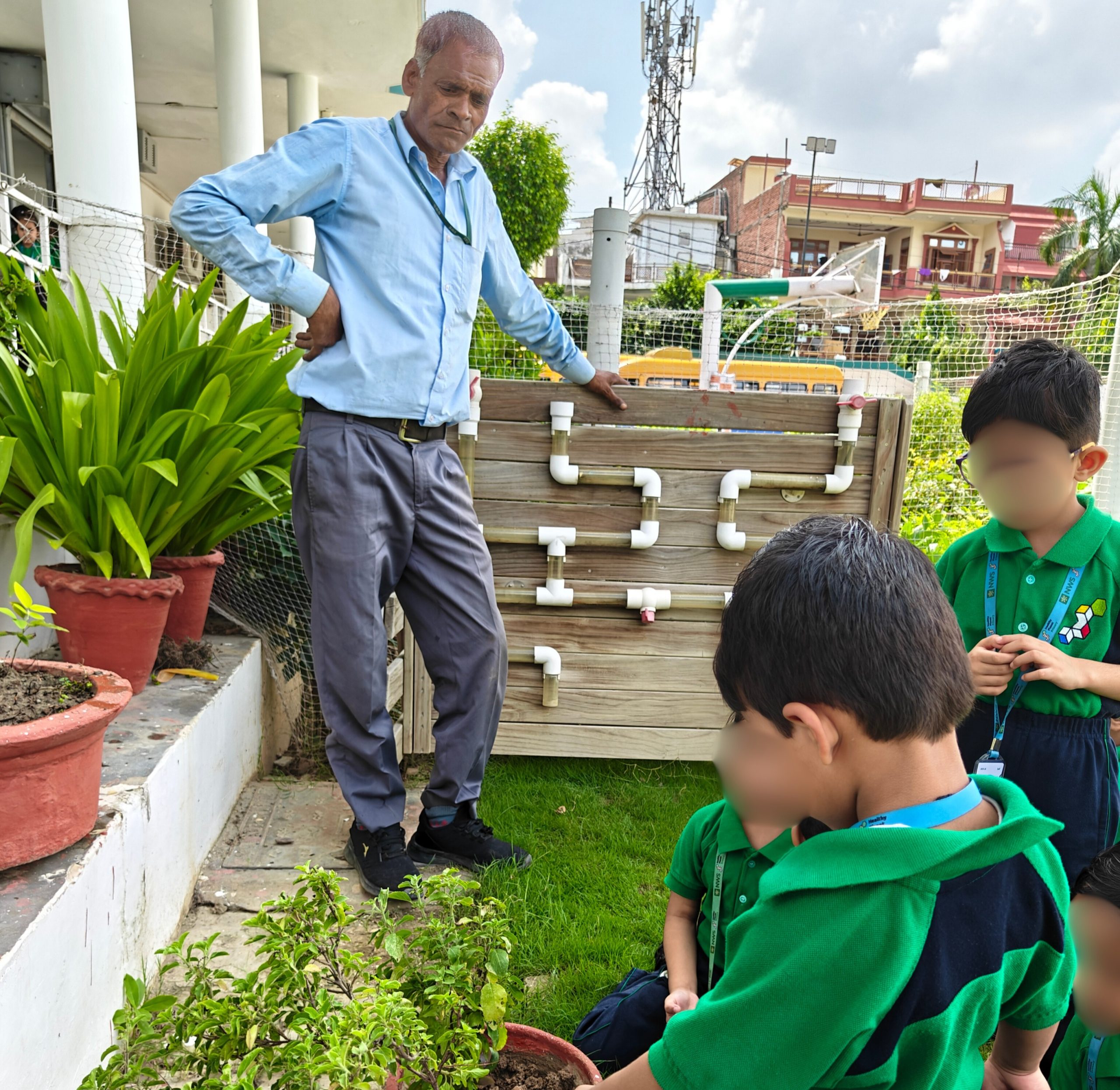
To help children understand real-world roles, I invited our school gardener, nurse, and bus driver to share their experiences. Children explored tools, tried on uniforms, and interacted with them in ways that made learning both tangible and meaningful.
In one instance, when a child pointed to a stethoscope and said, “Aunty! It is a stethos,” another child described the nurse’s stethoscope as “Doctor sunita ki heart ki awaaz,” meaning “the doctor listens to the heart’s sound.” These spontaneous interactions showed how naturally children bridge language, identity, and understanding when learning feels real.
Going Places: Learning in Motion
In the “Going Places” unit, our focus on transportation and travel experiences came alive through experiential exploration. The school bus driver explained different vehicle parts, encouraging children to ask questions such as: “Why do cars have mirrors?” and “What happens if we press the brakes?”
The class also visited the National Bal Bhavan in New Delhi, a creative hub for children’s imagination, play, and self-expression. A traffic policeman taught them about road safety and traffic signals. The unit culminated in a family trip to the Rapid Rail station, where children explored ticket counters, vending machines, and train operations with curiosity and joy. Each stop became an opportunity to connect observation with understanding.
A Classroom Rooted in Connection
Through these experiences, I have witnessed how powerful learning becomes when school, family, and community unite. Children do not just learn about their world; they learn from it. Every conversation, story, and shared moment helps them build confidence, curiosity, and compassion.
Community engagement, I believe, is where learning truly comes to life.
This article was taken from the latest issue of icaVoice, our seasonal magazine newsletter sharing best practices from ICA Subscribed Schools around the world. Want to read more stories like this? Become an ICA Subscriber School to access the full edition.
Author