Search List show here

Back to news

7 March 2024

Upcoming Regional Events

Regional Events offer a unique opportunity for both training and networking, delivering a range of our training courses with the added benefit of meeting peer educators in the region. We are delighted to share our 2 upcoming regional events.

Regional Event – India 2024

Friday 26 – Saturday 27 April 2024

With an optional Learning Walk opportunity on Thursday 25 April.

The event, kindly hosted by Healthy Planet TGA Early Years School, Wish Town Noida, will take place on Friday 26 – Saturday 27 April 2024.

Schedule:

Thursday 25 April (PM) – Optional session to include a Learning Walk of Nehru World School, Ghaziabad for both subscribers and non-subscriber schools.

An opportunity to see the IEYC in action, and hear about the school’s journey implementing the curriculum.

Friday 26 April (all day) – Registration and Welcome Session before heading into your chosen IEYC course. Choose from Implementing the IEYC (Level 1) or Embedding the IEYC (Level 2).

Saturday 27 April (all day) – International Curriculum professional development courses continue

Regional Event – Hong Kong 2024

Friday 14 – Saturday 15 June 2024

The event, kindly hosted by French International School, Hong Kong will take place from Friday 14 June – Saturday 15 June 2024.

Schedule:

Friday 14 June (from 3pm) – Registration and Welcome Session before heading into your chosen Curriculum course.

Saturday 15 June (all day) – International Curriculum professional development courses continue

Back to news

7 March 2024

Enhancing Mindset, Improving Learning: The impactful journey with ICA

We are so grateful to receive the news that our school, Sekolah Cita Buana, was presented with the Recognition Award from the International Curriculum Association (ICA). It was an accomplishment for the whole school community:  the academic team, parents, students, staff, and the school management team who took part from day one when we decided to have the implemented International Early Years Curriculum (IEYC) reviewed by the ICA through its recognition process.

Reviewing the curriculum implementation that has been the heart of the school’s learning process for more than five years and the commitment to provide quality education for the community were two of the management’s genuine intentions to have the ICA recognition process. Those goals were crucial, especially since the school had just experienced a significant impact from the pandemic that struck the country hard. The uncertainty and chaotic situations made the school often change its learning policy. Internally, our school also lost several faculty members; five people died of COVID-19, some were in isolation, and many needed logistic supplies. The anxiety rose when many schools in the region closed down because of some unfortunate conditions.

When many schools in Jakarta were at such a loss, having IEYC as our learning guidance was more than a blessing to us in that time full of challenges. The IEYC Learning Foundations and Coverage align with our school’s unique educational service and culture, with its inclusivity, where children of different abilities and needs are valued. The Personal Learning Dimensions were indeed a lifesaver. Children’s resilience and adaptability were put into solid practice from 2020 to 2023. The teachers conducted different scenarios of learning and explorations, ensuring the learning provided meaningful experiences for the children online or blended and onsite with some restrictions. The definition of learning had naturally transformed into physical and mental well-being for all.

Sekolah Cita Buana in Jakarta is a joint-cooperative school that also implements the National Curriculum (Kurikulum Merdeka), not merely to fulfill the government regulation but also since its establishment in 1995, the spirit of nationalism is explicitly stated in the school’s vision, mission, and educational goals. The International Goals of the IEYC equip the children in our school to develop their curious mind and sense of curiosity about the world and its people. Children are also allowed to explore global perspectives, and when ready, they can take action and make a difference. We believe that this combination is what made our school keep its existence.

Some consolidations are needed to recover the learning and patch the development gaps among the children. The ICA Recognition Process has helped to measure the effectiveness of the curriculum implementation in our school. We felt guided and encouraged to continue confirming the understanding of the curriculum implementation and improving the learning for our young learners. The mentoring sessions provided clarity about the required evidence. As our school also met the standard of Indonesia’s MoE, we almost did not find major difficulties in the journey of the ICA Recognition Process. The required documents did support the requirements set by ICA. The only challenge was our internal time management, and we appreciate the patience and commitment of the mentor and accessor from the ICA, which kept us going to achieve our goal.

With the ICA Recognition Award we received, we are more confident in the continued improvement and curriculum implementation. Also, with the quality assurance by the ICA, Sekolah Cita Buana can provide the most valid document required by the government for national accreditation and school permits. But, again, above all, providing quality education that gives true impact to the learners and an enhanced mindset to the school community are the main intentions of the journey we took with ICA.

Recognition and Accreditation

Sign up to receive the icaVoice newsletter on our home page!

Back to news

29 February 2024

Embracing Multilingualism: Self-Discovery Through Poetry

“Our sense of self, and that of others, is continually developing through our different interactions and impacts on how we exist in the world.”

This is the big idea of the International Middle Years Curriculum’s Identity unit. In this unit, students delve into the complexities of identity through the lens of poetry, and an important aspect of it is multilingualism. At United Lisbon International School, a school with over 60 different nationalities, the topic of identity gains even more relevance as cherishing students’ backgrounds becomes key in fostering students’ engagement and interest.

Through the exploration of poems by diverse authors such as Tom Leonard, Moniza Alvi, Grace Nicols and George Ella Lyon, students went on a journey of self-discovery. They learned to see themselves and others through different perspectives, understanding that identity is not static but continually evolving. They reflected on their own identities, considering how their interactions with others shape who they are and how they exist in the world.

One of the most impactful aspects of this unit is the inclusion of bilingual poems. These poems allowed students to explore the unique characteristics of different languages and how they reflect their cultural identity. Why did the authors choose to mix two languages in their poems? What kind of impact did it have on the reader? Why did Tom Leonard write phonetically in a Glaswegian dialect? By considering these questions, students were able to recognize the value of multilingualism and how it can contribute to a richer, more diverse and equitable society.

The culmination of this unit is a video poem created by the students. In this project, students brought together their learning about poetic features, their spoken English, their video-making skills and their awareness of the importance of their mother tongue and cultural background. The video poem is a testament to the student’s growth and understanding, showcasing their ability to express themselves creatively and reflect on their own identities.

Two examples of video poems created by students are shared below:

Click to view Video 1

Click to view Video 2

These video poems are not only a celebration of the students’ creativity but also a reflection of the success of implementing the IMYC curriculum in a multilingual environment. By embracing the complexities of language and identity, students can develop a deeper understanding of themselves and the world around them.

In a nutshell, the Identity unit is a powerful example of how the IMYC curriculum can foster self-discovery and appreciation for diversity. After this unit, nothing was ever the same in my classroom. The unit we did right after this one, Entrepreneurship, was enriched with examples of Ads in many different languages. Students enjoyed explaining different taglines and even attempted to explain expressions and puns in their mother tongue.

As Ofelia Garcia, in her book about Bilingual Education called “Bilingual Education in the 21st Century. A Global Perspective”, wrote: “Bilingual Education in the twenty-first Century must be reimagined and expanded, as it takes its rightful place as a meaningful way to educate all children and language learners in the world today.” Let’s keep cherishing students’ backgrounds and mother tongues!

Read more about our curriculum in bilingual contexts.

Learn more about how to implement the IPC effectively at your school from the very start and how to tailor it to your unique context.

Back to news

28 February 2024

Virtual Drop-In Sessions

Dive into the Curriculum with our Free Virtual Drop-in Sessions (for subscribers only!)

To help you explore and discover the magic of the International Curriculum, we’re pleased to announce a series of FREE virtual drop-in sessions covering all three International Curriculums:

What to expect
  • Interactive sessions: Ask questions, share experiences, and connect with other ICA educators from around the world.
  • Curriculum insights: Gain valuable knowledge from the heads of each curriculum who will guide you through topics you would like to learn more about. If you would like to find out about a specific topic or area of the curriculum, please submit your questions in advance here.
  • Global timing options: Join live sessions at a convenient time for you.
Who should attend
  • ICA Subscribers looking for ideas and teaching strategies that work for others.
  • School leaders interested in learning more about how other schools implement the curriculum.
  • ICA Subscribers who are passionate about sharing what they know about improving learning.
Ready to join the virtual drop-in sessions? Here’s how:
  1. Click one of the links below. These links will take you through to our Professional Development Hub which is a platform to access a range of free and paid courses to support your implementation of the IEYC. If you haven’t already, you will need to sign up. Don’t worry it’s completely free to register.
  2. Once you have filled out your details, a member of our team will approve your registration. Make sure to sign up ahead of the start time of the drop-in session you want to attend!
  3. You will then receive a confirmation email.
  4. If you belong to a subscriber school, you will find access to the Drop-in Sessions on your ‘HOME’ page, which you can access after logging in to the PD Hub.
  5. You can look for the Drop-in Session in the ‘More Courses to Choose From’ search bar, by selecting keywords ‘IEYC’ or ‘Free’, or by clicking the link in the ‘Upcoming Events’ image carousel at the bottom of the page.
Click on the links below to register for the sessions that interest you:
Session Dates and Times

IEYC Drop-in Sessions:

  • Tuesday March 26, 10:00am and 16:00pm UK
  • Tuesday April 25, 10:00am and 16:00pm UK
  • Tuesday May 28, 10:00am and 16:00pm UK
  • Tuesday June 27, 10:00am and 16:00pm UK

IPC Drop-in Sessions:

  • Thursday March 13, 9:00am and 16:30pm UK
  • Thursday May 9, 9:00am and 16:30pm UK

IMYC Drop-in Sessions:

  • Wednesday March 6, 9:00am and 18:00pm UK
  • Wednesday April 10, 9:00am and 18:00pm UK
  • Wednesday May 5, 9:00am and 18:00pm UK
  • Wednesday June 5, 9:00am and 18:00pm UK

Don’t miss this opportunity to connect with a global community of educators!

Back to news

29 January 2024

Fostering Resilient Learners: Embracing a Growth Mindset in the IPC

Fostering resilience in learners is vital to students’ holistic development and future success. In recent years, we have witnessed a substantial decrease in children’s ability to overcome setbacks and hurdles, both academically and socially. This can be attributed to the dynamic nature of the 21st century. Dependence on technology has increased; decreasing the amount of time spent creating and maintaining social connections. Parents have become more protective; allowing less time for unstructured play, thus limiting the opportunities to learn from experiences and failures. Most importantly falling under the pressures of modern society to unrealistically succeed across all disciplines, stigmatizing failure rather than learning from it (Weir, 2017).

Children learn how to become resilient from observing their environments. Since children spend most of their days at school, it is only logical to assume that a school environment that promotes resilience will positively affect their development of the skill. Schools play a significant role in advancing resilience in children by providing supportive environments, implementing interventions to develop essential skills, and providing training to handle adversities. (Cesarone, 1999) During the planning phase at Eternity International School, when deciding on a curricular framework to adopt, we were adamant about employing a framework that would allow us to create such an environment for our students. After thorough research, we decided to use The International Primary Curriculum (IPC) as it places significant emphasis on fostering resilience in learners as an integral aspect of its educational philosophy. Founded on a holistic approach to education, the IPC prioritises the development of the child as a whole rather than merely focusing on academic achievements. From the IPC perspective, resilience is viewed as a crucial life skill that empowers students to navigate a rapidly changing world (International Curriculum Association, 2022).

Resilience, in the educational context, refers to the ability to bounce back from setbacks, navigate challenges, and develop coping mechanisms for stressors. Resilient learners are able to maintain a positive outlook when faced with academic, social, or personal challenges. Resilience also equips students with essential life skills such as problem-solving and emotional intelligence (Condly, 2006).

On paper, fostering resilience seems like a straightforward endeavor, however, how does one practically teach children such a crucial life skill is a question that is raised by many educators. Educators must first examine how students think and react to situations, understanding how their mindset works. When a student has a fixed mindset; the belief that one’s qualities, such as intelligence, for instance, cannot be developed, (Central Washington University, n.d.), they automatically limit their ability to learn new skills such as resilience. Accordingly, embracing a growth mindset in the IPC can significantly contribute to fostering resilient learners.

The concept of a growth mindset was popularised by American psychologist Carol S. Dweck who believes that an individual’s personal qualities are dynamic and can be developed through practice, training, and determination (Dweck, 2006). In today’s day and age, the opportunities for learning and growth are boundless. Embracing a Growth Mindset allows students to see challenges as opportunities for learning rather than obstacles. Great teachers believe that all their students can experience intellectual growth and thus strive to encourage them to question assumptions, make mistakes, and learn from them.

The interdisciplinary nature of the IPC, which integrates various subjects and real-life contexts, provides opportunities for students to face challenges and reservations through their learning experiences. This curriculum encourages learners to approach problems as opportunities for growth, promoting a growth mindset that aligns with the principles of resilience.

Some of the benefits of adopting a growth mindset at schools includes; enhanced learning experiences, students are encouraged to explore and examine without fearing being right or wrong. Another benefit is decreasing anxiety, students with a growth mindset tend to perform better in difficult tests, they no longer fear failure and see difficulties as opportunities to apply more effort or try new strategies, rather than a sign of their inability. Accordingly, they have increased motivation to discover and learn, further developing their skills and ability to cope with challenges. Most importantly, students with a growth mindset become resilient children who are able to overcome setbacks and are empowered to take charge of their own learning.

If children are taught how to adopt a growth mindset from early on, this thought process will become embedded in their brains, making it easier for them to adopt it as their permanent mindset. The challenge here lies in the ability to change one’s mindset. Shifting from a fixed mindset to a growth mindset proves to be particularly challenging for older students and teachers; requiring making a conscious decision to think and act differently.

Moreover, home-school collaboration is essential to ensure that students continue to have the same mindset outside the school boundaries. Accordingly, parental awareness and acceptance of the ideology behind having a growth set is imperative. Students who are berated by their parents for not meeting specific academic expectations or are scolded for their behaviour will most definitely have a shift in mindset.

By adopting and implementing a growth mindset through the IPC, we are raising resilient learners who will grow up to be adaptable, capable, creative adults. Adults who confidently tackle life’s challenges, demonstrate readiness to embrace change and approach life’s setbacks with a positive and determined mindset.

International Primary Curriculum

Reference list

Central Washington University (n.d.). CWU Learning Commons. [online] Available at: https://www.cwu.edu/academics/academic-resources/learningcommons/_documents/cwu-growth-vs-fixed-mindset-lc.pdf.

Cesarone, B. (1999). ERIC/EECE Report: Fostering the Resilience of Children. Childhood Education, [online] 75(3), pp.182–184. doi:https://doi.org/10.1080/00094056.1999.10522011.

Condly, S.J. (2006). Resilience in Children. Urban Education, 41(3), pp.211–236. doi:https://doi.org/10.1177/0042085906287902.

Dweck, C.S. (2006). Mindset: The new psychology of success. New York: Ballantine Books.

International Curriculum Association (2022). IPC Curriculum Guide. [online] Available at: https://internationalcurriculum.com/. Weir, K. (2017).

Maximizing Children’s Resilience. American Psychological Association. [online] Sep. Available at: https://www.apa.org/monitor/2017/09/cover -resilience

Back to news

24 January 2024

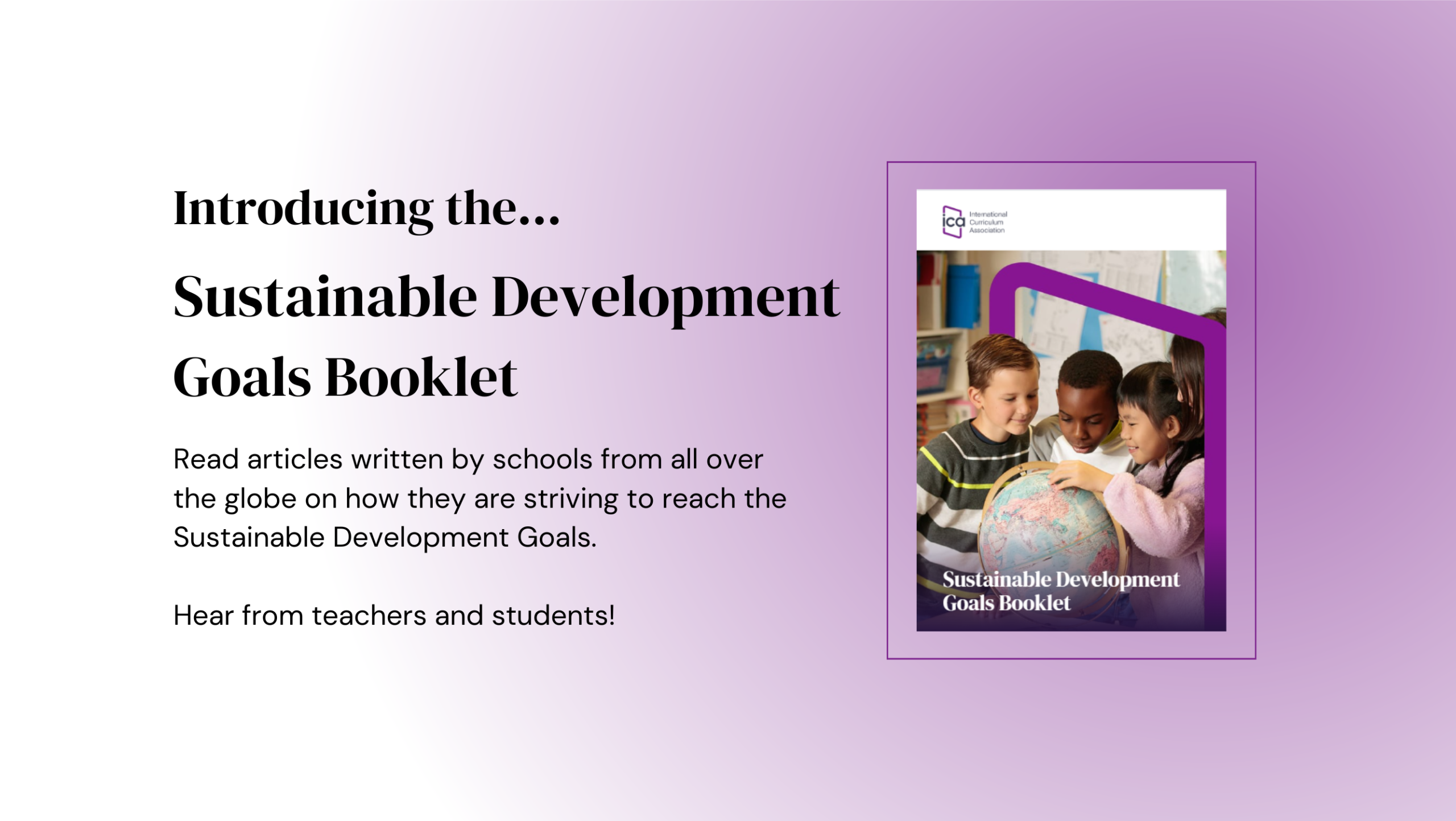
Introducing the Sustainable Development Goals Booklet

Are you looking for a comprehensive resource to learn about the Sustainable Development Goals? Look no further than the Sustainable Development Goals Booklet by the International Curriculum Association!

This flipbook, available on Issuu, is a must-read for anyone interested in understanding and striving for the Sustainable Development Goals. But what sets this booklet apart from other resources on the SDGs? Firstly, it is beautifully designed and presented in a flipbook format, making it engaging and easy to navigate. Each page is filled with vibrant images and concise explanations of the SDGs, making it suitable for a wide range of readers – from students to professionals.

The booklet includes real-life examples and success stories of individuals and organisations working towards the SDGs, inspiring readers to take action and make a difference in their communities. Delving into the interconnectedness of the SDGs and how they work together to achieve a sustainable future for all. This holistic approach is crucial in understanding the complexity of sustainable development and how we can all contribute to its attainment.

Whether you are new to sustainable development or a seasoned advocate, this booklet is a valuable resource that will deepen your understanding and spark your passion for a more sustainable world. So, why not take a few minutes to flip through the Sustainable Development Goals Booklet and be inspired to join the global movement toward a better future for all.

View the Sustainable Development Goals Booklet

Enquire about the International Curriculum Association

Back to news

23 January 2024

The COVID Pandemic: How Was it For You?

As a longstanding educator, I remain fascinated by the student voice.  ‘They’ say that should you want to know the truth, turn to a child.  It is all very well to delve into the ‘Big Picture,’ perusing carefully researched statistics of multiple authors in a Brookings report (March 3, 2022), or absorbing the interesting insights of Yong Zhao and Jim Watterston about the impact of COVID-19 on educational standards (Springer Link, February 2021).

But, are we really hearing the student voice?  The core of the educational project.  Post-COVID, how are they faring?  So, I attempted to do just that: I spoke directly with my students.  By chance, an eager group of Primary 5 girls had bounced into my office to ask me for my thoughts on a current IPC topic.  It was the perfect quid pro quo moment. 

To my surprise…

I took out a sheet and wrote the headings: Pro and Con.  Quite unlike the tone and content of COVID-related articles I have examined, I was genuinely surprised to find that, to a girl, they first launched into their positive memories of the lockdown, and Mexico’s had one of the longest.  They told me they “really enjoyed getting up-to-speed with new technology;” it was “surprising how good Zoom classes could be;” the “freedom to stay at home and still get an education” often took them unawares; plus, “being patient, and waiting to speak at the right moment, was an important thing to learn”.

Of course, some memories counter-balanced the above. “Not being able to socialize so easily” was the obvious main negative. 

It takes two to tango

In the interests of fairness and balance, I had to touch base with a few of the girls’ teachers in Primary.  I asked them the same overarching question without sharing what I had just been told.  This time they were far more cautionary about the efficacy of the online teaching and learning process.  This is the gist of what was shared.  “Motivating students without them actually being there was a challenge.”  “I felt a pressure to entertain, to teach, and to watch out for my students’ well-being issues.” “My students were too young to see the psychological effects working on them.  In some cases, I really began to see the sparkle in their eyes was lacking.”

Returning to the classes on campus required careful teaching, too.  The “students’ social skills had been very much affected”.  They felt more anxious about speaking up in class in front of their peers.  “Rules in general had to be relearned.”

On the flip side, teachers interviewed also agreed with their students that it was an “innovative experience,” especially regarding technology.  And that, happily, “the new knowledge and skills have stayed”.

And now…

The girls with whom I spoke today gave me a distinct impression that they can move on with life.  No victimhood!  Back with their friends, they have taken up the reins of their curriculum, and gallop along. 

Their ebullience impresses me.  While the 2022 Brookings report has kept its focus on damaged test scores in the USA, and Zhao and Watterston steam ahead with post-pandemic ideas of a “pedagogy that is student-centered, inquiry-based, authentic and purposeful,” my joyful girls are happy that they really can splice what was learned via zoom during the long pandemic with what is being offered live today.

International Primary Curriculum

Back to news

16 January 2024

Navigating “Treasure Island” with Little Blessings International School

We are thrilled to share a tale of discovery, wonder, and pirate adventures straight from the heart of Little Blessings International School. We are a school where education isn’t just about textbooks and tests, but a thrilling journey guided by the International Primary Curriculum. Our students have had a blast, especially with the thematic unit that turned their classrooms into the mesmerizing “Treasure Island.”

Let’s dive into the world of IPC and uncover the treasures it brought to our school.

The IPC Magic at Little Blessings International School:

The International Primary Curriculum is not just an educational framework; it’s like a passport to a global adventure. At Little Blessings, it has transformed the way we approach teaching and learning. To us, education isn’t just about memorizing facts; it’s about nurturing curious minds, fostering creativity, and preparing our little ones for the world beyond the classroom.

IPC has become the beating heart of our academic approach, emphasizing not just what to learn but how to learn. It’s a curriculum that speaks the language of collaboration, critical thinking, and cultural understanding. Our students are not just absorbing information but actively engaging and forming connections that go beyond the boundaries of subjects.

Adventure with “Treasure Island”:

 Now, let’s talk about the most exciting journey our Year 1 students embarked upon – the “Treasure Island” thematic unit.

Picture a classroom transformed into a pirate’s cove, complete with treasure maps, makeshift ships, and the echoes of pirate chants. It was more than a lesson; it was a full-fledged adventure that had our little ones hooked from the get-go.

Hands-On Learning and Smiles Galore:

The beauty of IPC is its ability to turn abstract concepts into tangible, hands-on experiences. “Treasure Island” wasn’t just a topic; it was an immersive journey. From treasure hunts that had our little pirates decoding clues to crafting their maps, the learning was active and engaging. The sparkle in their eyes as they discovered hidden treasures in the classroom was priceless.

Imagine the laughter and chatter as they collaborated on pirate ship designs, and created their pirate names. It wasn’t just about memorizing facts; it was about applying knowledge in a way that sparked creativity and fostered a love for learning.

Building Skills for a Lifetime:

 Beyond the pirate costumes and treasure chests, the “Treasure Island” unit served a deeper purpose – skill development. Our Year 1 student were not just playing pretend; they were enhancing their language skills through storytelling, improving math abilities by counting and refining social skills through teamwork.

The thematic unit provided a platform for these essential skills to flourish organically.

In Conclusion – Unearthing Educational Treasures:

 As we reflect on the impact of the International Primary Curriculum at Little Blessings International School, it’s evident that education is not a destination but a journey. IPC has turned our classrooms into adventure troves, with each thematic unit offering a new adventure. “Treasure Island” wasn’t just a unit; it was a testament to the power of immersive, joyful learning.

International Primary Curriculum

Enquire now

Find out more about ICA products and services!