Search List show here

Back to news

22 August 2023

Navigating the New Normal: Challenges in Education Beyond the COVID-19 Pandemic and the Rise of Generative AI

When asked to write this article, I was well aware that, as a teacher working in Sweden, a country that faced no lockdowns during the COVID-19 pandemic, my experience would probably not be representative of the reality facing schools around the world. However, conversation about the new reality teachers face now, made me realise that our struggles, thoughts, and lessons learned here at Futuraskolan International School of Stockholm do not differ significantly from those shared by other educators. 

‘It is like teaching two academic years in one’


June 2023 marked the end of another school year, a year when we thought everything had gone ‘back to normal’, or, at least, to a new ‘normal’. Despite lessons not having gone fully remote for us back in 2020, the few weeks of online learning, which entailed an increase in screen time, and the social isolation paired with more opportunities for teenagers to use social media, had a noticeable impact on learner wellbeing and social skills. Although we gradually started seeing the results of this in 2021-22, it wasn’t until this past academic year that this new reality became evident.

To me, it felt that supporting learners to achieve the same results as before required twice the effort and energy; in other words, it was like teaching two academic years in one. 


Topics, teaching approaches, and lesson plans from the years before did not seem to have the same appeal or yield the same results any more. Simultaneously, learners showed even less interest in reading widely and for pleasure outside of school, while they became increasingly aware of the negative effects of social media. The first term of the school year for teachers meant reading and researching, adapting, changing, or completely scrapping lesson plans more than ever before. Knowledge Harvests and other forms of formative assessment were crucial steps in redesigning units that no longer worked. Using the Six Key Needs of the Adolescent Brain as a framework to reevaluate teaching approaches was a useful tool along the process. 

And yet, it felt harder than ever before to establish a genuine connection with learners. Having discussed this with colleagues and educators outside of Sweden, I understand that this has been quite a heavy mental and emotional burden to bear for many of us. 

Transitions and the rise of AI


The International Curriculum Association defines transitions as “changes experienced by a learner as a result of progressing from one learning context to another” (IMYC Curriculum Guide, pg. 16). Supporting learners in their transition from childhood into adolescence, and from primary to secondary education, always requires socioemotional support, a focus on Health and Wellbeing, scaffolding, encouragement, space for safe risks, and room for learner agency. All these are invaluable tools for teachers and student support teams, and they might need to take an even more central stage for us to successfully navigate this new reality.  

However, there is one more type of transition that needs to be considered. One cannot discuss the challenges of this past academic year without reflecting on the rise of AI. The incredible capabilities of AI text, image, and music generators raise the question of whether we need to transition into a new way of working and assessing or back to more traditional methods such as books and exams. No matter what decisions and policies are made, the reality is that generative AI is here to stay and there is a tendency to turning a blind eye towards it or trying to completely ban it. Instead, at least at this early point, it feels like the one thing schools and educators can do is teach learners how to use it rather than abuse it. 

Moving forward

A new school year is starting here in Sweden, and it is crucial to reflect on new or improved ways to move forward – for the sake of our learners as well as for us teachers. The reality remains that there are curriculum plans and standards to meet, but this can surely happen in different ways. These are a few things I look forward to seeing the results of:

  • Planning lessons for learners with learners, as a way to reconnect, to build a new and stronger trust relationship, and to give them space to exercise agency. 

  • Exploring the capabilities and limitations of generative AI together with learners and agreeing on ways to use it as a learning tool; involving learners in a discussion around assessments and academic integrity. 

  • Increasing focus on mental health and socioemotional challenges through discussions and mindfulness sessions.

I have a feeling that, despite the challenges, this mindset shift could lead to less mentally and emotionally taxing years ahead. 


The International Middle Years Curriculum
Back to news

22 August 2023

7 Ways the IMYC Boosts Engagement with Learners

Learning should be at the core of what every good school does, and one overarching question to ask is, ‘How can we boost student engagement?’

Your students benefit from an environment where learners are co-constructors rather than passive objects of their education. Including the IMYC pedagogy and philosophy in your school’s learning environment (and spaces beyond) has the potential to stimulate and inspire curiosity and engagement among the school’s learners.

Below are 7 Ways the IMYC Boosts Engagement with Learners. 

  1. Offers an interdisciplinary approach to learning: The IMYC links subjects together under a Big Idea, allowing students to see the connections and relevance between different subject areas. This holistic approach can help students understand the bigger picture and connect what they learn.

  2. Focuses on holistic learning. The IMYC also emphasizes students to progress across three areas – Subject, Personal, and International – with learners gaining knowledge, mastering skills and deepening and broadening understanding. 

  3. Encourages personal reflection: Throughout their learning, students are encouraged to reflect on their understanding and progress. This helps them think about their mistakes, how to learn from them, and what approaches may be done differently. The IMYC embeds moments of reflection through discussion and journaling—whether in a journal, with audio or by video.

  4. Allows for flexibility: The IMYC allows for flexibility, which means teachers can adapt the curriculum to suit the specific needs and interests of their students, making lessons more engaging and relevant.

  5. Promotes global competence: IMYC promotes global competence by exploring issues and topics that are significant worldwide. This helps students understand their place in the world, fosters a sense of curiosity about different cultures and global issues, and encourages them to take action to make a change in their world, however big or small.

  6. Emphasises the process of learning: The IMYC not only focuses on the outcomes through learning goals but emphasises the importance of the learning process itself. By helping students appreciate the journey of discovery, they are more likely to stay engaged, enjoy their learning, and become more aware of how they are learning through metacognition.

  7. Addresses the needs of the teenage brain: The IMYC recognizes that the teenage brain undergoes significant developmental changes, and it is structured to address these through its unique model named IMPART. By weaving the IMPART principles into its framework, the IMYC ensures a holistic learning experience tailored to the specific needs of adolescents.


The International Middle Years Curriculum

Back to news

9 August 2023

Enhancing Global Competency with the Jinseki International School

Is there anything we can do to create a sustainable society? 

The question is often asked by teachers in class and outside of class. A pupil in the fourth grade at the time suggested

“How about supporting those in need by selling the vegetables we grow and donating?”

We were surprised by the sudden proposal. 

How could our school make the student’s idea into something tangible?

Our school has a field on the school site, and the younger pupils help with planting seedlings and harvesting the crops as part of their classes. The school also uses the field for food education by cooking and eating freshly harvested vegetables immediately after harvest. The field activities are already being used for education, but we thought that starting a ’sales project’ for the upper grades would allow us to reevaluate the educational value of school facilities and focus on international goals.

First, we considered whether the project was sustainable in our school. We considered the goals again and the process of the sales project. It captured the 5W (who, what, when, where and why) and 1H (How). By organizing and capturing the process below, we were able to clarify what could be done and also found issues.

Harvest 

Packing

Selling at shop

Who

Field Staff

Which grades?

Request a driver

Which grades?

What

Seasonal vegetable

Choose good looking vegetables

If cannot all sell 

When

​​Negotiate with field staff and management

Be packed immediately after harvest

Morning is better 

because many customers come

Where

Field

Outside near water tap

Nearby direct sales store

Why

To make money for donation

How to pack?

What we need?

Talk to customers and sell

How

Ask field staff 

Wash and clean

How to decide the selling price

Next, we needed to discuss what to do with the money from the sales. It took some time to discuss the various proposals, which included donating the entire amount to UNICEF, the idea that a portion of the proceeds should be used for expenses incurred, and the idea that the proceeds should be returned to our own labor as well. Ultimately, it was decided that 60% of the proceeds would be donated to UNICEF.

After these preparatory periods, we found out the educational value of the program and decided to continue it. The upper grades were to engage in a sales project once a week. A few months ago, a donation ceremony was held and a UNICEF workshop was held. The project turned out to involve a lot of learning related to subjects and cross-curricular learning. These include how production and sales work, the flow of money, and in math, how to calculate percentages. The students were able to think and act on what they could do as a team through communication, and they were also able to think and act on what they could do, to help people in need.

Global competency is a difficult concept for students, but we believe that they will be able to understand it by thinking about what they can do and continuing to work on it.

The International Primary Curriculum

Back to news

3 August 2023

Teachers from around the world: Why they choose the IEYC

Providing engaging learning experiences for children is important for any early years setting. Every child becomes naturally curious as they begin to grow; they question, explore, and soak up the world around them. Ensuring the children in your school are learning everything needed for later in life while keeping them engaged is a big task all teachers are faced with. By providing them with a child-centered, flexible curriculum children can nurture their natural abilities and teachers have the time to support and guide them.

Find out why the International Early Years Curriculum is the best solution for your school from 5 current IEYC teachers in the video below.

With thanks to Tarra Tanauan from UCSI International School Kuala Lumpur, Harumi Prijono from Sekolah Cita Buana, Katy Freeman from Seoul Foreign British School, Silvia Quiroz from Davy College and Bronwyn Jacobs from Nord Anglia School of Jiaxing.

Find out more about the International Early Years Curriculum

Back to news

4 July 2023

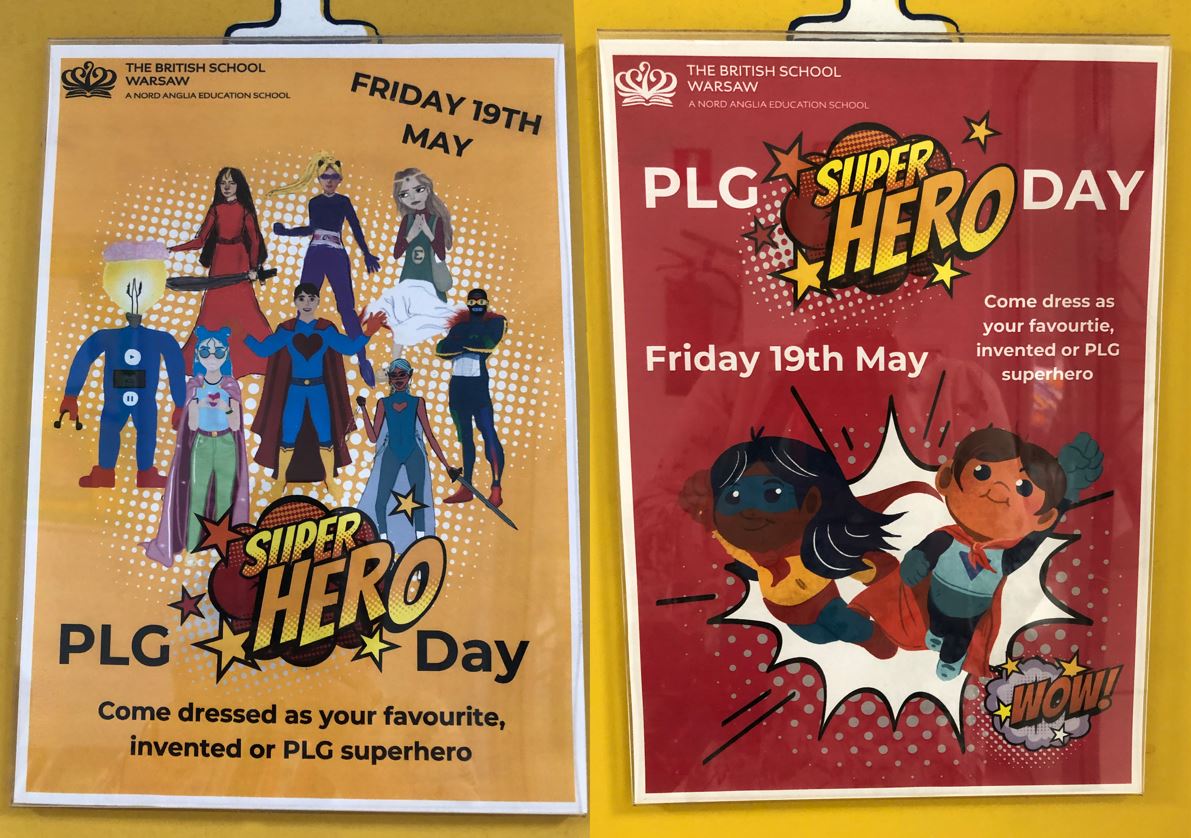
The Personal Goals at the British School Warsaw

In The British School Warsaw we ensure that the Personal Learning Goals are embedded in everything that we do, both within the classroom and in the wider school community. They are at the heart of our school culture and help make our school a happy place to learn.

To bring the Personal Learning Goals to life and support children in truly understanding them, our primary students designed a superhero for each Personal Goal. This was launched in 2020 with the help of secondary students who created the graphics we display all around the school. These superheroes and images support the children’s understanding of what and how they can develop these attributes and are a constant reminder to be the best person they can be – a superhero in our school community!

Every year we have a Superhero Day, where the children dress up as their favourite Superhero, one of the PLG Superheroes or design their own Superhero costume. Throughout the day the children take part in a range of activities to develop each of the Personal Learning Goals. This year, one of the optional challenges was a writing competition to explain briefly what the Personal Goals mean to them in school, at home and in the community.

On a visit to the school Jacqueline Harmer, Head of IPC judged the entries and met with all the competition participants to announce the winner. The writing by N.Chourey was selected as it not only told us about some of the Personal Goals but also showed empathy when thinking about ourselves, others and our shared experiences. The winning writing is shown below, we hope you enjoy reading it and feel inspired to make someone’s day!

A Learner’s perspective on the Personal Learning Goals by N. Chourey

Superheroes are not only main characters in books, movies or cartoons but they also teach us a lot in our daily life. Superheros don’t only save the world from evil people monsters or even dragons but they can also be used to make someone’s day or make them smile. We can be kind and polite by using please and thank you like my favourite PLG- ‘Respectful Rebecca‘. We all have those times when we struggle with something and we think about giving up but we must be like ‘Resla the resilient’ & do not give up. I try to be ethical with my actions like Miss Ethical. It’s great to know the PLGs and be inspired by them.


International Primary Curriculum

Back to news

22 June 2023

Introducing the new Director of the International Curriculum Association (ICA)

For over thirty years we have been working with schools with the aim of improving learning. With a rich history of collaboration and school support, looking to the future, it gives me great pleasure to introduce Sarah Blackmore as the Director of the International Curriculum Association (ICA).

Our journey began with the belief that learning and teaching in schools is best when it is learner-focused, positioning how and what is learnt in schools around the learner and best measured by what improvements in learning we can identify and influence. As an organisation, we have evolved over the past decades; initially established as a consultancy supporting schools, we launched the first International Curriculum, the International Primary Curriculum (IPC) in 2000, followed by the International Middle Years Curriculum (IMYC) in 2011, and International Early Years Curriculum (IEYC) in 2016, now learnt and taught in over 1,000 schools and over 90 countries.

Our focus on improving learning led to the creation of the International Leadership and Management Programme (ILMP) in 2005, Accreditation process in 2011, and a comprehensive range of Professional Development. We now work with over 15,000 teachers and leaders around the world, with the shared focus on the learner and their learning.

In 2021, together with schools we launched the International Curriculum Association (ICA) as the identity to focus on improving learning across the International Curriculum, with Professional Development, Recognition and Accreditation, and the International Curriculum Conference.

We have achieved so much already, following the launch of the ICA. We completed the award-winning review of the IEYC, IPC, and IMYC, with over 100 teachers around the world to ensure the International Curriculum, continues to be a contemporary, internationally researched, and improving-learning-focused resource for schools, developed for teachers, by teachers. We established the Recognition and Accreditation process, part of the ICA, working with schools through the journey of preparation, planning, implementation, and continuous school improvement with the International Curriculum. We developed and launched a Professional Development pathway, now available digitally, face-to-face and in hybrid versions, for teachers and leaders across the IEYC, IPC, and IMYC, in addition to those working with other curriculum options.

As the interim and founding director, it gives me great pleasure to introduce Sarah as the first Director of the International Curriculum Association, recognising her significant contribution to the community over the past 8 years, in the roles of Head of the ICA, and Head of International Outreach and Development. The past 5 years have been an absolute pleasure for myself, working with and for you as an inspirational community. We look forward to Sarah’s leadership in supporting you, your learners, teachers, and leaders in driving our focus on improving learning forward, together.

Gregory Biggs

Former Director of Fieldwork Education

“I am both honoured and humbled to have been entrusted with leading this community that has been created and shaped by so many insightful and talented people – all committed to the common goal of improving learning.
The commitment and support of the ICA learning community continuously pushes us to pursue our goal: to promote best practices in the implementation of the highest quality international curriculum. This year we have re-branded from Fieldwork Education to the International Curriculum Association, pursuing our vision of an active, well-connected learning community focused on championing quality, improving learning and unlocking potential.
Thank you for the kind words of congratulations and support from so many of you and for the active part that you continue to play in our community.  Thank you too to my colleagues in the ICA team who tirelessly bring skills, ideas and commitment to ensure our continuous improvement as a learning organisation.
I hope to see you at our International Curriculum Conference 2023 later this year in Vietnam, to hear your thoughts and feedback through our curriculum surveys and to welcome your participation in our regional professional development events. 
I am looking forward to working together with you all to unlock the potential of our association; to collaborating with you to strengthen our community; and to driving forward our common purpose.”

 Sarah Blackmore – Director of the International Curriculum Association

Back to news

6 June 2023

Growing and Greening a Sustainable School Culture: Vision, Mission, the IPC and Climate Action Schools

At the centre of any sustainable school culture is a clear vision and mission that values environmental stewardship. Schools must embrace a vision that integrates ecological principles into all aspects of their education and school ecosystem. This vision should go beyond the superficial, aiming to instil in students a deep understanding of the interconnectedness between human actions and the environment.  

Panyaden International School in Chang Mai, Thailand has sustainability at its heart, from the rainwater collection system to the bamboo buildings designed to have a low carbon footprint. Sustainable schools set ambitious goals to become carbon-neutral or even carbon-negative. They establish greenhouse gas reduction targets, implement energy-efficient practices, and explore renewable energy options. Additionally, they promote sustainable transportation by encouraging students to walk, cycle, or carpool to school.  

By involving students in these initiatives, the IPC and Climate Action Schools empower them to be part of the solution and foster a sense of environmental responsibility. Panyaden’s initiatives include a vast recycling program, a rainwater collection system, a rice-field lifecycle system and eco-friendly buildings. From an operational perspective, by implementing effective waste reduction systems and prioritizing recycling and composting schools can significantly reduce the amount of waste sent to landfills. This not only benefits the environment but also sets an example for students to follow in their personal lives. Students at Panyaden are involved in composting and gardening, meatless meal days and food waste reduction programs. 

Growing and greening a sustainable school culture is a multifaceted endeavour that involves embracing a mission of environmental stewardship, aligning financial and policy decisions with ecological principles, and actively participating in the sustainable development goals as well as in climate action education such as in the Climate Action Schools program. Sustainability is at the forefront of Panyaden’s organisation, but also their educational vision. 

“By offering a Genuine Values-based Education for a Sustainable Planet, our vision is to see that our children excel academically, enrich their physical, social, emotional and intellectual well-being and develop a caring and compassionate understanding of the environment, to benefit themselves, the people they meet and the planet.”  (https://www.panyaden.ac.th/academic-programme

As a new partner of the ICA, the emergence of the Climate Action Schools (CAS) program (by Take Action Global) has become a significant driving force in growing and greening sustainable school cultures. In 2022 CAS completed their first school year with 100 member schools in their first cohort chosen from around the world. The outcomes have been hugely impactful for the students, teachers and school community. The program is led by a designated and trained school Climate Champion and provides professional development certification to train all teachers in learning about climate action education. Climate Action Schools encourage community engagement and collaboration. Schools forge partnerships with local organizations, governments, and businesses to create a network of support for sustainability initiatives. This community involvement allows schools to access additional resources and expertise, amplifying the impact of their efforts. 

In October 2022, Panyaden began its journey with Climate Action Schools. Through the CAS audit, the primary students identified that bamboo is their signature species and IMYC students began composting projects. Becoming part of the CAS community helped to provide some focus and guidance to teachers and students regarding sustainability. In the primary, the CAS initiative was highlighted and presented in several staff meetings. The CAS framework allowed the community to recognize the strengths and areas for growth providing a common goal including a focus for learning.  

Students also learn to understand their environment through field trips, service-learning projects, and being part of the community. In addition to curriculum integration, schools can establish environmental clubs or student-led initiatives that engage students directly in sustainability efforts. These groups can organize tree planting drives, waste reduction campaigns, or even establish school gardens to promote the connection between food and the environment. Such activities foster a sense of ownership and responsibility, empowering students to actively contribute to a greener school environment. Examples include: 

Service Learning and Climate Action School projects 

  • Composting 

  • Planting trees and gardening 

  • Repurposing clothing 

  • Animal welfare  

IPC/IMYC Field trips/projects 

  • Year 1 Organic farm and composting 

  • Year 4 visit to hydroelectric plant, sustainable bamboo city design 

  • Year 5 Making brooms from recycled bottles 

  • Year 6 visit to solar energy centre, solar panel, and rainwater pond cleaning 

  • Year 7 organic farm and composting 

  • Year 10 animal welfare and habitat restoration 

By integrating sustainability into the curriculum, empowering students to take action, and pursuing environmentally friendly practices, schools can play a vital role in nurturing a sustainable future. Through these collective efforts, we can foster a generation of environmentally conscious individuals who will, as Panyaden International School’s vision exemplifies, “develop a caring and compassionate understanding of the environment that will benefit themselves, the people they meet and the planet.”

International Primary Curriculum

Back to news

11 May 2023

A curriculum solution: Meeting national curriculum requirements

Many national curricula around the world publish learning outcomes to be achieved within a certain age range, this concept of curriculum provides teachers and leaders with the ‘what’ of the curriculum but none of the ‘how’ and ‘why’. The International Curriculum Association has recently published a definition of curriculum encompassing four distinct facets – written, planned, experienced, and evaluated. The combination of these aspects provides schools with a comprehensive concept of curriculum encompassing philosophy and pedagogy alongside detailed Learning Goals.

Schools that choose to or are required to teach national or regional curriculum outcomes need to make research-informed choices to help make learning happen or select a curriculum solution that can meet the needs of both their learners and teachers while fulfilling any outcome requirements. By integrating subject areas, educators can create a more holistic and interconnected approach to teaching and learning, which can provide benefits for students. Below two established international schools in the Middle East share how they have integrated the International Primary Curriculum (IPC) with the English National Curriculum (NC).

At Brighton College, Dubai, rigorous inspections ensure curriculum coverage including checking attainment and progress in core subjects. For the foundation subjects they use the IPC which has allowed them to follow the structure/style of the English National Curriculum but select topics of more relevance to learners in the Middle East. Sarah Brannon shared how pupils were having difficulty relating to NC topics like ‘The Great Fire of London’ but the IPC unit ‘Moving People’ was fascinating and sparked incredibly thoughtful discussions and action projects. She states, “The benefits of using the IPC are very much related to the international context of our school, the relevance of the units to the pupils’ own experiences supports their interests and motivates learning.”

Each IPC unit can include learning related to the host, home, or heritage countries, with which learners have a connection. This brings a world perspective and develops local and global cultural understanding. This aligns with the KHDA (Knowledge and Human Development Authority) expectation for learning about the heritage and culture of the UAE as well as learners’ understanding and appreciation of their own and other world cultures.

Sarah Dillon from Compass International School, Doha, explains how they have integrated the IPC with other curriculum areas.

We have meticulously mapped the IPC units and planned learning across each Milepost to ensure complete curriculum coverage that meets the NC requirements. We have also made a conscious effort to align our English learning with the IPC units integrating a range of English NC genres into the units of learning.

Sarah credits the IPC thematic approach and its focus on International Learning with ensuring that NC requirements are met in an engaging, creative, and innovative manner that truly ignites the children’s passion for learning.

Fostering enthusiasm for learning is important at both Brighton College and Compass International School. Various studies have found evidence that intrinsically motivated students have higher achievement levels. At Brighton College, they recognise motivated teachers lead to motivated learners and improved learning. “Teachers like using the IPC because they can choose units in which they and the learners are interested. Teachers who are enthusiastic and excited about what they are teaching will transfer this to the pupils and learning becomes a dynamic process of exploring and finding out together about new topics.” Compass International acknowledges the role in the Process to Facilitate Learning that all IPC units follow as a motivating factor. During the Entry Point, the children’s memory of previous learning connected to the new unit should be activated. Following this, in the Knowledge Harvest, learners identify what they know and what they want to know, this learner agency motivates them to continue learning throughout the unit. This agency extends choice within learning, pupils can often select how they would like to learn or demonstrate their newly acquired knowledge. Regular reflection develops understanding and promotes metacognitive thinking, encouraging children to consider if their learning choices were effective.

The brain, metacognition and learning about learning are the focus of two IPC units in each milepost as Sarah Brannon explains, the ‘Brainwave’ units at the start of each year provide an opportunity for pupils to find out about learning methods, to develop a growth mindset and to be involved in open and deep conversations about their aspirational learning goals. These units aim to empower learners to plan, monitor and evaluate their learning. This research-endorsed approach, known to be more effective when applied to challenging tasks rooted in the usual curriculum content (i) transfers from the science of learning units to be utilised across the whole curriculum. Sarah Dillon appreciates that this focus on understanding how their brain works and how children like to learn is unique to the IPC.

Both Compass International and Brighton College are confident that their choice of curriculum solution improves learning through engaging, relevant content and research-informed pedagogy. Beyond the unit content, Personal Learning Goals contribute to the development of individuals and the school’s philosophy and culture. The 8 dispositions detailed in the IPC support learners with self-regulation, knowing themselves as learners and forming positive relationships. If learners are to flourish and overcome challenges, their dispositional qualities must be a key area of focus for teachers and school leaders. Enhancing academic learning with a suite of non-cognitive skills has also been associated with academic and life success. (ii) Personal learning cannot be confined to curriculum-specific activities or moments on the timetable; to be successful this learning needs to pervade across all aspects of the curriculum and the school community.

How do you know which curriculum solution will improve learning in your school?

Leaders should consider both the quality of the product but also how well it will fit with their school’s context, vision, and mission. Some questions that need to be asked and answered include the following.

  • Does the research basis of the curriculum align with those valued by the school?
  • Is the activity design based on research to best suit the age range of the learners?
  • Are learning experiences based on authoritative, researched pedagogy?
  • Does it make the teachers’ job of planning and delivery easier?
  • Is the curriculum flexible and adaptable to meet learner needs and engage with learner interests?
  • Does the curriculum provide opportunities for learners to ‘see’ themselves in the curriculum?
  • Does the curriculum meet the requirements of any chosen/assigned written curriculum?
  • Is it ambitious?

Whichever curriculum integration solution you choose, ensure that in the words of the OECD, “it maximizes the potential for the effective enhancement of learning.” (iii)

With thanks to Sarah Brannon, the Head of Preparatory School at Brighton College in Dubai and Sarah Dillon the Head of Primary, Madinat Khalifa campus at Compass International School in Doha, an IPC Accredited School.

(i) Metacognition and self-regulation

(ii) The impact of non-cognitive skills on outcomes for young people

(iii) What Makes a Quality Curriculum?

International Primary Curriculum

Enquire now

Find out more about ICA products and services!