Search List show here

Back to news

2 February 2023

Bringing back community at Seoul Foreign British School

It’s August 2022. The masks are still on but it almost feels ‘normal’ again. Parents are allowed on campus, we can have student assemblies again, staff meetings have no limits on the number of staff allowed to attend, and many more of the things that we had taken for granted a few years ago have returned. As a sense of normality returns, it felt like the ideal moment to reflect on the last two years and my experience as a teacher adjusting to the challenges that Covid19 has had on my teaching, my communication and how the school community has responded as sanctions have eased.

At Seoul Foreign British School, we started the 2022/23 academic year with one very powerful statement: Let’s bring back community!

Of course, our community didn’t go away during the past two years. In fact, we strived to keep everyone together and I feel we were successful in doing this in many ways. But the beginning of term this year was different. It was unlike any other start of term that I have experienced in my twenty years of teaching. It was filled with so much hope, excitement and a refreshing feeling of freedom. Harnessing this energy, we set about planning the first few months and thought about all of the ways we could make our community feel fully connected and together again.

As an Early Years educator, the relationship I have with my children’s parents is one of the most important factors that influences the success of my student’s learning. I find that the more sharing we do with our parents and community, the better the connections between home, school and the child. Thanks to technology and applications such as Seesaw we were able to share learning experiences during Covid times but these can’t compare to live interactions where we can use all of our senses to fully engage with each experience and really feel human again.


We began with an in-person ‘Back to School Night’. We saw this as an opportunity to really focus on reuniting the community and building relationships. So, as in previous years, we made video and slide presentations to provide information about the learning expectations and logistical information that parents needed; the purpose being that families could watch these in their own time. This meant that when Back to School Night came around, our focus was on building those very important relationships. Teachers and parents spent the time chatting and connecting with each other.


The next amazing event was a playground party. Over the summer we had a very new and exciting playground built which had been a real community project, realised by the generous donations of everyone connected with our school. This definitely needed celebrating! Since it was an outside event, it meant we could all be together with no restrictions. In line with guidance, masks were optional, the warm weather was perfect and there was a brand new playground for everyone to explore and enjoy!


The term continued with so many more experiences that it was almost overwhelming. It was like we had planned all the lost moments from the past two years into the next two months! There were school trips to local museums, street fairs organised by our Key Stage 3 students, in-person workshops for parents, student-led learning walks, shared exit points, parent readers, whole school assemblies, parents coming in to decorate classrooms for Christmas, visitors coming to present at assemblies. You name it, if there was an opportunity for a member of our community to be involved, we did it! For me the magic was the end of term Christmas assembly when the whole school, all 300 students and staff, met in our hall and we celebrated being together by singing the 12 days of Christmas. Different classes each sang a section of the song for the different days.  For our youngest students to be interacting with our oldest students is something so precious that needs to be captured and kept forever. 

Our parents also had a lot to say about the importance of connections with their children’s learning:

“I appreciate how hard the school tries to be in touch with us parents and work with parents in each child’s growth. To be able to know every week what they are learning about and to be able to finally do activities together at the school is so positive for my child.” – Natalia

“Throughout the year, Miss Katy always emphasises the open door policy. One of the most important things I noticed during Covid was the strong communication from Miss Katy. She kept the students and parents engaged. She is always open to feedback and adopted and improved the curriculum each day. Now that we can come to school it is so much easier for us as parents. We loved the learning walks and seeing the amount of detail invested in each child. From the wall of new phrases that each child said to the confidence they showed when sharing their learning. How nice to be back and to have these experiences together again.”  – Rene

As a parent of a child in Foundation, there have been so many ways the SFBS has invited us to be part of our son’s learning. The party at the end of the unit on identity was a great way to celebrate some of the things that make us unique and the learning walk was a wonderful opportunity to have a window into what happens in the classroom on a daily basis. Being part of these experiences have deepened our son’s learning and have allowed us to connect with him and the SFBS.”   Joshua 

Now it’s January 2023 and a new term has begun. I have a lot to live up to from last term’s community interaction but I would not change it for the world!

International Early Years Curriculum

Back to news

1 February 2023

Building a Common Understanding of Rigour

Rigour is creating an environment in which each student is expected to learn at high levels, each student is supported so he or she can learn at high levels, and each student demonstrates learning at high levels.

In order to create long-lasting change in a school, having a shared understanding of rigour among all stakeholders is critical. How do you build that common understanding? I’d like to share some strategies I use when working with schools.

First, it’s important to understand what teachers and leaders currently believe about rigour. I start by asking the group to anonymously answer three questions.

  • What is rigour?
  • What are teachers doing in a rigorous classroom?
  • What are students doing in a rigorous classroom?

Once they have answered these questions, we discuss each in turn. I typically chart out common responses so we can see any patterns. Next, it’s helpful to read articles and books about rigour and discuss them. I usually start with The Beginner’s Guide to Rigor as an overview of rigour. After talking about the key points, we compare this information to our earlier responses.

A second strategy is to watch teaching videos and assess them for rigorous instruction. I use a rigour rubric, and there are a variety of types available online. Using a rubric or framework, I ask teachers and leaders to note any examples of rigorous instruction, as well as any non-rigorous instruction. I also ask them to make note of any improvements they might make. These observations make for a rich discussion.

Sample Criteria for Rigorous Instruction

  • Higher Order Thinking Questions
  • Probing Students for Deeper Answers
  • Asking Students to Justify Their Responses
  • Encouraging Students to Ask Their Own Questions

Finally, we work together to assess tasks and assignments. These might be projects, worksheets, tests, or other items, particularly those that are teacher developed. After sharing initial perceptions of an assignment, we delve deeper into specific aspects or questions, again using a rubric of characteristics.

  • For example, in a science assignment, we might determine if the students are required to develop a research question and then design an experiment to answer the question rather than simply completing an experiment that is given to them.
  • With mathematics, we would look for questions that would require a student to identify and explain misconceptions.
  • In social studies or history, we would consider whether the assignment asks students to write about how people or places change over time.
  • In an English/Language Arts task, we would evaluate if students are required to justify their response, as well as making connections outside the text.

By looking for these specific types of questions and responses, we are able to determine if assignments are truly rigorous.

Building a shared understanding of rigour can be challenging, but there are professional development activities that can help. Reading quality information, critiquing videos, and assessing tasks will help teachers and leaders develop a common awareness of the true meaning of rigour.

Back to news

12 December 2022

The Lost Food Project

The Sustainable Learning Goals symbolises the main issues that we are facing around the globe as we are striving for a better future. In the IPC, the learners are given the opportunity to develop the global competence through interesting and exciting challenges that are linked to the Sustainable Development Goals.

At Straits International School, Rawang, while working on our Year 3 unit ‘Different Places, Similar lives’, we came across the International Task that highlights two learning goals: Know about organisations that help others and be able to associate cause and effect related to global events and/or issues. The children first researched organisations that help people in need in Malaysia. We came across a few of them and contacted them. We were lucky enough to get a response from one of the global charities ‘The Lost Food’. They were very happy to come to our school to share about what they do during our Key Stage assembly.


It was interesting to hear about the numbers and information that was shared with us. Almost 1/3 of food produced in the world is either lost or wasted. In Malaysia 3000 tonnes of edible food is thrown away each day. This is enough to feed 10 million people. This organisation help rescue an average of 10 tonnes of food per week from going to the landfill and unfortunately is it still not enough. To be able to help and support this global issue, we need to start now, and the best place is from school where children are given to opportunity to learn and understand what is happening around us.

After this talk, we started the ‘Clean your plate challenge’, where we paid attention to how much food the children eat and waste. We took some pictures of the bin to help them see how much we waste. We continued this process for three weeks, and we could slowly see some changes where children started to take smaller amounts of food, checking the time before going for a second round, encouraging each other and becoming more aware of how much they really need to eat and understanding the concept of ‘what we want, and what we really need’. 

To keep the momentum going, we continued this process by carrying out ‘The Food Drive’ where the children rescued some of the food items that they don’t need or are nearly expired in their own homes. The Year 3s helped to organise the items into different categories to see what type of food were being donated the most. It was then donated to the lost food charity. Learning experiences like this is something that our children will always remember, and I hope these little things that we do in school can inspire them to do more in the future for a better world. I truly appreciate ideas like this!

Find out more about the International Primary Curriculum

Back to news

8 December 2022

Leading Learners to Change their World

Caroline Hickman, (University of Bath, UK) who conducted a global online survey in 2021, discovered that 60% of young people had climate anxiety. Harriet Shugarman suggests we should strengthen learner agency in children from nursery age to take action on climate change which in turn, should help lessen their anxiety. But climate change is just one of the issues that children may be concerned about and wish to take action on. Learning about the Sustainable Development Goals (SDGs) furthers students’ knowledge of a variety of issues they will have heard about in news and media channels. The International Curriculum aims to take this learning further as the vision for learners states: “Learners are encouraged to be informed, globally competent, future-ready, socially conscious and motivated to positively contribute within a local and/or global context.”  


Learners should be encouraged to take action in response to, and to further extend, their learning. Providing learners with a constant reminder through a taking action display will empower them to know they can (and should) make a difference. Students can add their ideas for action or share their action experiences to advocate for issues they care about and get others involved.

Both the International Primary Curriculum (IPC) and the International Middle Years Curriculum (IMYC) include action in the Process to Facilitate Learning, it encircles the learning journey as a reminder that action can take place at any time.


In the IPC, children are explicitly invited to suggest, carry out and evaluate action. This could be within the school community, contributing locally to solutions for global issues or connecting to organizations working across the globe. Introducing learners to action planning strategies provides a way for learners to think critically and creatively about action.

Children could contribute to a shared chart like the one below and make decisions to take appropriate and meaningful collective action.  Example chart: Better management of resources, reducing waste.

Alternatively, individuals can reflect on their current choices and behaviours by completing a personal chart. This can be done through text or using visuals such as cutting and pasting slogans aimed at advocating certain behaviours or reducing others. Example chart: Reducing loneliness. 

Regardless of how they plan for action, children need to revisit the chart and evaluate the impact they have had including considering unforeseen consequences.

In the IMYC, similar engagement and action towards local issues or global competence can be developed through exploring and embedding Big Ideas such as Responsibility, Balance, or Resilience in the classroom and beyond. These can be a cohesive element of learning for teenagers as they investigate local issues or global events through a conceptual lens. This Big Idea also links subjects, providing teachers and students continuous opportunities to connect learning on a deeper level.

Another way for adolescents to be globally competent is by addressing the significance of their learning—or the “Why are we studying this?” Educational research has identified six key needs for the teenage brain which IMYC have interpreted in their IMPART model, standing for Interlinking learning, Making meaning, Peers, Agency, Risk, and Transition. It’s the significance of “What’s in it for me?” (or the Making meaning portion of IMPART) that can help students make sense of their worlds and be motivated to make an impact, however large or small.

One way in which students can reflect on their intrinsic motivation towards a global issue and in turn, can take action, is by using some of the Thinking Routines by Project Zero (Harvard School of Education). The 3 Whys is an effective exercise to guide thinking about global, local or personal issues. These three questions help adolescents find relevance and meaning to their learning by zooming out from the self:

1. Why might this [topic, question] matter to me?

2. Why might it matter to people around me [family, friends, city, nation]?

3. Why might it matter to the world?

Overall, learners should explore and evaluate their roles and thinking and be empowered to take action outside of the classroom. Making meaning in learning and zooming out from the personal to the global are ways in which children and adolescents can help make an impact on the world.

How will your students be changemakers?


Learn more

Back to news

2 December 2022

Winner – Education Today Awards

We are delighted to share that the International Primary Curriculum was named Overall Supplier of the Year at the Education Today School & Supplier Awards 2022. 

A fantastic evening celebrating learning, meeting inspirational people and presenting a well deserved award to the primary school of the year, Kirton Primary School. 

We would like to thank everyone who voted for the IPC and those who have contributed to content over the years. Jacqueline Harmer, Head of IPC says she was, 

“Proud to represent the IPC community of educators who contributed to the extensive review of the IPC.”

A big thank you to all our subscribing schools who embed the IPC in their schools and continue on the path to help improve learning. We wouldn’t be where we are without you.

With over 20 years of experience in delivering the world-renowned International Primary Curriculum (IPC), the forward-thinking IPC2020 curriculum was launched for learners aged 5-11 years old, with the aim to help prepare children for opportunities and challenges that occur now and in the future. 

The primary curriculum encourages learners to be globally competent, socially conscious, and motivated to positively contribute within a local and/or global context, something that has become increasingly essential over the last few years especially during this historic moment in time.

Back to news

4 October 2022

Early Years Symposium with the British Vietnamese International School (BVIS)

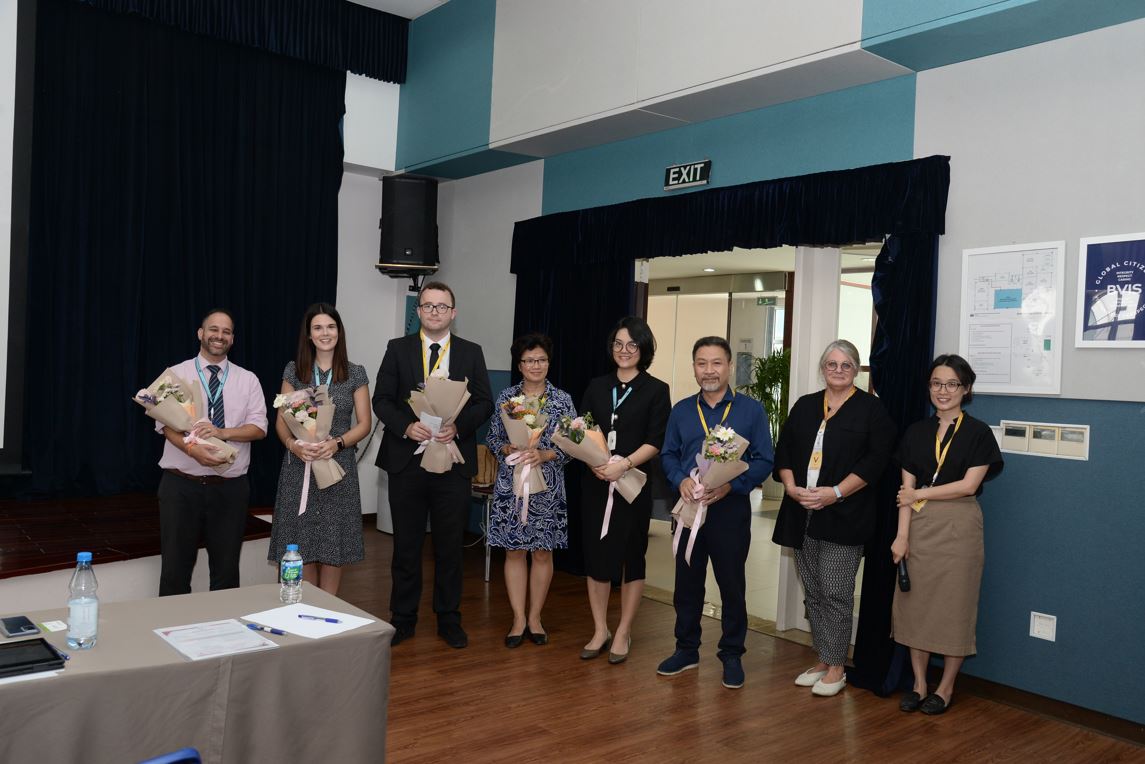
Hosted by the British Vietnamese International School Hanoi (BVIS) with the support of the British Embassy Hanoi, we facilitated a symposium on early years education.

Bringing together educators, administrators, and investors in early years the event provided an opportunity for all to discuss the important roles of early years education as well as on the theme of ‘play – a pedagogy for learning and teaching’.

‘Speaking at the event, the British Embassy’s Head of Trade and Investment Hanoi, Mr. Harry Rawicz-Szczerbo, emphasised that the playful, holistic and child-focused approach should be encouraged to learning and development. The UK is committed to supporting Viet Nam with its experience and expertise in this regard.’

If you would like to learn more on this subject, join us for the International Curriculum Conference this October 19-20.

Established in 2013, BVIS Hanoi provides a world-class education within Vietnam for students aged 2-18 and has reached almost 10 years of education. Being a school of Nord Anglia Education, part of a worldwide family of 81 premium international schools located in 31 countries around the world, BVIS Hanoi offers a unique international bilingual curriculum that is British based.

The Vietnam Association for Nonpublic Preschool Education (VANPPE) was the co-sponsor for the conference. Presenting was Dr. Ton Quang Cuong, a  member of VANPPE’s Executive Committee. He addressed the role of “digital play”, which plays an increasingly prominent role in early childhood education. Harnessing the power of digital play while controlling potential risks of over-exposure to smart devices by young children is a topic that sparked lively discussion among conference participants.

Dr.  Ton Quang Cuong is both the founding member of VANPPE’s Executive Committee and Dean of the Faculty of Educational Technology, University of Education, VNU (http://education.vnu.edu.vn). With more than 20 years of experience, Dr. Cuong has contributed many initiatives, solutions, and application models in education and teacher training.  As an expert in theory and teaching methods, he and his colleagues, scientists and education experts are actively laying the foundation for a new direction in educational technology in the context of digital transformation in Vietnam.

Until the end of October 2022, the school offers that the application fee will be waived for new applicants. [ANCO2] For the details, send your enquiry to email: enquiry@bvishanoi.com or contact hotline +8498 162 6100.

To learn more about BVIS Hanoi, visit their website: www.bvishanoi.com

Back to news

20 September 2022

Different Places, Similar Lives – Shaping Teaching and Learning from the Cultures of Finland

Boothferry Primary School in Yorkshire (UK) has over 16 different nationalities, languages and cultures which makes us naturally outward facing to the world. Within our school, we utilise the 8 IPC learning goals of: enquiry, communication, thoughtfulness, adaptability, cooperation, resilience, respect and morality, but a recent addition of a 9th goal, international mindedness, truly reflects the multicultural faiths our school exhibits, which in turn fosters a curiosity amongst children and teachers alike. This is summarised in our school motto ‘Embracing diversity, building a brighter future together!’.

In 2019, I was awarded a grant from the Goldsmiths’ Company Charity Education Committee, who provide funds for teachers to be able to research a project based on an area of their educational interest. My project primarily focused on how music education was delivered in Finland and was inspired by the 2019 government warning in the decline in music education in the UK [1]. I wanted to visit schools around the country and bring back ideas and inspirations that would develop my teaching, but also inspire the children in my class to show how children learn in another country.  

First Impressions

I quickly realised the context of cultural principles was paramount. It would be unrealistic to implement the routines and policies from Finland immediately into my school in the UK, primarily due to the priorities of the society and traditional aspects of the country. The first impression I got from visiting schools was the attitude amongst teachers and students was very much more relaxed compared to schools in the UK. Aided by the non-wearing of uniform, frequent learning breaks (each 45-minute lesson ended with a 15-minute break) and earlier start and finish times (8.15 am until 2.15 pm), helped to create an atmosphere within class which made learning comfortable and enjoyable, allowing each child the opportunity to flourish. Another important difference was that each child was provided with a free school meal each day, which lasts throughout the entirety of their education up to 18. This not only has important health benefits, but also decreases the financial burden for parents, ensuring that all aspects of a child’s education are taken care of by the state.

Teachers

The profession of teaching is given a high status within Finnish society. As a result, teachers are given far more autonomy and trust to find the best way of teaching, and they can reflect constantly on how they can improve and develop their pedagogy.  I found that they have more time to reflect on their practice because they are released from the constraints of inspections, monitoring visits and scrutiny which can become a continuous burden for teachers.

Indeed, this freedom of thinking and working is encouraged in the pupils, who I found to be working in corridors, listening to music or taking short learning breaks to do pull ups on gym equipment that had been installed in the corridor, but yet still remain engaged in completing the task set by the teacher.

Teacher Training

One of my focus areas was how teachers are trained. While visiting the University of Eastern Finland, Joensuu, I was amazed to see the amount of investment that was put into training teachers. Prospective teachers are rigorously trained for 4 years up to a Masters level of education, where they can choose their thesis to focus on any area of teaching, such as special education or on a specific subject area.

I was delighted to see that all trainee primary teachers are required to learn a musical instrument, either the guitar or piano, to a basic level. The musical skills of primary teachers were evident in the lessons I saw when I visited schools around the country, where teachers could confidently accompany children when singing and performing. 

Inspiring my pupils

When I returned from my trip, I instinctively used my visit as an opportunity to collaborate between the two cultures. Our children exchanged letters with the children in Finland and a video call was set up to ask questions that the children had created. This matched perfectly with our IPC unit ‘Different Places, Similar Lives’ where the children could directly ask the questions they had generated from their knowledge harvest. The relationships I formed with the schools that I visited will continue in the future due to the connections and friendships that I made during my visit. 

Through studying the IPC unit of ‘Different Places, Similar Lives’, aided by the experiences on my trip, my pupils have a more accurate and realistic approach to life in another culture, enabling them to genuinely ‘embrace diversity and build a brighter future together’.

Back to news

15 September 2022

The Innovative Mindshift

Let’s face it, with these unprecedented times as institutions, educators, students, and parents alike, we have had no other choice but to be innovative and open. We have been forced by this looming, long lasting pandemic to shift our mindsets. We have been forced to reflect upon and ask ourselves: 

What is good learning? 

What does it look like? 

What tools do we have at our fingertips? 

How can we make learning more creative, fun, and inspiring even when faced with adversity navigating through stressful times? 

Are we busy or are we busy learning?

Here in Bermuda, Chatmore British International School is the proud leader in our country. We are well on our way towards accreditation and the team are rallying together to make it to the finish line. We are looking forward to engaging with Fieldwork Education to hone our skills and give the best we can to each other, the families, and the learners. 

So, you might be asking yourself, how does the International Curriculum make learning innovative? Here are Chatmore, when we review our topics for the school year, we chose a more holistic and wholesome approach across all departments. For instance, the Brainwaves Unit runs unilaterally across Early Years, Primary and Secondary. We focus on how innovative and creative we can make each of our classrooms and hallways. Imagine the look on the students’ faces when they can see the progression of the unit throughout the school. It not only strikes up more interest among classmates, but it also provides an opportunity for knowledge sharing! How cool is it to learn in a unified journey together as a school no matter what the age! Brains, Brains, everywhere!

Good learning should be inspiring not only to the students but the teachers too! Our teachers here at Chatmore embrace technology and provide a dynamic learning experience though the use of the International Curriculum. Whether we are teaching remotely or brick and mortar, the curriculum allows for flexibility and creativity. At home learning projects are a wonderful way to explore recyclable materials or experiment with science projects by pioneering. We have so many tools at our fingertips without having to purchase or spend a lot of money on store bought materials/resources. It also provides for a fantastic opportunity for parents to be as involved (or not) as they would like to be in partnership with their sons’/daughters’ learning opportunities.

More recently, we have been exploring Space. Once again, the students from across year levels can enjoy learning about the planets with a hands-on approach. Walking through the hallways watching the expression on each students’ face with blow up ball planets hanging from the chandeliers is priceless! Students can also be heard singing the planet songs combined with laughter while creating their very own alien visitors from recycled materials. Students love creating and sitting next to their very own chocolate eating alien from planet Earth, an alien King holding a triton from planet Neptune, or a reddish-brown alien with bubble wrap to keep warm visiting us from Mars! Our mindsets have shifted as we all embrace technology and further enhance our knowledge harvest, research and recording opportunities using a variety of tools at our fingertips. Here in Bermuda, the International Curriculum allows for our classrooms at school AND at home during remote learning, to be fun, innovative, and busy with learning!

At Chatmore, we love that the IEYCIPC and IMYC provide us with the knowledge, skills and understanding to provide the best for our students, ages 4-18. The international connections we have through fieldwork elevate our teaching and learning experience and we cannot wait to achieve more with them!

Enquire now

Find out more about ICA products and services!