Search List show here

A Rewarding Journey Teaching Young Entrepreneurship

As I begin my second year teaching the “Young Entrepreneurs” unit to my Year 3 students, I’m excited by the journey we’ve embarked on together. I’ve witnessed my students discovering their passions and embracing creativity to craft distinctive business ideas. It’s been truly fulfilling to see them harness their enthusiasm and translate it into tangible impact, using our earnings to create a meaningful difference in our community. This experience has not only shaped them as budding entrepreneurs but has also highlighted the deep satisfaction that comes from applying their skills to help others.

Cultivating Interest and Engagement

Initially, I was pleasantly surprised by the enthusiasm and creativity my students brought to the unit. What stood out most was their eagerness to delve into the world of business, from understanding basic financial literacy to crafting intricate business plans. This unit has not only nurtured their entrepreneurial spirit but has also instilled invaluable life skills.

Tailoring the Curriculum

While following the recommended curriculum, I made deliberate adjustments to cater to the unique needs and interests of my students. I firmly believe that introducing concepts of financial literacy early in primary education is crucial yet often overlooked. By customising lessons and activities, we ensured that every student could actively participate and thrive.

From Ideas to Action: Practical Learning in Action

Throughout the unit, students engaged in a variety of hands-on activities that bridged theoretical knowledge with practical application. From designing business plans and creating marketing strategies to executing sales events, each step was meticulously planned to provide a comprehensive learning experience. One notable project involved students forming groups to produce items such as comic books, artwork, and handmade crafts. Another initiative included a recycled book drive, where books were sold at affordable prices, promoting both sustainability and entrepreneurship.

Integrating Learning Across Subjects

 The unit was thoughtfully integrated with Geography, History, Mathematics, and English, enhancing students’ understanding across disciplines. Geography lessons explored global markets and currencies, while history sessions traced the evolution of commerce and currencies. In mathematics, students applied their skills to calculate profits and create statistical data, essential for business analysis. English activities involved writing a story then creating a storybook on Canva, detailing the entrepreneurial journey of a young entrepreneur, which was shared with parents. During the culminating Big Sales Day, Year 2 and Year 4 students participated as customers, offering feedback that enriched our learning experience and provided valuable insights for future iterations of the project. Here is a story written by a student – https://www.collab-education.com/wp-content/uploads/2024/07/Luken.pdf

Impact Beyond Profit: Fostering Compassion and Community

The highlight of our journey was not just the financial gains but the empathy and social responsibility demonstrated by my students. Inspired by their learning about refugees and their challenges for their class assembly presentation this term, The children decided to contribute their earnings to Fugee School, supporting refugee children. I’ve created a curriculum for the Fugee School to learn financial literacy and potentially start their own businesses, aiming to inspire them in entrepreneurship. This act of generosity underscored the broader lesson of using business as a force for positive change in the community.

Reflections and Future Prospects

Reflecting on their experiences, students shared profound insights about money management, making responsible choices, and the holistic role of businesses in society. Their newfound understanding extended beyond financial literacy to encompass values of empathy, sustainability, and community engagement. Looking ahead, I envision expanding these units to include all primary school grades, adjusting the difficulty level to suit the age of each group. Additionally, parents can also play a role in teaching these skills, making it an ideal activity during extended breaks such as approaching summer or winter holidays.

Author

Picture of Pearline Silvanathan

Pearline Silvanathan

Year 3 Homeroom and IPC Coordinator at Straits International School Rawang

Ms. Pearline has been teaching in international schools for the past 11 years as a Primary Teacher. She holds Bach. Hons in Education from the University of Roehampton, UK and PGCEi from the University of Nottingham, UK. Previous to teaching in Straits International School, Rawang, Malaysia she worked in a British School in Cairo, Egypt. She is now responsible for leading the IPC at her current school in Malaysia as well as teaching a Year 3 class.

An Interview with Tess Baguio from Small World Christian Kindergarten

Early childhood development is heavily focused on play. Can you describe your philosophy on play-based learning and how you incorporate it into your daily classroom activities?

Play is integral to young children’s growth and learning about themselves, others and the world. Young children need an ample amount of play each day – play is an essential part of children’s growth and development to continue to flourish! Children learn best when they are playing and engaging in playful experiences as they make meaning of their relationships and experiences. 

In our school, it is crucial for teachers to plan, design and implement play-based learning, providing children with playful and meaningful learning experiences from their classrooms to the outdoors. The learning environment is enabled by teachers to support children’s developmental needs and also considers children’s interests. Our school timetable supports children to meaningfully engage in uninterrupted play, providing them a third of their class period to explore and extend their interest and curiosity. It is also important that children are provided with diverse opportunities to play and engage in teacher-led, teacher-scaffolded or child-led learning experiences in our setting. In school, our young learners have a balance of structured and unstructured play, both indoors and outdoors. We also encourage and invite the children to explore and extend their play at the Outdoor Play area such as the garden, mud kitchen, etc. Our teachers are always available to guide, support and scaffold children’s learning, whenever appropriate. 

The social-emotional well-being of young children is crucial. How do you create a nurturing and inclusive environment that fosters positive social interactions and emotional regulation in your classroom?

Providing a nurturing and inclusive environment is fundamental in our setting and classroom practices. Each learning environment needs to be warm and welcoming, providing a space where teachers support positive interactions with young children to make them feel safe, secure, and have a good sense of belonging. Our setting provides opportunities for children and adults to interact and play together in various learning areas, using different types of play materials, where adults are sensitive and responsive to the needs of each child. Every learning environment helps children feel included, acknowledging and validating their thoughts and feelings through numerous opportunities to practise and learn social skills.

It is vital that children are provided with lots of play and an enabled playful environment where they can be surrounded by an environment of positive relationships.  If some children are feeling anxious or managing big emotions, we have a quiet ‘calming area’ in every classroom – a comfortable space with soft pillows and toys where children can regulate their emotions through different calming techniques that they learned in the IEYC Unit, ‘Healthy Habits’, such as humming, breathing exercises, guided by a teacher.

Every child learns and develops at their own pace. How do you assess and address the individual needs of each student in your early years classroom?

In school, we are guided by the IEYC Reflective Practices for Improving Learning through capturing, interpreting and responding. Teachers and learning assistants regularly observe children, capturing the information they need to plan for and extend their learning. Teachers observe children in different play contexts such as in teacher-led activities, child-led activities indoor and outdoor play environments, etc., where they capture and interpret data meaningfully and appropriately, helping them to extend their children’s learning and development. Likewise, it is essential to consider multiple perspectives about the child and their learning, hence, teachers engage in professional learning dialogues with different stakeholders such as teaching partners, parents and families. Through these dialogues, teachers are able to adapt or enable their learning environment to support children’s development and learning, consider appropriate learning experiences and activities in either Phase A or Phase B that are suitable to meet the needs of the child.

Collaboration with parents and caregivers is essential in early childhood education. How do you build strong relationships with families and keep them informed and involved in their child’s learning journey?

We forge strong partnerships through regular communication such as our weekly School Newsletters (whole school) and weekly Learning Update (class-based). These newsletters are learning-focused which outlines what learning has taken place in school and in class, providing information about the themes, learning blocks, celebrations of learning, personal learning goals, and many others. Every child has a digital Learning Journey that includes photos, videos and anecdotal observations of the three dimensions: academic, personal and international.

We encourage parents to be involved in children’s learning through the class newsletters learning-link segment that provides suggestions on how to continue learning from home, especially during weekends and holidays. We also invite parents to be involved in class as a resource person, mystery readers, parent volunteers, and many others. We encourage parents to be involved in various school events, supporting children in their learning such as field trips, gardening, etc. We invite parents to participate in parent education courses, IEYC workshops, parent-teacher conferences, learning celebrations, and other annual school events.

The transition to kindergarten can be a big step for young children. How do you prepare your students for the academic and social demands of kindergarten? What strategies do you use to ensure a smooth transition for each child?

Before the start of the school year, we usually invite parents and their children for a day of orientation in school through ‘Stay and Play’ sessions in school, introducing and familiarising the learners to their new teachers, new classmates, their classroom and the school. In class, the parents and learners will learn their new class routine for them to know what will be expected in every period, for example circle time, child-initiated play, snack time, music and movement, story time, etc. Various learning areas are prepared and clearly designated with lots of playful learning experiences and open-ended activities for children to build and construct, either on their own or with their peers.  Each classroom has a home corner and meaningful play resources that allow children to engage in role play related to their home experiences. It provides a space for imaginative play, social interactions, emotional development, language and communication and many learning opportunities. We also stage their transition in school, providing differentiation to some young children who may need more time to settle in, for example, having a parent or caregiver in class to support their emotional needs, having a shorter time in school and increasing their hours incrementally, etc.

Author

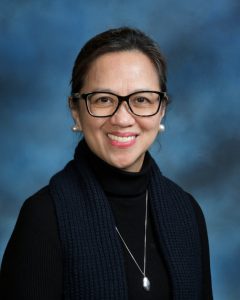
Picture of Tess Baguio

Tess Baguio

Principal of Small World Christian Kindergarten

Initially a chemist by training, Tess was inspired to change career directions to the field of education when her daughter entered Small World in 1998. Having found her calling to teach and serve young children, Tess qualified as a Kindergarten teacher with Hong Kong Institute of Education. She has completed two Post Graduate Diplomas in Education, specialising in Special Education (2010) and Early Childhood Education (2014) and subsequently completed her Certificate Course for Kindergarten Principals at HKBU (2015). She received her Masters Degree in Education (Early Childhood Education) from the University of Hong Kong in 2019.

Attracted to Small World by its biblical foundations and Montessori philosophy, Tess joined the school as a teacher in August 2001. She led the kindergarten as Vice-Principal in 2010 and as Principal in 2011. Tess and her team successfully led the accreditation of Small World in the International Early Years Curriculum (IEYC) in May 2021. In the same year, Small World was voted and recognized as ‘Kindergarten of the Year’ by the Hong Kong Living during the height of COVID. Tess believes that all children deserve equal opportunities to access the education offered by the school and to reach their true potential.

Back to news

1 July 2024

Reflecting on Global.Learn.Connect

The Global. Learn. Connect. Conference, held June 13-14 in Brazil, was a resounding success. This two-day event brought together a dynamic community of school leaders and educators, offering a rich learning experience through engaging keynote presentations and a diverse range of teacher-led workshops. The workshops provided valuable insights into the practical experiences of educators from the region and around the world. Attendees not only gained practical strategies but also fostered connections with colleagues, strengthening both regional and global school communities.

Hear from attendees on their key takeaways from the conference.

Tatiana Levy from Escola Eleva shares her key takeaways:

  • The need for understanding the learning journey of students considering sustainable development, dialogue, interdependence and identity and the ethics of care

  • The strategies we can use for our multilingual learners  to access a rich and challenging curriculum

  • The reflection on glocalization and decolonizing the curriculum 

Melissa Beeko from The British School, Rio De Janeiro shares:

One of the highlights of the conference was its facilitation of reflective moments. Conference workshops and discussions encouraged us to consider how we, as educators, use the curriculum to serve as both a window and mirror of a multicultural world; how we are equipping our students with the necessary skills to be agents of change, and how we are incorporating global issues into the curriculum whilst connecting to our local communities. These reflective moments were further enriched by The British College Brazil IB students, who shared the journey of their inspiring social impact project, Computers for All. Their presentation highlighted the transformative power of student-led initiatives and the critical role educators play in nurturing these initiatives.

We were also delighted by our students’ contribution to the conference. Our music club shared their talents, offering a taste of Brazilian culture while our student ambassadors played a pivotal role, leading our visitors around our learning spaces, providing a firsthand look at learning and our educational practices in action.

The conference was an incredible opportunity for connection, reflection, and growth. We are proud to have supported the ICA and look forward to future Global.Learn.Connect events.

Judith Dawson from Greengates shares:

With, the overarching themes of connection and globalization the conference was a whirlwind of keynote talks and smaller group workshops. The British School of Rio, Barra da Tijuca campus were our amazing hosts. On day One we were treated to a learning walk through the early years and primary school. Our well-informed guides were the Y6 children, who eloquently answered all our questions and showed a poise and understanding way beyond their years. We were welcomed into the classrooms, art room, music rooms and library to experience the learning. Our guides patiently explained the whole school house system and the personal goals as well as watching on bemused as we played on the trampoline in the beautifully revamped early years area.

As the day progressed it was clear that in this context the teachers were the students, and the students became the teachers. We were treated to a presentation by a group of young people who are taking action to improve the lives of the local community by rebuilding and gifting computers, ‘closing the digital divide, one computer at a time.’ @computers.forall they taught us how by understanding the digital divide, we can make a difference, empowering minds with the gift of technology. Please follow them on Instagram to increase their social media presence and help them help others. The session after their presentation put us in groups including the young adults, to discuss the skills, mindset and strategies needed to identify issues and opportunities in local and global communities. The buzzword of conference was quickly becoming, ‘glocalisation’. This approach aims to prepare students to think globally while acting locally, fostering a sense of global citizenship and local responsibility.

Of course, to finish the day we took some photographs and we may even have drunk some Caipirinhas but everyone was up early and ready for day two of the conference. Alan Downie started our day with the Keynote cheekily named, ‘The End of Education.’ This turned out to be a philosophical romp through the history of educational research and the continuing purpose of education in the 21st century. Yes, to what end do we educate; not education coming to an end, very clever, Mr. Downie.

We were treated to a musical interlude by the primary school music group. The highlights of this conference were so often driven by the students and the amazing traditional Brazilian music group wowed us with their skills and rhythm.

For the rest of the morning, we were treated to a choice of workshops. I had the pleasure of reflecting on multilingual learning with Karen Fraser Colby de Mattos, followed by a playful look at Entry points in the IMYP with Chris Barnes. This followed into a series of lightening Keynotes and an interactive session. As well as unpacking the learning myths; discussing multilingual learning; how to engage the wider community; inclusion and global citizenship we also learned how students can feel when you must move on to groups just as the discussion is getting juicy!

During lunches and breaks throughout the conference, we were invited to play, ‘Here be Dragons’. Those mythical beasts so scary and attractive at once are a synonym for the learning myths that as teachers we can be easily drawn into believing without real research or evidence. Neil MacRae invited us not to be taken in by legend but maybe still believe that we can help our students fly.

 Sarah Blackmore treated us to a new perspective on the traditional tale of the ‘Emperor’s New Clothes,’ to encourage us to look in the mirror and unpack if there is such a thing as cultural identity.  While the overlying ideas of global connection and learning were interwoven into the fabric of the conference; the underlying themes rang out to me as putting a new spin on an old story and handing over the power to the students to act and be ready to make changes under the banner of glocalization.

To end the conference, we had an open mike session and of course, it wasn’t just questions and answers. We were treated to the dulcet tones of Chris honouring his native Bob Marley and last but not least, an Oscar-type thank you speech from Andy.

It was an inspiring couple of days, well organised and diverse; peppered with student agency and practical ideas. Thank you to the course organisers and the British School of Rio for hosting.

Back to news

17 June 2024

The International Curriculum Association partners with 8billionideas to launch ‘The Critical Curriculum’

The International Curriculum Association (ICA) has partnered with ed-tech and services company, 8billionideas, to further enhance its International Curriculum and launch ‘The Critical Curriculum.’ The partnership will bring together the ICA’s rich educational resources and expertise with 8billionideas’ cutting-edge approach to prepare students for the challenges and opportunities of the future.

The ICA and 8billionideas are collaborating to work with schools in reshaping their curriculum landscapes with curriculum enhancements aimed at equipping students with essential future skills. The ‘Critical Curriculum’ will be structured around a suite of learning pillars.

The first learning pillar to be introduced will be focussed on Entrepreneurship and it will help learners to build a solid, holistic foundation of entrepreneurial skills. It will build an initial understanding of value and worth in the early years through introducing learners to the ideas of commerce in their communities through play-based learning. This will then be developed further in the primary years through idea-to-execution-based challenges. Learning will continue to be refined in the middle years via the means of interactive problem-solving challenges exploring crisis’ on a macro and micro level.

Sarah Blackmore, Director of the ICA, said: “We recognise the need for a comprehensive and innovative approach to teaching that stretches far beyond traditional academic learning. In a fast-changing world, skills such as critical thinking, creativity, collaboration and adaptability have an increasing significance. We are excited to be working together with 8billionideas to provide young learners with the opportunity to develop the skills they require for future success.”

David Harkin, CEO and Founder of 8billionideas, said: “At 8billionideas, we believe in empowering students to think creatively, act entrepreneurially, and prioritise their wellbeing. This collaboration with ICA enables us to amplify our impact, reaching a wider audience with our mission to revolutionise education for the betterment of individuals and society as a whole. We’ve worked closely with the ICA for 12 months to understand deeply its vision for education. In 2024, we will begin by offering all ICA schools a developed and bespoke learning pathway around our entrepreneurship pillar and expand in the years ahead.”

To find out more about how you can integrate entrepreneurship into your curriculum, visit: https://page.8billionideas.com/8billionideas-ica-partnership

Back to news

12 June 2024

ICA Welcomes EdEvents

We’re excited to announce a new partnership between the EdEvents Community (EdEvents) and the International Curriculum Association (ICA). As part of this collaboration, EdEvents are offering ICA member schools a 20% discount on EdEvents school memberships.

EdEvents is a convenient media hub for international educators interested in exploring a comprehensive directory of education events, innovative solutions, and exciting career opportunities. The platform brings educators together in a vibrant, collaborative environment.

Through strong partnerships with premier event organisers, solution innovators, and educational institutions, EdEvents aims to provide a seamless, centralised space to highlight the most impactful opportunities in the international education sector.

With an EdEvents school membership, schools can:
  • Populate their school profile, being discoverable in the community
  • Advertise their own professional events open to educators
  • Post job vacancies to the community

Schools interested in being early adopters on our platform can really stand out from the rest, taking full advantage of our numerous membership features designed to enhance their visibility and engagement in this brand-new and growing space.

By joining EdEvents, ICA member schools can stay connected with the latest and most meaningful developments in international education. Don’t miss out on this exclusive opportunity to enhance your school’s educational journey.

For more information and to claim your discount, visit www.ed.events or contact info@ed.events 

Back to news

3 June 2024

Launching icaSpotlight: upskill on the different dimensions of international education

The International Curriculum Association (ICA) is proud to launch icaSpotlight, a series of virtual mini-conferences designed to offer educators around the world innovation and affordable professional develop opportunities.

Curriculum agnostic, the event are tailored to provide educators with unique learning experiences, connect educators with leading experts, and foster a global network of education professionals.

The inaugural icaSpotlight sessions will focus on:

  • The Transformative Power of Theatre in Education (27 June 2024): This session explores how theatre can ignite curiosity, foster creativity, enhance empathy, and activate learner agency.
  • Exploring Global Citizenship (3 July 2024): In partnership with Inspire Citizens, this session delves into what it means to be a global citizen in today’s interconnected world.
  • ·Middle Years Conference 2024: Unlocking the Needs of the Teenage Brain (11-12 July 2024): A two-day event focusing on the latest research on teenage brain development, aimed at improving middle school education globally.

Each icaSpotlight is designed to be short and accessible, allowing educators to gain valuable insights without significant time commitments. The platform offers both individual and group ticket options, encouraging collaborative learning among peers.

To find out more about icaSpotlight and the upcoming sessions, visit: https://pd.internationalcurriculum.com/ica-spotlight

Back to news

2 May 2024

icaVoice Newsletters

See below the latest editions of the icaVoice Newsletter. To sign up to receive our icaVoice newsletter, head over to our homepage and scroll down.

January edition
April edition
Back to news

22 April 2024

Spotlight: Being an education mentor

The transition from education to employment can be a daunting one.  A lot of young people face challenges like unemployment, lack of experience, or are simply not sure what direction to take. The Prince’s Trust, a youth charity founded by His Majesty King Charles III, is here to help bridge that gap and empower young people.

For over 40 years, The Prince’s Trust has been offering young people the support, guidance, and resources they need to thrive. They recognise the unique obstacles young people face in today’s world, and through a variety of programs, they equip them with the confidence, skills, and experience to build successful futures.

Lucy Gray who is a valued part of the International Curriculum Association team, took part in The Prince’s Trust’s Mosaic Mentoring Programme, an initiative designed to connect young people with experienced professionals who can offer invaluable guidance and support. We hear from Lucy about her experience!

1. What initially motivated you to volunteer as a mentor with the Prince’s Trust Programme?

I have always held a strong belief in the possibility and importance of social mobility- knowing that if I had met someone I could look up to at a young age, my journey of upward mobility would have been less scary and more efficient/ effective. My primary motivations were to give back, to do something different/ learn something new, and to utilise my unique skills to help others.

2. What did you do to prepare for your first mentoring session?

Preparing for my mentoring session was enjoyable (22  students – 12ish years old)! As an ESOL teacher (in a past life) I was used to creating lesson plans that were high energy and held attention, this helped me to have a clear plan that was easily followed and impactful. It also meant I was comfortable managing a large class and could monitor/ provide feedback effectively. For the content itself, I utilised the Prince’s Trust recommended materials and adjusted these to fit the classroom dynamics and my style. The session itself focused on personal strengths and why these are important – activities included: definition matching, self-assessment, mentor presentations, and more! Key skills focused on: being sensitive, enthusiastic, brave, creative, adaptable, expressive, curious, gentle, generous, adventurous, spontaneous, and kind.

2.  What are some of the biggest challenges you’ve faced as a mentor, and how did you overcome them?

When you’re a new teenager and go to a large co-ed school, there are many social barriers to being true to yourself, courageous about yourself and making the most of a new and unfamiliar programme. The biggest challenge I found was the social unfamiliarity and inability to find group consensus among the students. As the students were chosen across the year by multiple different teachers based on their untapped potential – this meant that many of the students didn’t have a relationship with one another and were very socially withdrawn especially in the first half of the programme – all figuring out their place and what they needed to embody in this new situation. Thankfully time improved this, as trust was built with the mentors and other students week-by-week. We were also able to better personalize our lessons to the needs and temperaments of the students, focusing on more individual tasks, and building up to the group activities instead of jumping right in.

4. What would you say to someone who was thinking about volunteering to mentor?

Making someone feel of value is the name of the game. From this experience, I have realised that the students who get the most out of mentoring are the students who feel seen and know you are interested in them (especially if they haven’t felt like this before). I would recommend having 10+ open questions up your sleeve to facilitate conversation, 100% engagement and a genuine smile.

5.  What do you enjoy the most about mentoring with this program?

It has been a unique opportunity to meet young people and hear about how they interpret and interact with the world. I have enjoyed getting to know the mentees, teachers, and fellow mentors who all come from different backgrounds – policewoman, investment banker, software engineer, and psychology student to name a few. It has been great to expand my knowledge of the world and the others who are sharing it with me, especially knowing that the Prince’s Trust Mosaic Programme is shining a light on the possibility and positivity of tomorrow to the young people who need it.

About: The Prince’s Trust, Mosaic Mentoring Programme:

The Prince’s Trust is a leading UK charity founded in 1976 by King Charles III (the then Prince of Wales) and offers vital support for young people aged 11-30 years through multiple initiatives such as the Mosaic Mentoring Programme. The programme itself pairs disadvantaged youth with inspiring mentors, providing guidance and real-world insights together with a focus on employability skills and confidence building. The programme aims to empower students to overcome obstacles, pursue their dreams and reach their potential.

You can find out more about the Prince’s Trust here: https://www.princes-trust.org.uk/.

Enquire now

Find out more about ICA products and services!