Search List show here

Students in Action: Feeling Confident, Empowered, and Becoming Agents of Learning

We (students from Futuraskolan International School of Stockholm) had to write a proposal for an action plan as part of our Exit Point for the International Middle Years Curriculum (IMYC) unit Responsibility. This was a challenging task because we wanted to come up with a really good plan that nobody else had thought of. We wanted our presentation to be impactful and educational. After a lot of planning and discussion, we decided to focus on feminine hygiene because we found this topic not to be spoken about enough. We wanted people in our school to talk about the topic more freely and comfortably, which can be complicated when a school is international. 

Our proposed plan took a lot of discussion and research. We wanted our slides to include informative and reliable research. When we gave the presentation the first time, to just our classmates, we received some uncomfortable reactions that included laughing. However, the second time we presented, we received much more positive and respectful feedback. This is what we wanted to achieve, and we did it!
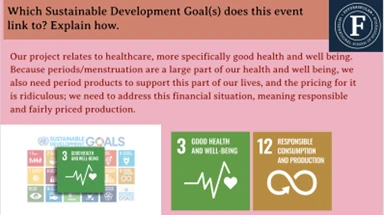
Our experience when presenting to the entire middle school was overall positive. However, we all felt nervous and apprehensive of the possible negative judgments and comments but were pleasantly surprised with the positive reactions from students. We also found that presenting makes us feel more confident in our communication skills, it enables us to be our own agents in making decisions and understanding the benefits of those decisions.
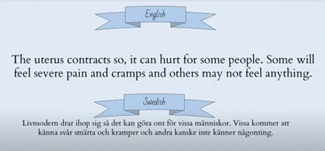
As part of our project, we also created an informational video, which was shown in each mentor class. The purpose was to educate our fellow students and spread awareness about women’s hygiene and menstruation. The process had two steps: first, the students were given a questionnaire, asking questions that were later explained in the video; then, we interviewed two nurses in order to get reliable responses. The video shows the importance of learning about menstruation and also shows appreciation for the subject. 

Our final project was creating a period product box and a bag. These consisted of pads, tampons and sanitary napkins. In other words, they included everything a girl would need if she got her period unexpectedly. This will be very beneficial for most girls because then they don’t have to go around and ask other students or teachers for menstruation products when they are in need of them. We placed the box and bag in easily accessible places around the school.

In conclusion, taking action like we did in our feminine hygiene project, which included presenting it in an assembly, makes students feel empowered in their communication skills and boosts one’s confidence, especially when presenting to a big crowd. We felt empowered by what we had accomplished, and that allowed us to present assertively and this presented us with new opportunities to grow the menstruation project.

Author

Picture of Nadja Lund, Ester Berning, Francesca Radochinskaya from Futuraskolan International School of Stockholm

Nadja Lund, Ester Berning, Francesca Radochinskaya from Futuraskolan International School of Stockholm

Students

Back to news

4 October 2024

ICA Drop In Sessions

The Q&A Drop in session is an open drop in for teachers and leaders to ask any questions they wish.

Including:

  • How to subscribe
  • Implementation
  • Curriculum specific questions
  • Professional Development
  • ICA – Mentor services, Recognition, Accreditation
  • Finance

Please book a slot, and we look forward to supporting you.

Q&A session with Alex Johnson – Europe and Middle East

Q&A session with Linh Dong – APAC

Q&A session with Karen Fraser – Americas and Africa

Outreach and Development Team

ICA marks International Equal Pay Day with introduction of new gender equality learning unit

To mark the United Nations (UN) International Equal Pay Day on 18 September, we have introduced a new optional gender equality unit for our International Primary Curriculum (IPC).

The unit forms part of its ‘SDG Challenge Series’, which gives primary school students the opportunity to develop global competence through learning linked to each of the UN’s 17 Sustainable Development Goals (SDGs).

Gender equality is the focus of SDG 5, and IPC learners at participating schools will learn how to improve the lives and treatment of women and girls around the world through its new multidisciplinary unit.

According to research conducted by the Fawcett Society, 45% of young people experience gender stereotyping that expects them to behave in a certain way. This highlights the importance of learning about gender equality from a young age.

Jacqueline Harmer, Head of the International Primary Curriculum, said: “The international education community has a responsibility to improve students’ capacities to positively impact the world, and I am absolutely delighted to announce the launch of our new IPC unit which focuses on gender equality. It is clear that experiences during childhood have a significant impact on people’s outlook with regards to gender equality, and we have a real opportunity to shift the dial on creating a more equal society through education.”

The new unit will explore gender equality primarily through Creative Arts and Drama. Students will use Drama and Art as tools for research and will be encouraged to explore female representation in both disciplines and how it has changed throughout history, as well as learning about historical figures who have campaigned for gender equality. Teachers will also be empowered to analyse whether there is equal gender representation within their own curriculum.   

Jacqueline Harmer added: “By utilising our framework of research influenced and culturally responsive curriculum materials, educators are able to deliver learning experiences that not only improve learners’ opportunities to succeed in later life, but to positively influence the world in the present. I am pleased that IPC learners will now be able to benefit from a learning unit which has been designed to empower girls and women, develop empathy and, importantly, encourage children to use their skills and understanding to positively impact their communities.”

The IPC is delivered to students aged 5 – 11 years old and it supports their Academic, Personal, and International development.

Author

Picture of International Curriculum Association

International Curriculum Association

The International Curriculum Association (ICA) brings together the three age ranges of the International Curriculum: the International Early Years Curriculum (IEYC) for learners aged 2-5+ years old; the International Primary Curriculum (IPC) for learners aged 5-11 years old; and the International Middle Years Curriculum (IMYC) for learners aged 11-14 years old, with Professional Development for teachers and leaders and a two-stage Recognition and Accreditation process for schools, to ensure that with teachers, leaders and schools, we are improving learning, together.

ICA Teacher Awards

The International Curriculum Conference (ICC24) is proud to announce the first ICC24 Teacher Awards. A celebration of the exceptional educators who inspire and empower their students. These awards aim to recognise the positive impact teachers have on their communities and foster a culture of excellence in education.

Award Categories:

  • Best Newcomer Award: Honouring a promising new teacher who has made a significant impact in their initial years of teaching.
  • Community Engagement Award: Celebrating a teacher who fosters positive relationships and collaboration between their school and the wider community.
  • IEYC Teacher of the Year Award: Recognising an IEYC teacher who consistently demonstrates exceptional IEYC teaching skills and engagement with early learners.
  • IPC Teacher of the Year Award: Recognising an IPC teacher who consistently demonstrates exceptional IPC teaching skills and engagement with primary learners.
  • IMYC Teacher of the Year Award: Recognising an IMYC teacher who consistently demonstrates exceptional IMYC teaching skills and engagement with middle school learners.
  • Leader of the Year Award: Honouring an individual who has demonstrated outstanding leadership in their school, fostering a positive school culture and commitment to educational excellence.

Eligibility Criteria:

All educators employed at an ICA Subscribed School are eligible to nominate or be nominated for these awards.

Nomination Process:

  1. Online Nomination Form: Nominations will be accepted through an online form available here.
  2. Voting Period: Voting will be open to all ICA Subscribed Schools during the month of October.
  3. Voting Method: Voting will be conducted via an online form. (Multiple submissions from the same person will not be counted. Submissions that are not from an ICA Subscribed school will not be counted).
  4. Winner Selection: The category winner will be determined by the individual with the most votes received.

Recognition and Celebration:

  • Awardees will receive an award and a certificate (if they are present at our upcoming conference, they will receive the award here).
  • Schools with award-winning teachers will be celebrated with a case study.
  • We will promote the awardees and their accomplishments through the icaVoice winter edition, social media, and local media outlets.

Join us in celebrating the exceptional educators who make a difference in the lives of their students!

Author

Picture of International Curriculum Association

International Curriculum Association

The International Curriculum Association (ICA) brings together the three age ranges of the International Curriculum: the International Early Years Curriculum (IEYC) for learners aged 2-5+ years old; the International Primary Curriculum (IPC) for learners aged 5-11 years old; and the International Middle Years Curriculum (IMYC) for learners aged 11-14 years old, with Professional Development for teachers and leaders and a two-stage Recognition and Accreditation process for schools, to ensure that with teachers, leaders and schools, we are improving learning, together.

Back to news

23 August 2024

Thriving in the International School Arena: A Conversation with Martin Boother

We’re thrilled to present a spotlight episode of our International Curriculum Specialist Series guest-hosted by International Schools Network.

In this thought-provoking discussion, we delve into the unique experiences of educators working at international schools. Our esteemed guest, Martin Boother, Assistant Head at a prestigious international school in the UAE, offers valuable insights and practical advice for both seasoned educators and aspiring individuals considering a career abroad.

Unveiling the realities of International Education

The interview delves into a range of pertinent topics, including:

  • Leading in the UAE: Martin shares his journey and experiences as a senior leader at a renowned international school in the UAE.

  • Work-Life Balance and Wellbeing: Explore the unique challenges faced by international school staff and discover strategies for maintaining a healthy work-life balance while navigating cultural adjustments and living away from family.

  • Professional Development and Support: Learn about specialized resources and programs that international schools can offer to enhance staff wellbeing and support their professional growth.

  • Building a Strong Community: Discover how schools can foster a sense of belonging and combat isolation among educators.

  • Navigating Transitions: Get valuable tips and resources to assist educators during re-entry and transitions between international locations.

This episode is a must-listen for:
  • Educators currently working in international schools

  • Individuals considering a career move to an international school

  • School leaders seeking health and wellbeing strategies to support their international staff


Ready to watch or listen?

Watch on YouTube or Listen to the podcast version

Sign up for our free Professional Development Hub

Don’t forget to sign up to our new PD Hub, available to all educators worldwide! The International Curriculum Association Professional Development Hub has been developed with you in mind. We offer a comprehensive range of learning opportunities for teachers and leaders.

Fostering Growth: Harnessing Social Emotional Learning for Student Success

In this round-table discussion, the crucial role of social-emotional learning in schools is explored. International classrooms are where many students are first exposed to people who hail from a range of different backgrounds, belief systems and abilities.

Listen as the panel discusses:
  • Defining Social Emotional Learning: Why it’s important for schools to establish clear SEL in their curriculum offering.

  • Effective strategies for integrating social-emotional learning (SEL) into various subject areas within the curriculum.

  • Assessing and monitoring students’ social-emotional development effectively.

  • Ways in which educators can foster a supportive and inclusive classroom environment that promotes students’ social-emotional growth.

  • The role parents and caregivers play in supporting SEL initiatives, and how can educators collaborate with them to reinforce SEL skills outside of the classroom.

Guests
  • Landon Seigler, M.Ed – Middle School Principal | Designated Safeguarding Lead at East-West International School, Cambodia. Representative for the International Curriculum Association
  • Donovan Robus,  Head of SEL & Student Support Service at Hsinchu International School
  • Jonno Melia – Deputy Principal Pastoral & Wellbeing and Designated Safeguarding Lead at Brighton College
  • Corneila Weiner, School Principal at Dubai Arabian American Private School
  • Martin Boother, Senior Leader at GEMS Metropole School

Author

Picture of International Curriculum Association

International Curriculum Association

The International Curriculum Association (ICA) brings together the three age ranges of the International Curriculum: the International Early Years Curriculum (IEYC) for learners aged 2-5+ years old; the International Primary Curriculum (IPC) for learners aged 5-11 years old; and the International Middle Years Curriculum (IMYC) for learners aged 11-14 years old, with Professional Development for teachers and leaders and a two-stage Recognition and Accreditation process for schools, to ensure that with teachers, leaders and schools, we are improving learning, together.

Information Session with the ICA

In an increasingly globalised world, do you want to improve students’ learning with an evidence-based international curriculum that can be tailored to your location? Are you looking for professional development that enables you to build effective practices that unlock learning potential?

Whether you’re already familiar with the International Curriculum Association or are curious to learn more, you can join us for a live demonstration of the Curriculum Portal and the PD hub. The session will also include a live Q&A. The webinar will run twice, first at 9:30 AM BST and again at 17:30 PM BST UK time in the hope that we are supporting all time zones.

Session 1
📅 Date: 22 May, 2025
🕒 Time: 9:30 AM or 17:30 PM UK Time 

🔗 PD Hub: Access live session


Overview

Please join one (or as many as you wish) of our information sessions to learn a little bit more about the products and services that we offer at the ICA. From Curriculum to Professional Development & quality assurance.  We will invite some of our community to support these sessions on occasion, so keep your eyes peeled for updates. We will always have time for live Q&A’s too. We look forward to meeting you and helping you learn more about what we do! 

We look forward to meeting you and helping you learn more about what we do!

Author

Picture of International Curriculum Association

International Curriculum Association

The International Curriculum Association (ICA) brings together the three age ranges of the International Curriculum: the International Early Years Curriculum (IEYC) for learners aged 2-5+ years old; the International Primary Curriculum (IPC) for learners aged 5-11 years old; and the International Middle Years Curriculum (IMYC) for learners aged 11-14 years old, with Professional Development for teachers and leaders and a two-stage Recognition and Accreditation process for schools, to ensure that with teachers, leaders and schools, we are improving learning, together.

Progressive Pedagogy in Early Years and Primary

As everyone gets ready to return to school, there is a sense of anticipation in the air. Families are preparing everything their children need, while teachers have been busy during the preparation week. They’ve been attending back-to-back meetings, preparing class displays, organising student lists, arranging classroom layouts, creating timetables, and more. Behind the scenes at the start of the new academic year are layers of preparation. Every word, action, and activity in the learning experiences are meaningful, as they all stem from the rich curriculum foundation that all teachers must understand well.

At the beginning of the school year, it’s important to recall the school’s vision, mission, aims, and philosophy. This serves as a reminder of the direction of education in the school. The International Early Years Curriculum (IEYC) and International Primary Curriculum (IPC) Learning Foundations have been instrumental in guiding teachers as they plan activities, especially during the first week of school when students are undergoing their orientation week.

Progressive pedagogy is a foundational approach to learning that enables teachers to create environments where students actively construct their own learning experiences rather than just receiving information. Teachers use four categories of pedagogy as part of their planning and preparation:

  1. Brain Based:  Promoting retention in the long-term memory

    Younger learners benefit most from play and visualization. Teacher Images Puzzle is an excellent game for familiarizing children with the teaching staff. In this game, children work in groups to solve puzzles. Once they complete a puzzle, they have the opportunity to meet and get to know the teacher featured in it. 

  2. Constructivism: Connecting new learning to prior learning

    The school tour is a great way for both current and new students to familiarize themselves with the school. This is especially important when there have been relocations, new buildings or areas, and renovations. It allows students to compare the current school environment with the previous academic year.

  3. Experiential and Active: The learners are fully engaged in learning activities

    During the upper graders’ first week of orientation, students have the chance to brainstorm and come up with ideas. They elect class crews, make classroom agreements, and campaign against bullying. These activities not only keep them engaged but are also meaningful for their learning throughout the year.

  4. Metacognition: Learning is improved by learner reflection

    It is important to set goals for the upcoming academic year by reflecting on past learning experiences. This will help students enhance their learning. The insights gained from this activity can also provide valuable data for teachers to plan and support the learning activities for the year.

To all teachers and education leaders: As we start a new year of shaping minds and inspiring futures, remember that our dedication plants the seeds of excellence in every student. Embrace the journey, ignite curiosity, and witness the classroom flourish with endless possibilities. Let’s kick off the new academic year with excitement and a commitment to enhancing education for children worldwide from Day One!

Author

Picture of Julianti Hadi Purnami Nugroho

Julianti Hadi Purnami Nugroho

Principal for Early Years and Primary at Sekolah Cita Buana

Julie has dedicated over 28 years to working in education. She has extensive experience working with national and international schools in Indonesia and abroad. Julie has taught and developed curricula for young learners, teenagers, and professionals. Later in her career, she became actively involved in establishing and developing schools. Additionally, she has worked as a trainer and education consultant for various schools in Indonesia and Southeast Asia. Julie started her career as an English Teacher and later expanded her expertise as a Speech and Drama Teacher, Special Education Teacher, and School Manager.

The significant changes in the education sector motivated Julie to enhance her knowledge and skills in contributing to the decision-making processes and the establishment of bilingual schools, inclusive schools, and teacher development centers. Following the completion of her master’s degree in education management, Julie remains committed to promoting an inclusive education mindset, aiming to provide opportunities for all children with different abilities to learn at their own pace and according to their strengths. Julie aspires for educators and school leaders worldwide to collaborate in creating an environment that nurtures holistic growth in learners, where personal qualities are equally valued alongside academic achievement.

Enquire now

Find out more about ICA products and services!