Search List show here

Back to news

22 April 2024

Spotlight: Being an education mentor

The transition from education to employment can be a daunting one.  A lot of young people face challenges like unemployment, lack of experience, or are simply not sure what direction to take. The Prince’s Trust, a youth charity founded by His Majesty King Charles III, is here to help bridge that gap and empower young people.

For over 40 years, The Prince’s Trust has been offering young people the support, guidance, and resources they need to thrive. They recognise the unique obstacles young people face in today’s world, and through a variety of programs, they equip them with the confidence, skills, and experience to build successful futures.

Lucy Gray who is a valued part of the International Curriculum Association team, took part in The Prince’s Trust’s Mosaic Mentoring Programme, an initiative designed to connect young people with experienced professionals who can offer invaluable guidance and support. We hear from Lucy about her experience!

1. What initially motivated you to volunteer as a mentor with the Prince’s Trust Programme?

I have always held a strong belief in the possibility and importance of social mobility- knowing that if I had met someone I could look up to at a young age, my journey of upward mobility would have been less scary and more efficient/ effective. My primary motivations were to give back, to do something different/ learn something new, and to utilise my unique skills to help others.

2. What did you do to prepare for your first mentoring session?

Preparing for my mentoring session was enjoyable (22  students – 12ish years old)! As an ESOL teacher (in a past life) I was used to creating lesson plans that were high energy and held attention, this helped me to have a clear plan that was easily followed and impactful. It also meant I was comfortable managing a large class and could monitor/ provide feedback effectively. For the content itself, I utilised the Prince’s Trust recommended materials and adjusted these to fit the classroom dynamics and my style. The session itself focused on personal strengths and why these are important – activities included: definition matching, self-assessment, mentor presentations, and more! Key skills focused on: being sensitive, enthusiastic, brave, creative, adaptable, expressive, curious, gentle, generous, adventurous, spontaneous, and kind.

2.  What are some of the biggest challenges you’ve faced as a mentor, and how did you overcome them?

When you’re a new teenager and go to a large co-ed school, there are many social barriers to being true to yourself, courageous about yourself and making the most of a new and unfamiliar programme. The biggest challenge I found was the social unfamiliarity and inability to find group consensus among the students. As the students were chosen across the year by multiple different teachers based on their untapped potential – this meant that many of the students didn’t have a relationship with one another and were very socially withdrawn especially in the first half of the programme – all figuring out their place and what they needed to embody in this new situation. Thankfully time improved this, as trust was built with the mentors and other students week-by-week. We were also able to better personalize our lessons to the needs and temperaments of the students, focusing on more individual tasks, and building up to the group activities instead of jumping right in.

4. What would you say to someone who was thinking about volunteering to mentor?

Making someone feel of value is the name of the game. From this experience, I have realised that the students who get the most out of mentoring are the students who feel seen and know you are interested in them (especially if they haven’t felt like this before). I would recommend having 10+ open questions up your sleeve to facilitate conversation, 100% engagement and a genuine smile.

5.  What do you enjoy the most about mentoring with this program?

It has been a unique opportunity to meet young people and hear about how they interpret and interact with the world. I have enjoyed getting to know the mentees, teachers, and fellow mentors who all come from different backgrounds – policewoman, investment banker, software engineer, and psychology student to name a few. It has been great to expand my knowledge of the world and the others who are sharing it with me, especially knowing that the Prince’s Trust Mosaic Programme is shining a light on the possibility and positivity of tomorrow to the young people who need it.

About: The Prince’s Trust, Mosaic Mentoring Programme:

The Prince’s Trust is a leading UK charity founded in 1976 by King Charles III (the then Prince of Wales) and offers vital support for young people aged 11-30 years through multiple initiatives such as the Mosaic Mentoring Programme. The programme itself pairs disadvantaged youth with inspiring mentors, providing guidance and real-world insights together with a focus on employability skills and confidence building. The programme aims to empower students to overcome obstacles, pursue their dreams and reach their potential.

You can find out more about the Prince’s Trust here: https://www.princes-trust.org.uk/.
Back to news

22 April 2024

International Dimension and Global Learners

MET Rishikul Vidyalaya had an interactive cross-cultural exchange session with Jakarta Nanyang School, as part of our exiting IEYC Unit – Let’s Have a Party.

The unit is “learning all about celebrations and parties that happen all around the world!” a fun-filled video session was conducted, wherein both schools enjoyed exchanging vibrant traditions and festivities. For the unit’s Learning Block 1: Celebrations Around Me – our students proudly presented and explained the rich cultural heritage of Makar Sankranti, a significant kite-flying celebration of the harvest festival in India. Witnessing their enthusiasm and pride as they shared our country’s traditions was an amazing moment to note.

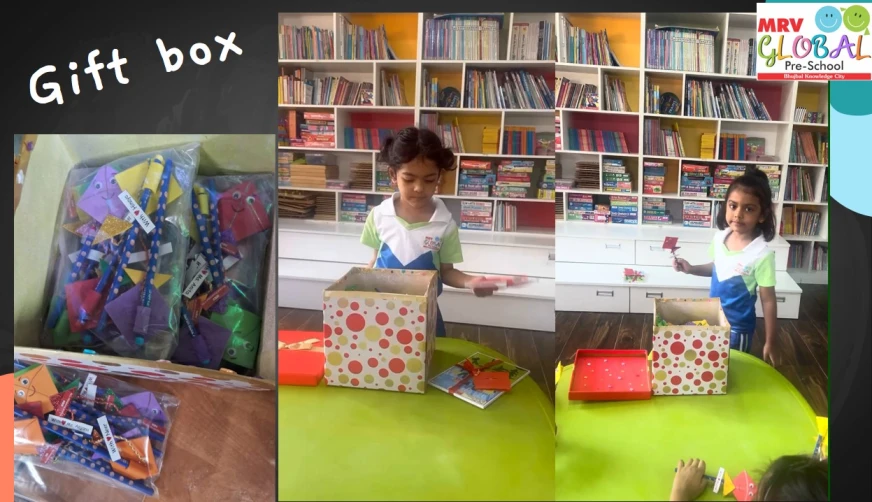
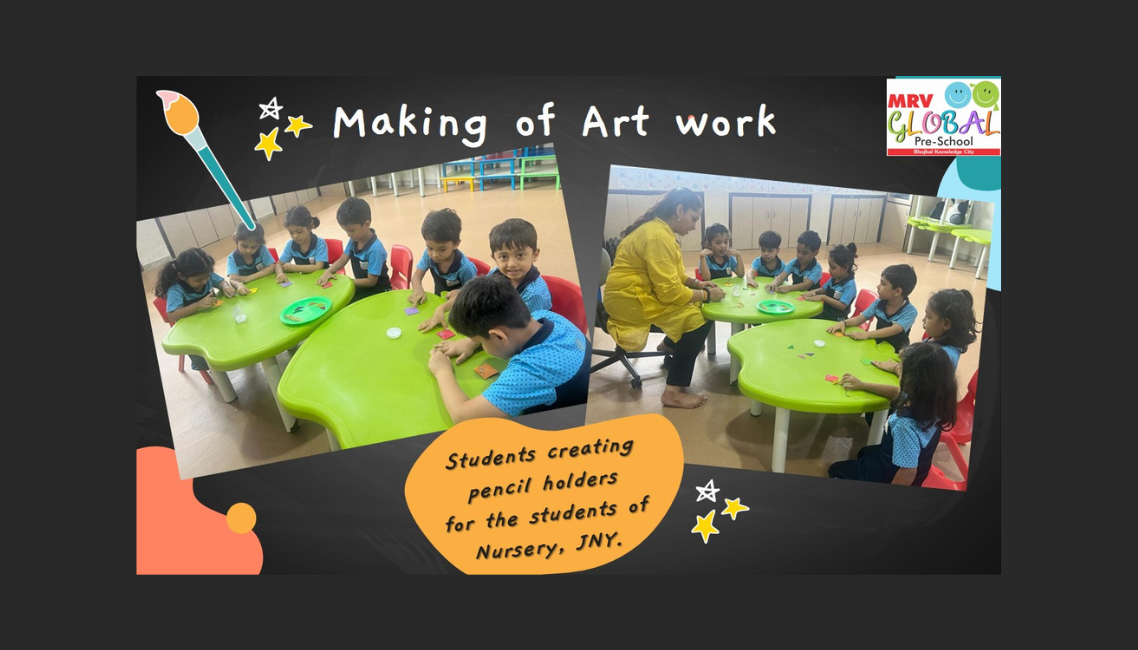
Equally fascinating was the exposure to the unique birthday traditions of the students and teachers from Jakarta Nanyang School. Their distinctive practices added an extra layer of excitement and intrigue to our partnership for learning. The excitement reached new heights as both schools exchanged greetings and souvenirs of super cool pencil cap holders (by MRV) in the form of kites and bead bracelets (by JNY), making the experience even more memorable.

This collaborative experience has left an indelible mark on all participants, creating lasting memories and reinforcing the values of collaboration, cultural exchange, and global learning. We extend our heartfelt thanks to our young ambassadors and the Jakarta Nanyang School for making this cultural journey an incredible success!

Back to news

22 April 2024

Get to know Chris Barnes from Hillel Academy

1.  Let’s start with a glimpse into your professional journey. Can you share a bit about your background?

My journey commenced at The University of the West Indies, Jamaica, where I pursued both my Bachelor’s degree in Biology with a focus on Education and my Master’s degree in Educational Leadership and Management. These formative years laid a robust foundation for my career in teaching and educational leadership. With a relatively young tenure in academia spanning four years, I’ve been fortunate to embrace leadership roles, including that of a Curriculum Coordinator. Throughout this journey, I’ve remained driven by a profound passion for both the subject matter and the pedagogical process, propelling me to consistently innovate and enhance my teaching practice.

2.   What’s one piece of advice you would give to someone starting out their teaching career and one piece of advice to someone who has been teaching a while but wants to incite change in their school?

One piece of advice for someone embarking on a teaching career is to ensure that their motivation stems from a genuine passion for the field. Teaching demands not only knowledge and skills but also emotional investment. It can be emotionally draining at times, and having a deep-seated love for education is vital for sustained growth and fulfillment in the profession.

For experienced teachers seeking to incite change in their school, it’s crucial to revisit their initial motivations and remember “why” they chose to enter the teaching profession. Reconnecting with this sense of purpose can reignite their passion and provide clarity in driving forward initiatives for change. Moreover, it’s essential for seasoned educators to adopt a growth mindset, viewing challenges not as indicators of inadequacy but as opportunities for personal and professional development. Embracing this mindset enables them to approach obstacles with resilience and a willingness to learn, ultimately fostering an environment of continuous improvement.

3.  When did you/your school begin the journey with IMYC, and how long have you been implementing it?

Our school began its journey with the IMYC six years ago. Since then, we have been dedicated to implementing this innovative curriculum framework, which has greatly enriched our students’ learning experiences.

4.  What are the biggest challenges on the horizon for your context/school?

Our primary challenge revolves around striking the delicate balance between academic rigor and holistic learning while preventing staff and student burnout. While we aim to uphold high academic standards, we recognize the importance of providing a learning environment that nurtures students’ overall well-being and fosters meaningful connections between curriculum content and their lived experiences.

5.  How has implementing the IMYC helped with improving learning in your context/school?

One of the key benefits is the framework’s emphasis on inquiry-based learning, which fosters critical thinking, creativity, and problem-solving skills among our students. The curriculum allows our students to extend their knowledge beyond their context and make international connections, enriching their understanding of global issues and perspectives.

Furthermore, the IMYC’s flexibility enables teachers to personalize learning experiences and cater to the diverse needs and interests of students. This flexibility not only empowers teachers to innovate and adapt instructional strategies but also fosters their professional growth and development. By continually refining their practice and exploring new pedagogical approaches, teachers are better equipped to meet the evolving needs of their students and create engaging learning experiences.

6.  If you could have any superpower related to your work, what would it be and why?

If I could have a superpower related to my work, I’d be thrilled to have the ability to predict the future! Just imagine the excitement of being able to anticipate upcoming challenges and opportunities in education before they even arise. With this superpower, I’d be able to stay one step ahead, dynamically adapting curriculum, teaching methods, and school policies to ensure our students receive the best possible education.

7.  We’d love to know a bit more about you beyond your professional persona. What do you like to do when you’re not working?

Outside of work, I’m all about the thrill of Broadway musicals, the excitement of anime adventures, and the mind-blowing wonders of space exploration! Whether I’m belting out show tunes, binge-watching the latest anime series, or geeking out over space videos, I’m always up for an exhilarating adventure that sparks joy and ignites my imagination! From musicals such as Hamilton to the epic battles of Naruto, I love diving into worlds filled with creativity, imagination, and endless possibilities.

8.  What’s the most interesting thing you’ve learned recently, inside or outside of work?

One of the most fascinating things I’ve recently learned is about the phenomenon of aphantasia, where some individuals lack an internal narrator or mental imagery. This revelation has reshaped my understanding of human cognition and perception, highlighting the diversity of experiences within our own minds. Simply shows how unique we all are.

9.  What’s your favourite way to unwind and de-stress after a busy day?

My favorite way to unwind and de-stress after a busy day is by calling my parents. Every day at 6:30pm, I make it a point to call my mom and dad. This daily ritual not only helps me decompress, but it also strengthens my bond with my family, providing a sense of comfort and support that rejuvenates me for the days ahead.

10. One thing on your bucket list?

To travel the world and connect with different people and cultures.

Back to news

26 March 2024

World Languages and the Middle Years

When we first introduced the International Middle Years Curriculum (IMYC) at French International School for our future Year 7 cohort, we were going through a phase of online learning in our school. Faced with such a hurdle and no unit plans for World Languages, it was immediately met with ‘the curriculum doesn’t apply to us’ and ‘how can we do this?’ Determined to make it work and to build on the excellent work done at the International Early Years Curriculum (IEYC) and International Primary Curriculum (IPC), we focused on how we could make the curriculum work following the Big Ideas alongside our fellow departments. 

The IMYC World Languages Learning Goals already aligned with our current practice so the question of how we deliver the curriculum was our main issue.

As teachers, we had decided democratically on the Big Ideas so it became a question of how we match topics to cover a thorough curriculum for our learners.

We took all topics traditionally covered in KS3, completely rearranged and adapted them to be able to provide a rigorous curriculum.

We began with the Big Idea of ‘Adaptability’. As a French school, the language is compulsory for all and we have 4 levels of learners in each cohort Standard, Intermediate, Higher, and Advanced. Standard is for beginners, Intermediate and Higher for those who have studied French in Primary School, achieving a level equivalent to traditional Year 8 or 9 students and Advanced is typically for native speakers. At that time, Mandarin was taught at 2 levels; Foreign Language and Second Language. We now also have a First Language Mandarin class. Spanish is beginner-level for all students in Year 7.

As a department, we agreed that the topic of ‘School Life’ would be ideal for everybody and fit well with the Big Idea of Adaptability. New learners of French, Spanish, and Mandarin would Adapt to their new language by covering the basics. Intermediate and Higher groups would study school life as they adapt to secondary school and Advanced would begin an introduction to literature by studying texts such as Le Petit Nicolas using Language Arts Learning Goals.

Introducing International Learning Goals is relatively easy for World Languages. Writing from the experience of having taught the intermediate French group, we began by planning our end-of-unit project.

We wanted students to be empathetic whilst also learning about francophone culture and showing off their grammatical knowledge.

Our end-of-unit project was to be a magazine article where students would research a day in the life of a school student in a francophone African country. We modelled the diary entry on a student in Senegal. The results were fantastic. Students chose a country, researched where they would live, chose a traditional name, looked at the food they would eat, and also focused on differences and similarities between their schooling and that of their chosen location. After introducing the project, we encouraged learner agency by asking students to write their assessment rubric which they did with competency, whilst also challenging themselves to include academic rigour.  

From a traditional approach, our students now experience Knowledge, Skills, and Understanding via an exciting journey in language learning. Textbooks are gone, consistency is across the board in all three languages, reflection is continuous and our department team teaches and collaborates at all times. Assessment is formative and summative with student input. To mention a few examples, end-of-unit projects include presentations, slam poetry, podcasts, vlogs, pitching products, and creating new resources for peers. Learner agency and metacognition are highly present at all times throughout our units.

We are in our 4th year of delivering the IMYC and our curriculum in World Languages for Years 7 to 9 is exciting, challenging, and constantly developing. At the end of Year 9, our students are ready to begin the International General Certificate of Secondary Education (IGCSE) with a solid language foundation and are learning skills that will serve them well through to the International Baccalaureate Diploma Programme (IBDP) and beyond.

Back to news

20 March 2024

Exit Points- A Celebration of Learning

Exit points are the final step in the student’s learning journey during an International Primary Curriculum unit of study. The Exit Point has two main purposes: to help children pull together their learning from the unit and to celebrate the learning that has taken place. At Nadeen, we have had a wonderful start to our IPC learning journey with three extremely successful Exit Points across primary since the introduction of the International Primary Curriculum this year. These have ranged from trips to exhibitions and museums. These celebrations of learning have included parents, teachers, and students from other year groups. 

Students in Year 6 embarked on an enchanting journey about myths and legends from their own country. Students presented their myths and legends through performances, artwork, and storytelling. In Year 5, students created their museum, exploring the theme of “The Great, The Bold, and The Brave.” Transforming their Year 5 and 6 collaborative areas, students showcased artifacts, and interactive displays, and delivered informative tours to year groups in the school. 

“I’m very proud of the Year 5 students. They did independent research prior to the Exit Point and on the day they were able to share their knowledge confidently and with loads of enthusiasm.“ Ms Karlien Year 5 Teacher. “We prepared for the Exit Point by designing things like plates, jewellery, shields, vases and many more things” Hitisha in Year 5 

In Year 4, our students explored the Stone Age, delving into the lives of scavengers and settlers who roamed the earth thousands of years ago. Students immersed themselves in hands-on activities that brought history to life from designing Stone Age paintings to crafting Stone Age necklaces. 

“I enjoyed making Stone Age jewellery and playing interactive games with my mum” Minahil in Year 4.

“It was great to see the children teaching the parents what they had learned in the Stone Age IPC topic. The children showed great enthusiasm showing the parents what life was like thousands of years ago and demonstrated good knowledge of the unit. Parents enjoyed joining the children for a quiz at the end of the exit point to test their Stone Age knowledge. ” Ms Nicole Year 4 Teacher.

In Year 3’s Mummification Exit Point, students engaged in a hands-on exploration of ancient Egyptian culture. They learned about the mummification process, wrote hieroglyphics, sketched ancient designs, and constructed miniature pyramids. This immersive experience deepened their understanding of ancient civilizations and fostered creativity.

In Year 2, our students completed an observational walk to our local mall of Dilmunia, where they found inspiration in their surroundings. Through observational drawing, students captured the beauty of some of the local buildings and created stunning artworks that reflected their observations and experiences while also enjoying a picnic.


“On our way back to school, the buzz of conversations among students and parents about the day’s experiences was heartwarming. Their drawings, each unique and insightful, reflected their keen observations and what they had learned about Art.“ Mr Joseph Year 2 Teacher.

“For our Exit Point, we went on a walking trip to Dilmunia Mall to sketch Dilmunia Mall, the canal or Nadeen School. The walk from school was exciting, we walked in pairs and enjoyed looking around the street.” Shanzey Jahanzeb in Year 2

Year 1 explored the world of buildings and studied various structures in towns and cities globally, drawing inspiration from projects from our local surroundings. Additionally, students explored the concept of recycled buildings, broadening their understanding of sustainability. 

Exit Points offer parents a firsthand glimpse into their children’s learning experiences and achievements. By attending exhibitions, performances, and presentations, parents gain insight into the curriculum and see how their children are applying their knowledge and skills in creative and meaningful ways. Exit Points is a celebration of learning that enriches the educational journey of our students while strengthening the bonds between our school and the wider community.

Back to news

13 March 2024

A Teacher’s Journey with ChatGPT and Beyond

Over the past 4 decades, I have seen some remarkable shifts in the resources available to teachers.  Recently a new tool has arrived with great potential to enhance the lives of teachers and students alike, if not revolutionise education itself – artificial intelligence.

As an early adopter of ChatGPT at the beginning of 2023, I was quickly impressed by some of its education-related capabilities. It was able to provide levelled-texts on demand on any subjects I could think of.  It could also create a variety of receptive and productive tasks for students for those same texts that focused on specific chosen aspects of learning. It could help redesign a lesson to increase student engagement, suggesting ideas for variety and dynamism. It could simplify existing planned tasks providing opportunities for differentiation. It could redesign a lesson while still adhering to the stated Learning Goals. And a lot more.

How ChatGPT Became a Game-Changer in My Classroom

Being the Academic Director at Tonkla School Chiang Mai, I quickly saw the potential for it to help both experienced teachers and newer teachers by providing ideas for planning, teaching, and assessment. I am trying to encourage differentiation across all grade levels and I found that ChatGPT could play a complementary role in teacher development by suggesting various approaches to modifying content, tasks, instructions, and seating, for example, that follow up on or prepare for face-to-face PD sessions. I have held several PD meetings with IPC and English teachers to explore the potential benefits, always headlining with the reminder that human oversight is essential every time it is used. It can quite confidently make mistakes and needs correcting at times. While a few staff members seemed almost suspicious of it, as if I had just shown them a conjuring trick, many teachers have embraced it and recognised the positive impact it can have on their planning and teaching.

New websites and applications making use of this technology have been appearing almost weekly, offering help with everything from curriculum planning and assessment, to slide creation from a video, and interviewing famous people from the past about their lives. Towards the end of 2023, OpenAI, the makers of ChatGPT, launched a significant upgrade, only currently available to subscribers, that not only allowed GPT to search the internet in real-time but also to produce high-quality custom images, all from one prompt box. But perhaps the most valuable aid for teachers was the introduction of custom-made GPT bots.

The Rise of Custom-Made GPT Bots: Putting AI Expertise at Every Teacher’s Fingertips

This new feature allows anybody to custom design a bot, or AI assistant, in a few minutes for any purpose that they need, without any technical know-how. You simply need to type what you want in clearly labelled boxes. So, what does that mean? One of the first things I made was an IPC Learning Navigator bot for Primary 1 teachers who were using the ‘A Day in the Life’ unit. To save a lot of time writing long prompts in regular ChatGPT, I simply instructed the bot with the teaching context – age and level of students – and what I wanted it to do – help with all aspects of lesson planning, teaching, and assessment – in the instructions box. I then uploaded the ‘A Day in the Life’ unit to the bot’s knowledge base. An important step here is to uncheck the box that says ‘Use conversation data in your GPT to improve our models’. This ensures the protection of copyrighted material. Uploading files to the knowledge base means that whatever you ask, it will first go straight to that uploaded file and search. The teacher now has an IPC expert planning assistant specifically for that unit. An example of some prompts I gave it were: ‘Simplify History task 2’, ‘How can I integrate Music learning goals more fully in my lessons?’, ‘Provide five level-appropriate video clips, with links, that relate to Geography task 1’. The latter prompt sent it to the internet to search websites for suitable clips with links that took you directly to the sites. In theory, every teacher could have one of these ‘teaching assistants’ at hand to use whenever needed for each unit they were using. These bots do not have to be IPC specific but can offer more generic help with planning and teaching including bots that are designed to help teachers teach students with ADHD, dyslexia, and autism, for example.

Beyond ChatGPT: Exploring the Future of AI in Education

As a primary school, we can focus on the benefits to students via the teachers’ use. The challenges of students using AI in their course work is a warmly discussed topic on many AI educator forums and undoubtedly in many staffrooms around the world and that subject is best kept for another post. One aspect that holds great potential is the idea of AI tutor assistants. These are bots that can be embedded into learning websites (Khanmigo with Khan Academy Kids, for example) or used independently by students, and rather than give answers, they are trained to guide the students on how to solve problems in whatever subject they are focusing on.

Being a proponent of teachers exploring the benefits of AI, I am acutely aware of other voices that speak against its use. There are certainly conversations to be had, standards to be set, and policies to be formulated. However, I believe that things are only going to accelerate in this area in the coming years and as educators, we should, at the very least, educate ourselves about the use of these new tools so we can adapt effectively.

International Primary Curriculum

Back to news

12 March 2024

LIVE WEBINAR AND PANEL DISCUSSION – Growing and Greening a Sustainable School Culture, Curriculum and Community

We invite you to join us on March 27th at 13:00 GMT for an enlightening webinar as we delve into integrating sustainability into your school culture, curriculum and community, and navigating the 17 Sustainable Development Goals (SDGs).

Learn From Other Schools Around the World

Discover how some schools in different parts of the world are aligning their educational frameworks with the United Nations’ 17 Sustainable Development Goals (SDGs). From fostering global citizenship to addressing environmental challenges, our panellists will share the transformative power of weaving sustainability into the fabric of education. There will be engaging discussions, sharing of practical strategies and inspiring anecdotes for educators seeking to empower the next generation with the knowledge and skills needed to tackle real-world issues.

Our panel includes:

BROUGHT TO YOU BY

The ICA Outreach & Development Team

This webinar series is brought to you by the ICA International Outreach and Development Team. Their aim is to inform schools around the world about the benefits of the International Curriculum and support them through the initial stages of their journey with implementation.

The link will take you through to our Professional Development Hub which is a platform to access a range of free and paid courses. You will need to sign up to access the webinar. Don’t worry it’s completely free to register!

Back to news

7 March 2024

Enhancing Mindset, Improving Learning: The impactful journey with ICA

We are so grateful to receive the news that our school, Sekolah Cita Buana, was presented with the Recognition Award from the International Curriculum Association (ICA). It was an accomplishment for the whole school community:  the academic team, parents, students, staff, and the school management team who took part from day one when we decided to have the implemented International Early Years Curriculum (IEYC) reviewed by the ICA through its recognition process.

Reviewing the curriculum implementation that has been the heart of the school’s learning process for more than five years and the commitment to provide quality education for the community were two of the management’s genuine intentions to have the ICA recognition process. Those goals were crucial, especially since the school had just experienced a significant impact from the pandemic that struck the country hard. The uncertainty and chaotic situations made the school often change its learning policy. Internally, our school also lost several faculty members; five people died of COVID-19, some were in isolation, and many needed logistic supplies. The anxiety rose when many schools in the region closed down because of some unfortunate conditions.

When many schools in Jakarta were at such a loss, having IEYC as our learning guidance was more than a blessing to us in that time full of challenges. The IEYC Learning Foundations and Coverage align with our school’s unique educational service and culture, with its inclusivity, where children of different abilities and needs are valued. The Personal Learning Dimensions were indeed a lifesaver. Children’s resilience and adaptability were put into solid practice from 2020 to 2023. The teachers conducted different scenarios of learning and explorations, ensuring the learning provided meaningful experiences for the children online or blended and onsite with some restrictions. The definition of learning had naturally transformed into physical and mental well-being for all.

Sekolah Cita Buana in Jakarta is a joint-cooperative school that also implements the National Curriculum (Kurikulum Merdeka), not merely to fulfill the government regulation but also since its establishment in 1995, the spirit of nationalism is explicitly stated in the school’s vision, mission, and educational goals. The International Goals of the IEYC equip the children in our school to develop their curious mind and sense of curiosity about the world and its people. Children are also allowed to explore global perspectives, and when ready, they can take action and make a difference. We believe that this combination is what made our school keep its existence.

Some consolidations are needed to recover the learning and patch the development gaps among the children. The ICA Recognition Process has helped to measure the effectiveness of the curriculum implementation in our school. We felt guided and encouraged to continue confirming the understanding of the curriculum implementation and improving the learning for our young learners. The mentoring sessions provided clarity about the required evidence. As our school also met the standard of Indonesia’s MoE, we almost did not find major difficulties in the journey of the ICA Recognition Process. The required documents did support the requirements set by ICA. The only challenge was our internal time management, and we appreciate the patience and commitment of the mentor and accessor from the ICA, which kept us going to achieve our goal.

With the ICA Recognition Award we received, we are more confident in the continued improvement and curriculum implementation. Also, with the quality assurance by the ICA, Sekolah Cita Buana can provide the most valid document required by the government for national accreditation and school permits. But, again, above all, providing quality education that gives true impact to the learners and an enhanced mindset to the school community are the main intentions of the journey we took with ICA.

Recognition and Accreditation

Sign up to receive the icaVoice newsletter on our home page!

Enquire now

Find out more about ICA products and services!