The International Early Years Curriculum (IEYC) is designed with flexibility at its core, empowering schools to create tailored curricula that align with their unique contexts and specific learning experiences. Building on this foundation, the Early Years team at RA International School came together to collaboratively develop a unit that enriches children’s sense of identity and cultural awareness.
Embracing culture: The rationale behind our new IEYC unit
In today’s rapidly changing world, children are increasingly at risk of losing touch with their cultural roots. This disconnection can lead to a diminished sense of identity and belonging, particularly for young learners. Recognising this challenge, we have developed a new unit for the IEYC that focuses on the rich tapestry of Nigerian culture. This initiative aims to achieve several key objectives: to embed or positively inculcate Nigerian culture in children, to raise awareness among those who may not call Nigeria home, and to promote a sense of identity and self-concept among the children.
Entrenching Nigerian culture in children
One of the primary motivations for creating this new unit is to instil a deep appreciation and understanding of Nigerian culture in our young learners. By integrating cultural elements—such as traditional stories, music, art, and festivals—into the curriculum, we provide children with a vibrant context for their learning. This approach not only enriches their educational experience but also fosters a sense of pride in their heritage. As children engage with their culture, they develop a stronger identity, which is crucial for their emotional and social development.
Creating awareness for non-Nigerian children
In a multicultural classroom, it is essential to create an inclusive environment where all children can learn about and appreciate diverse cultures. For children who may not be from Nigeria, this unit serves as an introduction to the country’s rich traditions and values. By exploring Nigerian culture, these children gain insights into the lives and experiences of their peers, promoting empathy and understanding. This awareness helps to build a cohesive community where differences are celebrated, and every child feels valued.
Promoting a sense of identity and self-concept
A core objective of this unit is to promote a strong sense of identity and self-concept among children. Understanding who they are and where they come from is crucial for their overall development. By exploring their cultural backgrounds, children can better appreciate their unique identities and the values that shape them. This exploration helps them build confidence and self-esteem, which are essential for navigating social interactions and forming relationships with others. When children see their cultures reflected in the classroom, it fosters a positive self-image and belonging (1). To form positive self-concepts, children must honour and respect their own families and cultures and have others honour and respect these key facets of their identities too. A learning environment that validates every child’s family and culture ensures that everyone feels visible and proud (2).Click here to view the unit at a glance.
References
1. T. Roisleen, Creating a Culturally Responsive Early Childhood Classroom. Edutopia, 2021
2. B. Kaiser, Opening the Culture Door: Valuing Diversity. Continued, 2021
Thursday 03 April 2025 – 9:30, 16:00 and 20:00 UK time
Strategies for Supporting Multilingual Learners
Panelists will share how they have been embracing all languages and cultures as they design learning opportunities for their Multilingual Learners at their schools. We know that Multilinguals need to be challenged, have choice and agency as they access grade level appropriate curriculum that affirms, celebrates and validates who they are.
The International Curriculum Association (ICA) brings together the three age ranges of the International Curriculum: the International Early Years Curriculum (IEYC) for learners aged 2-5+ years old; the International Primary Curriculum (IPC) for learners aged 5-11 years old; and the International Middle Years Curriculum (IMYC) for learners aged 11-14 years old, with Professional Development for teachers and leaders and a two-stage Recognition and Accreditation process for schools, to ensure that with teachers, leaders and schools, we are improving learning, together.
Experience a LIVE THEATRE SHOW from your own classroom!
Thursday 27th February 2025 at 8am, 1pm and 6pm UK Time
What is Excuse Me Mrs Pardon?
It is a unique show for children aged 2 – 8. It is a rhyming one-woman musical about Mrs Pardon and her magical garden. What does she grow there…. Jellies? Wellies and birthdays? Is it real or pretend…? Based on the picture book of the same name and linked to the UN Sustainable Development Goals, this experience is the perfect way for students to develop their global vision through theatre.
About the LIVE stream!
For the first time, we will offer a live stream of the Excuse Me Mrs Pardon show. Enjoy a fantastic and interactive performance from your classroom anywhere in the world! Join the live stream on Thursday, February 27th, 2025, at 8 am, 1 pm, or 6 pm UK Time.
It’s a wonderful opportunity to have a live theatre performance beamed into your classroom! Involvement in theatre gives our youngest learners the environment to spectate, emote, emphasise, reflect, and participate. Theatre experiences enable children to benefit from a shared experience that enriches their relationships, reflections, and reactions to wider themes. The show explores the role of the imagination whilst linking to the SDGs allowing the children a fresh and fun way to consider these larger global issues.
The International Curriculum Association (ICA) brings together the three age ranges of the International Curriculum: the International Early Years Curriculum (IEYC) for learners aged 2-5+ years old; the International Primary Curriculum (IPC) for learners aged 5-11 years old; and the International Middle Years Curriculum (IMYC) for learners aged 11-14 years old, with Professional Development for teachers and leaders and a two-stage Recognition and Accreditation process for schools, to ensure that with teachers, leaders and schools, we are improving learning, together.
ICA Regional Event: Transforming Education with International Curriculum Training
Join us for the ICA Regional Event in Brazil, where experienced ICA trainers will lead cooperative training sessions tailored for schools in your region. This event focuses on the International Primary Curriculum (IPC) and the International Early Years Curriculum (IEYC), offering guidance through our Level 1: Implementing or Level 2: Embedding courses.
Connect with fellow educators and school leaders to exchange ideas, share experiences, and explore new approaches to enhancing teaching and learning. This event is designed to empower educators with the tools, strategies, and support they need to meet the diverse needs of their students in an increasingly globalized world.
Join us for this event, kindly hosted by Escola Eleva Botoafogo on 27 – 28 March 2025.
The International Curriculum Association (ICA) brings together the three age ranges of the International Curriculum: the International Early Years Curriculum (IEYC) for learners aged 2-5+ years old; the International Primary Curriculum (IPC) for learners aged 5-11 years old; and the International Middle Years Curriculum (IMYC) for learners aged 11-14 years old, with Professional Development for teachers and leaders and a two-stage Recognition and Accreditation process for schools, to ensure that with teachers, leaders and schools, we are improving learning, together.
We’re thrilled to present a spotlight episode of our International Curriculum Specialist Series guest-hosted by International Schools Network.
In this thought-provoking discussion, we delve into the unique experiences of educators working at international schools. Our esteemed guest, Martin Boother, Assistant Head at a prestigious international school in the UAE, offers valuable insights and practical advice for both seasoned educators and aspiring individuals considering a career abroad.
Unveiling the realities of International Education
The interview delves into a range of pertinent topics, including:
Leading in the UAE: Martin shares his journey and experiences as a senior leader at a renowned international school in the UAE.
Work-Life Balance and Wellbeing: Explore the unique challenges faced by international school staff and discover strategies for maintaining a healthy work-life balance while navigating cultural adjustments and living away from family.
Professional Development and Support: Learn about specialized resources and programs that international schools can offer to enhance staff wellbeing and support their professional growth.
Building a Strong Community: Discover how schools can foster a sense of belonging and combat isolation among educators.
Navigating Transitions: Get valuable tips and resources to assist educators during re-entry and transitions between international locations.
This episode is a must-listen for:
Educators currently working in international schools
Individuals considering a career move to an international school
School leaders seeking health and wellbeing strategies to support their international staff
Don’t forget to sign up to our new PD Hub, available to all educators worldwide! The International Curriculum Association Professional Development Hub has been developed with you in mind. We offer a comprehensive range of learning opportunities for teachers and leaders.
As everyone gets ready to return to school, there is a sense of anticipation in the air. Families are preparing everything their children need, while teachers have been busy during the preparation week. They’ve been attending back-to-back meetings, preparing class displays, organising student lists, arranging classroom layouts, creating timetables, and more. Behind the scenes at the start of the new academic year are layers of preparation. Every word, action, and activity in the learning experiences are meaningful, as they all stem from the rich curriculum foundation that all teachers must understand well.
At the beginning of the school year, it’s important to recall the school’s vision, mission, aims, and philosophy. This serves as a reminder of the direction of education in the school. The International Early Years Curriculum (IEYC) and International Primary Curriculum (IPC) Learning Foundations have been instrumental in guiding teachers as they plan activities, especially during the first week of school when students are undergoing their orientation week.
Progressive pedagogy is a foundational approach to learning that enables teachers to create environments where students actively construct their own learning experiences rather than just receiving information. Teachers use four categories of pedagogy as part of their planning and preparation:
Brain Based: Promoting retention in the long-term memory
Younger learners benefit most from play and visualization. Teacher Images Puzzle is an excellent game for familiarizing children with the teaching staff. In this game, children work in groups to solve puzzles. Once they complete a puzzle, they have the opportunity to meet and get to know the teacher featured in it.
Constructivism: Connecting new learning to prior learning
The school tour is a great way for both current and new students to familiarize themselves with the school. This is especially important when there have been relocations, new buildings or areas, and renovations. It allows students to compare the current school environment with the previous academic year.
Experiential and Active: The learners are fully engaged in learning activities
During the upper graders’ first week of orientation, students have the chance to brainstorm and come up with ideas. They elect class crews, make classroom agreements, and campaign against bullying. These activities not only keep them engaged but are also meaningful for their learning throughout the year.
Metacognition: Learning is improved by learner reflection
It is important to set goals for the upcoming academic year by reflecting on past learning experiences. This will help students enhance their learning. The insights gained from this activity can also provide valuable data for teachers to plan and support the learning activities for the year.
To all teachers and education leaders: As we start a new year of shaping minds and inspiring futures, remember that our dedication plants the seeds of excellence in every student. Embrace the journey, ignite curiosity, and witness the classroom flourish with endless possibilities. Let’s kick off the new academic year with excitement and a commitment to enhancing education for children worldwide from Day One!
Principal for Early Years and Primary at Sekolah Cita Buana
Julie has dedicated over 28 years to working in education. She has extensive experience working with national and international schools in Indonesia and abroad. Julie has taught and developed curricula for young learners, teenagers, and professionals. Later in her career, she became actively involved in establishing and developing schools. Additionally, she has worked as a trainer and education consultant for various schools in Indonesia and Southeast Asia. Julie started her career as an English Teacher and later expanded her expertise as a Speech and Drama Teacher, Special Education Teacher, and School Manager.
The significant changes in the education sector motivated Julie to enhance her knowledge and skills in contributing to the decision-making processes and the establishment of bilingual schools, inclusive schools, and teacher development centers. Following the completion of her master’s degree in education management, Julie remains committed to promoting an inclusive education mindset, aiming to provide opportunities for all children with different abilities to learn at their own pace and according to their strengths. Julie aspires for educators and school leaders worldwide to collaborate in creating an environment that nurtures holistic growth in learners, where personal qualities are equally valued alongside academic achievement.
Early childhood development is heavily focused on play. Can you describe your philosophy on play-based learning and how you incorporate it into your daily classroom activities?
Play is integral to young children’s growth and learning about themselves, others and the world. Young children need an ample amount of play each day – play is an essential part of children’s growth and development to continue to flourish! Children learn best when they are playing and engaging in playful experiences as they make meaning of their relationships and experiences.
In our school, it is crucial for teachers to plan, design and implement play-based learning, providing children with playful and meaningful learning experiences from their classrooms to the outdoors. The learning environment is enabled by teachers to support children’s developmental needs and also considers children’s interests. Our school timetable supports children to meaningfully engage in uninterrupted play, providing them a third of their class period to explore and extend their interest and curiosity. It is also important that children are provided with diverse opportunities to play and engage in teacher-led, teacher-scaffolded or child-led learning experiences in our setting. In school, our young learners have a balance of structured and unstructured play, both indoors and outdoors. We also encourage and invite the children to explore and extend their play at the Outdoor Play area such as the garden, mud kitchen, etc. Our teachers are always available to guide, support and scaffold children’s learning, whenever appropriate.
The social-emotional well-being of young children is crucial. How do you create a nurturing and inclusive environment that fosters positive social interactions and emotional regulation in your classroom?
Providing a nurturing and inclusive environment is fundamental in our setting and classroom practices. Each learning environment needs to be warm and welcoming, providing a space where teachers support positive interactions with young children to make them feel safe, secure, and have a good sense of belonging. Our setting provides opportunities for children and adults to interact and play together in various learning areas, using different types of play materials, where adults are sensitive and responsive to the needs of each child. Every learning environment helps children feel included, acknowledging and validating their thoughts and feelings through numerous opportunities to practise and learn social skills.
It is vital that children are provided with lots of play and an enabled playful environment where they can be surrounded by an environment of positive relationships. If some children are feeling anxious or managing big emotions, we have a quiet ‘calming area’ in every classroom – a comfortable space with soft pillows and toys where children can regulate their emotions through different calming techniques that they learned in the IEYC Unit, ‘Healthy Habits’, such as humming, breathing exercises, guided by a teacher.
Every child learns and develops at their own pace. How do you assess and address the individual needs of each student in your early years classroom?
In school, we are guided by the IEYC Reflective Practices for Improving Learning through capturing, interpreting and responding. Teachers and learning assistants regularly observe children, capturing the information they need to plan for and extend their learning. Teachers observe children in different play contexts such as in teacher-led activities, child-led activities indoor and outdoor play environments, etc., where they capture and interpret data meaningfully and appropriately, helping them to extend their children’s learning and development. Likewise, it is essential to consider multiple perspectives about the child and their learning, hence, teachers engage in professional learning dialogues with different stakeholders such as teaching partners, parents and families. Through these dialogues, teachers are able to adapt or enable their learning environment to support children’s development and learning, consider appropriate learning experiences and activities in either Phase A or Phase B that are suitable to meet the needs of the child.
Collaboration with parents and caregivers is essential in early childhood education. How do you build strong relationships with families and keep them informed and involved in their child’s learning journey?
We forge strong partnerships through regular communication such as our weekly School Newsletters (whole school) and weekly Learning Update (class-based). These newsletters are learning-focused which outlines what learning has taken place in school and in class, providing information about the themes, learning blocks, celebrations of learning, personal learning goals, and many others. Every child has a digital Learning Journey that includes photos, videos and anecdotal observations of the three dimensions: academic, personal and international.
We encourage parents to be involved in children’s learning through the class newsletters learning-link segment that provides suggestions on how to continue learning from home, especially during weekends and holidays. We also invite parents to be involved in class as a resource person, mystery readers, parent volunteers, and many others. We encourage parents to be involved in various school events, supporting children in their learning such as field trips, gardening, etc. We invite parents to participate in parent education courses, IEYC workshops, parent-teacher conferences, learning celebrations, and other annual school events.
The transition to kindergarten can be a big step for young children. How do you prepare your students for the academic and social demands of kindergarten? What strategies do you use to ensure a smooth transition for each child?
Before the start of the school year, we usually invite parents and their children for a day of orientation in school through ‘Stay and Play’ sessions in school, introducing and familiarising the learners to their new teachers, new classmates, their classroom and the school. In class, the parents and learners will learn their new class routine for them to know what will be expected in every period, for example circle time, child-initiated play, snack time, music and movement, story time, etc. Various learning areas are prepared and clearly designated with lots of playful learning experiences and open-ended activities for children to build and construct, either on their own or with their peers. Each classroom has a home corner and meaningful play resources that allow children to engage in role play related to their home experiences. It provides a space for imaginative play, social interactions, emotional development, language and communication and many learning opportunities. We also stage their transition in school, providing differentiation to some young children who may need more time to settle in, for example, having a parent or caregiver in class to support their emotional needs, having a shorter time in school and increasing their hours incrementally, etc.
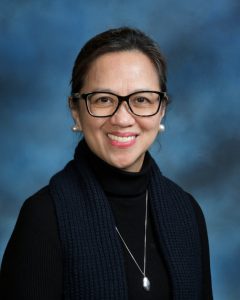
Initially a chemist by training, Tess was inspired to change career directions to the field of education when her daughter entered Small World in 1998. Having found her calling to teach and serve young children, Tess qualified as a Kindergarten teacher with Hong Kong Institute of Education. She has completed two Post Graduate Diplomas in Education, specialising in Special Education (2010) and Early Childhood Education (2014) and subsequently completed her Certificate Course for Kindergarten Principals at HKBU (2015). She received her Masters Degree in Education (Early Childhood Education) from the University of Hong Kong in 2019.
Attracted to Small World by its biblical foundations and Montessori philosophy, Tess joined the school as a teacher in August 2001. She led the kindergarten as Vice-Principal in 2010 and as Principal in 2011. Tess and her team successfully led the accreditation of Small World in the International Early Years Curriculum (IEYC) in May 2021. In the same year, Small World was voted and recognized as ‘Kindergarten of the Year’ by the Hong Kong Living during the height of COVID. Tess believes that all children deserve equal opportunities to access the education offered by the school and to reach their true potential.
The International Curriculum Association (ICA) has partnered with ed-tech and services company, 8billionideas, to further enhance its International Curriculum and launch ‘The Critical Curriculum.’ The partnership will bring together the ICA’s rich educational resources and expertise with 8billionideas’ cutting-edge approach to prepare students for the challenges and opportunities of the future.
The ICA and 8billionideas are collaborating to work with schools in reshaping their curriculum landscapes with curriculum enhancements aimed at equipping students with essential future skills. The ‘Critical Curriculum’ will be structured around a suite of learning pillars.
The first learning pillar to be introduced will be focussed on Entrepreneurship and it will help learners to build a solid, holistic foundation of entrepreneurial skills. It will build an initial understanding of value and worth in the early years through introducing learners to the ideas of commerce in their communities through play-based learning. This will then be developed further in the primary years through idea-to-execution-based challenges. Learning will continue to be refined in the middle years via the means of interactive problem-solving challenges exploring crisis’ on a macro and micro level.
Sarah Blackmore, Director of the ICA, said: “We recognise the need for a comprehensive and innovative approach to teaching that stretches far beyond traditional academic learning. In a fast-changing world, skills such as critical thinking, creativity, collaboration and adaptability have an increasing significance. We are excited to be working together with 8billionideas to provide young learners with the opportunity to develop the skills they require for future success.”
David Harkin, CEO and Founder of 8billionideas, said: “At 8billionideas, we believe in empowering students to think creatively, act entrepreneurially, and prioritise their wellbeing. This collaboration with ICA enables us to amplify our impact, reaching a wider audience with our mission to revolutionise education for the betterment of individuals and society as a whole. We’ve worked closely with the ICA for 12 months to understand deeply its vision for education. In 2024, we will begin by offering all ICA schools a developed and bespoke learning pathway around our entrepreneurship pillar and expand in the years ahead.”

 Español
 Nederlands
 Chinese Mandarin