Search List show here

Back to news

6 June 2023

Growing and Greening a Sustainable School Culture: Vision, Mission, the IPC and Climate Action Schools

At the centre of any sustainable school culture is a clear vision and mission that values environmental stewardship. Schools must embrace a vision that integrates ecological principles into all aspects of their education and school ecosystem. This vision should go beyond the superficial, aiming to instil in students a deep understanding of the interconnectedness between human actions and the environment.  

Panyaden International School in Chang Mai, Thailand has sustainability at its heart, from the rainwater collection system to the bamboo buildings designed to have a low carbon footprint. Sustainable schools set ambitious goals to become carbon-neutral or even carbon-negative. They establish greenhouse gas reduction targets, implement energy-efficient practices, and explore renewable energy options. Additionally, they promote sustainable transportation by encouraging students to walk, cycle, or carpool to school.  

By involving students in these initiatives, the IPC and Climate Action Schools empower them to be part of the solution and foster a sense of environmental responsibility. Panyaden’s initiatives include a vast recycling program, a rainwater collection system, a rice-field lifecycle system and eco-friendly buildings. From an operational perspective, by implementing effective waste reduction systems and prioritizing recycling and composting schools can significantly reduce the amount of waste sent to landfills. This not only benefits the environment but also sets an example for students to follow in their personal lives. Students at Panyaden are involved in composting and gardening, meatless meal days and food waste reduction programs. 

Growing and greening a sustainable school culture is a multifaceted endeavour that involves embracing a mission of environmental stewardship, aligning financial and policy decisions with ecological principles, and actively participating in the sustainable development goals as well as in climate action education such as in the Climate Action Schools program. Sustainability is at the forefront of Panyaden’s organisation, but also their educational vision. 

“By offering a Genuine Values-based Education for a Sustainable Planet, our vision is to see that our children excel academically, enrich their physical, social, emotional and intellectual well-being and develop a caring and compassionate understanding of the environment, to benefit themselves, the people they meet and the planet.”  (https://www.panyaden.ac.th/academic-programme

As a new partner of the ICA, the emergence of the Climate Action Schools (CAS) program (by Take Action Global) has become a significant driving force in growing and greening sustainable school cultures. In 2022 CAS completed their first school year with 100 member schools in their first cohort chosen from around the world. The outcomes have been hugely impactful for the students, teachers and school community. The program is led by a designated and trained school Climate Champion and provides professional development certification to train all teachers in learning about climate action education. Climate Action Schools encourage community engagement and collaboration. Schools forge partnerships with local organizations, governments, and businesses to create a network of support for sustainability initiatives. This community involvement allows schools to access additional resources and expertise, amplifying the impact of their efforts. 

In October 2022, Panyaden began its journey with Climate Action Schools. Through the CAS audit, the primary students identified that bamboo is their signature species and IMYC students began composting projects. Becoming part of the CAS community helped to provide some focus and guidance to teachers and students regarding sustainability. In the primary, the CAS initiative was highlighted and presented in several staff meetings. The CAS framework allowed the community to recognize the strengths and areas for growth providing a common goal including a focus for learning.  

Students also learn to understand their environment through field trips, service-learning projects, and being part of the community. In addition to curriculum integration, schools can establish environmental clubs or student-led initiatives that engage students directly in sustainability efforts. These groups can organize tree planting drives, waste reduction campaigns, or even establish school gardens to promote the connection between food and the environment. Such activities foster a sense of ownership and responsibility, empowering students to actively contribute to a greener school environment. Examples include: 

Service Learning and Climate Action School projects 

  • Composting 

  • Planting trees and gardening 

  • Repurposing clothing 

  • Animal welfare  

IPC/IMYC Field trips/projects 

  • Year 1 Organic farm and composting 

  • Year 4 visit to hydroelectric plant, sustainable bamboo city design 

  • Year 5 Making brooms from recycled bottles 

  • Year 6 visit to solar energy centre, solar panel, and rainwater pond cleaning 

  • Year 7 organic farm and composting 

  • Year 10 animal welfare and habitat restoration 

By integrating sustainability into the curriculum, empowering students to take action, and pursuing environmentally friendly practices, schools can play a vital role in nurturing a sustainable future. Through these collective efforts, we can foster a generation of environmentally conscious individuals who will, as Panyaden International School’s vision exemplifies, “develop a caring and compassionate understanding of the environment that will benefit themselves, the people they meet and the planet.”

International Primary Curriculum

Back to news

11 May 2023

A curriculum solution: Meeting national curriculum requirements

Many national curricula around the world publish learning outcomes to be achieved within a certain age range, this concept of curriculum provides teachers and leaders with the ‘what’ of the curriculum but none of the ‘how’ and ‘why’. The International Curriculum Association has recently published a definition of curriculum encompassing four distinct facets – written, planned, experienced, and evaluated. The combination of these aspects provides schools with a comprehensive concept of curriculum encompassing philosophy and pedagogy alongside detailed Learning Goals.

Schools that choose to or are required to teach national or regional curriculum outcomes need to make research-informed choices to help make learning happen or select a curriculum solution that can meet the needs of both their learners and teachers while fulfilling any outcome requirements. By integrating subject areas, educators can create a more holistic and interconnected approach to teaching and learning, which can provide benefits for students. Below two established international schools in the Middle East share how they have integrated the International Primary Curriculum (IPC) with the English National Curriculum (NC).
At Brighton College, Dubai, rigorous inspections ensure curriculum coverage including checking attainment and progress in core subjects. For the foundation subjects they use the IPC which has allowed them to follow the structure/style of the English National Curriculum but select topics of more relevance to learners in the Middle East. Sarah Brannon shared how pupils were having difficulty relating to NC topics like ‘The Great Fire of London’ but the IPC unit ‘Moving People’ was fascinating and sparked incredibly thoughtful discussions and action projects. She states, “The benefits of using the IPC are very much related to the international context of our school, the relevance of the units to the pupils’ own experiences supports their interests and motivates learning.”

Each IPC unit can include learning related to the host, home, or heritage countries, with which learners have a connection. This brings a world perspective and develops local and global cultural understanding. This aligns with the KHDA (Knowledge and Human Development Authority) expectation for learning about the heritage and culture of the UAE as well as learners’ understanding and appreciation of their own and other world cultures.

Sarah Dillon from Compass International School, Doha, explains how they have integrated the IPC with other curriculum areas.

We have meticulously mapped the IPC units and planned learning across each Milepost to ensure complete curriculum coverage that meets the NC requirements. We have also made a conscious effort to align our English learning with the IPC units integrating a range of English NC genres into the units of learning.

Sarah credits the IPC thematic approach and its focus on International Learning with ensuring that NC requirements are met in an engaging, creative, and innovative manner that truly ignites the children’s passion for learning.

Fostering enthusiasm for learning is important at both Brighton College and Compass International School. Various studies have found evidence that intrinsically motivated students have higher achievement levels. At Brighton College, they recognise motivated teachers lead to motivated learners and improved learning. “Teachers like using the IPC because they can choose units in which they and the learners are interested. Teachers who are enthusiastic and excited about what they are teaching will transfer this to the pupils and learning becomes a dynamic process of exploring and finding out together about new topics.” Compass International acknowledges the role in the Process to Facilitate Learning that all IPC units follow as a motivating factor. During the Entry Point, the children’s memory of previous learning connected to the new unit should be activated. Following this, in the Knowledge Harvest, learners identify what they know and what they want to know, this learner agency motivates them to continue learning throughout the unit. This agency extends choice within learning, pupils can often select how they would like to learn or demonstrate their newly acquired knowledge. Regular reflection develops understanding and promotes metacognitive thinking, encouraging children to consider if their learning choices were effective.

The brain, metacognition and learning about learning are the focus of two IPC units in each milepost as Sarah Brannon explains, the ‘Brainwave’ units at the start of each year provide an opportunity for pupils to find out about learning methods, to develop a growth mindset and to be involved in open and deep conversations about their aspirational learning goals. These units aim to empower learners to plan, monitor and evaluate their learning. This research-endorsed approach, known to be more effective when applied to challenging tasks rooted in the usual curriculum content (i) transfers from the science of learning units to be utilised across the whole curriculum. Sarah Dillon appreciates that this focus on understanding how their brain works and how children like to learn is unique to the IPC.

Both Compass International and Brighton College are confident that their choice of curriculum solution improves learning through engaging, relevant content and research-informed pedagogy. Beyond the unit content, Personal Learning Goals contribute to the development of individuals and the school’s philosophy and culture. The 8 dispositions detailed in the IPC support learners with self-regulation, knowing themselves as learners and forming positive relationships. If learners are to flourish and overcome challenges, their dispositional qualities must be a key area of focus for teachers and school leaders. Enhancing academic learning with a suite of non-cognitive skills has also been associated with academic and life success. (ii) Personal learning cannot be confined to curriculum-specific activities or moments on the timetable; to be successful this learning needs to pervade across all aspects of the curriculum and the school community.

How do you know which curriculum solution will improve learning in your school?

Leaders should consider both the quality of the product but also how well it will fit with their school’s context, vision, and mission. Some questions that need to be asked and answered include the following.

  • Does the research basis of the curriculum align with those valued by the school?
  • Is the activity design based on research to best suit the age range of the learners?
  • Are learning experiences based on authoritative, researched pedagogy?
  • Does it make the teachers’ job of planning and delivery easier?
  • Is the curriculum flexible and adaptable to meet learner needs and engage with learner interests?
  • Does the curriculum provide opportunities for learners to ‘see’ themselves in the curriculum?
  • Does the curriculum meet the requirements of any chosen/assigned written curriculum?
  • Is it ambitious?

Whichever curriculum integration solution you choose, ensure that in the words of the OECD, “it maximizes the potential for the effective enhancement of learning.” (iii)

With thanks to Sarah Brannon, the Head of Preparatory School at Brighton College in Dubai and Sarah Dillon the Head of Primary, Madinat Khalifa campus at Compass International School in Doha, an IPC Accredited School.

(i) Metacognition and self-regulation

(ii) The impact of non-cognitive skills on outcomes for young people

(iii) What Makes a Quality Curriculum?

International Primary Curriculum

Back to news

14 April 2023

Exploring “Big Questions” in IPC classrooms

While big questions are becoming more common in classrooms, it’s important to note that there is currently no one-size-fits-all definition. Some schools may define big questions as overarching, broad questions that guide learners through an entire unit or semester, while others may define them as specific questions that help their children connect ideas within a smaller scope. Ultimately, the definition of a big question will vary from school to school, and even from teacher to teacher.

The questions themselves should be designed as open-ended and thought-provoking, encouraging learners to think deeply about the subject matter and develop a deeper understanding of the world around them. The key is to identify questions that challenge students to think critically, make connections, and apply their knowledge in meaningful ways.

Big questions were included in a small selection of IPC units, however, these task-based questions were not big enough to connect learning. The big question concept continues to be developed by IPC teachers in their classrooms and applied in different ways. In this article, we will explore how four teachers from different IPC schools in Asia use big questions in their classrooms to improve learning.

Life worthy questions in Vietnam

Yvette Jeffrey, Principal at TH School in Vietnam, believes that the key to effective big questions is to make them “life worthy” and relevant to the children’s lives. In the unit “Existing, Endangered and Extinct,” TH School’s big question is “Can we preserve biodiversity on this planet?” This question encourages their children to think about their impact on the environment and how they can take action to preserve the natural world. By posing a big question that connects to the learners’ passions, they are empowered to take action and make a difference.

Evaluating understanding in Malaysia

At Nexus International School in Malaysia, Janine Grassby, a Year 3 teacher and IPC leader, uses big questions to measure and evaluate understanding. Nexus’ big questions can be answered with a yes or no, but students must always justify their answers by making connections to knowledge and experience. By using an “understand-o-meter,” the children can place themselves on a continuum in answer to the question and adjust their thinking as the unit progresses. The school believes that big questions provide an opportunity to connect learning and reveal the interdependence of subjects.

Accessibility and relevance in Japan

Tom Greene, a Year 3 teacher and primary coordinator at St. Michael’s International School in Japan, presents big questions when explaining the theme of a unit and revisits it before each task. A recent big question at St Michael’s was “How do forces help us live?” By making the big question accessible and life-relatable, the children are encouraged to connect their expanding knowledge to the question.

Daily learning links in Brunei

Maura Murphy, IPC Leader for Learning at Panaga School in Brunei, uses big questions to guide the direction of a unit and make learners think. At Panaga, the children are introduced to the big question after explaining the theme, and daily learning links are made to the question. To prepare for the Exit Points, children use the big question as a scaffold, explaining their learning from the unit in a coherent way.

As these IPC schools highlight, big questions can be a powerful tool for guiding student learning, promoting critical thinking, collaboration, and creativity in the classroom. By encouraging children to explore complex and multifaceted issues, they are able to apply their knowledge. In doing so, as educators we can help them to develop a deeper understanding of the world around them and to build important skills that will serve them well throughout their lives.

Big questions can challenge students to engage with content in a meaningful way and become active, lifelong learners. As such, they can become a component of thematic learning, strengthening connections within and between subjects.

International Primary Curriculum

Back to news

13 April 2023

Digital citizenship: How to recognize and harness the potential of Artificial Intelligence (AI)

The expansion of Artificial Intelligence (AI) has become a source of conversation and concern across all of society but especially in the educational community.  AI is reimagining the way users look at data and how it can change everyday activities such as writing emails to creating new computer code. Alarms are being sounded from statements such as AI replacing educators to providing high tech ways for students to answer questions, this new technology has opened new discussions for its place in society.   As AI continues to evolve, it is essential to consider the ethical and practical implications of its use and how it affects everyone as digital citizens.

Digital citizenship

Digital citizenship refers to the responsible use of technology and online resources, including social media, messaging, and other digital tools. It encompasses a range of behaviors, including online safety, ethical use of technology, and responsible digital communication. Digital citizenship is crucial in a world where technology is rapidly advancing, and its use is becoming increasingly more embedded.  It provides a structure of what needs to be addressed and scaffolds a way to learn about the appropriate use of technology.

As technology becomes more sophisticated, it is crucial to consider the ethical implications of its use, particularly when it comes to data privacy, security, and equity. Users must be critical of the accuracy of information provided and not make assumptions about the validity of what is created through these platforms.  It is essential to those using these tools that they balance their rights to utilize this technology with their responsibilities of sharing where the information was created.  Everyone must be taught how to recognize and harness the potential of AI through digital citizenship topics and skills (e.g., being able to write effective prompts to gain the best responses). Those using this technology must recognize their need for responsible use and not be controlled by these tools.

Using AI safely

One of the key issues is the importance of transparency in AI decision-making. Users need to reflect on what information they are sharing and the need for the data they provide.  AI algorithms rely on capturing large amounts of data to provide responses, which can include personal information. It is crucial to ensure that individuals’ data is protected and that they are aware of how their data is being used. This is part of the foundation of digital citizenship and how to be safe and effective users of these tools for the sake of all digital citizens.  This includes in sharing what data is being collected, stored, and used, and ensuring that individuals have control over their own data.

The importance of responsible use of AI technology is especially important as there is a continued expansion of its use across various platforms. AI has the potential to transform the way we work, communicate, and interact with each other. Digital citizenship is based on the use of technology for the support of society.  Users must recognize the value of genuine/authentic interaction with other individuals over a relationship with the technology.  It is essential to ensure that AI is used in a way that is consistent with the users’ values and ethical principles. This includes considering the impact that AI may have on individuals, communities, as well as society.

Embracing AI

As technology continues to advance, it is crucial to ensure that individuals are aware of their rights and responsibilities when using all technology, especially AI. This includes recognizing how AI is being used, while protecting individuals’ data privacy and security, and ensuring that AI is used in a responsible and ethical manner. This is why is it crucial that students learn and understand the power of these tools with skill building through the lens of digital citizenship to prepare to live in a world using AI.  By promoting and embracing responsible use of AI technology, it is possible to harness the potential to transform our lives and to provide opportunities to everyone in this new and expanding digital society.


Hear more from Mike on on Season Two of the IMYC International Specialist Series Season

Back to news

5 April 2023

Why the IEYC?

Take two minutes to find out why the International Early Years Curriculum new units of learning are perfect for any early years setting.

By teachers for teachers

The IEYC is flexible and works alongside your national curriculum whilst offering the structure required to suit all teachers. With regular contributions from teachers who use the curriculum the IEYC provides a contemporary perspective that empowers teachers as they help children learn effectively and with enjoyment.

Child-centred

As a child-centred and research informed curriculum for 2-5+ year olds, the IEYC emphasises playful, holistic, and child-focused approaches to learning and development. Throughout our curriculum children are encouraged to be informed, globally competent and socially conscious individuals.

Thematic

The units of learning are specifically designed on appealing themes that provide engaging and developmentally appropriate learning experiences. Each unit has been carefully developed to capture children’s natural curiosity, including our brand-new units ‘Let’s have a party’ and ‘Let’s play outside’.

Nurturing

The IEYC promotes high levels of child well-being and involvement. Through curriculum resources that nurture children’s natural abilities, teachers can support and guide children as they pursue their interests and curiosity, allowing them to develop children’s ability to ask questions, think deeply, and consider how answers may be found.

‘I just love the layout of the new units!! The structure now is really digestible and provides the perfect balance of a supportive scaffold that covers all the bases but with the clear openness to adapt for your own setting.’

British International School of Houston


Find out how the IEYC can improve learning in your school

Back to news

10 March 2023

We’re back to in-person events in 2023!

We’re delighted to be back to in-person events this year. Look out for us with our brand new name International Curriculum Association. If you would like to book an appointment prior to attending, please find the details you need below. See you there!

FOBISIA Leadership Conference

Linh Dong from our Outreach and Development team will be exhibiting.

EARCOS Teacher’s Conference

Linh Dong from our Outreach and Development team will be exhibiting.

Symposium on Education for Sustainability

Open to anyone involved in international education. This in person event will be hosted by Southbridge International School in Phnom Penh on April 26th, 2023, this event will bring together educators and school leaders in international education settings to provide attendees with presentations and discussions on the theme of Education for Sustainable Development.

BESS Vietnam

Linh Dong from our Outreach and Development team will be exhibiting. Join us on the below panels.

11:30   

Panel Discussion: Building a Future Fit Curriculum

15:15

Panel Discussion: Learning Through Play, encouraging a love of learning through hands-on discovery

COBIS Annual Conference

Matthew Silvester, Head of IEYC will be leading an interactive session called Brain Building in the Early Years and Lucy Gray, School Operations Coordinator will be exhibiting.

Book a conference appointment

If you would like to book an appointment with us at one of the conferences please email with your contact details, the conference you’re attending and the person you’d like to make an appointment with.

Back to news

1 March 2023

Bringing the Professional Development Courses to you

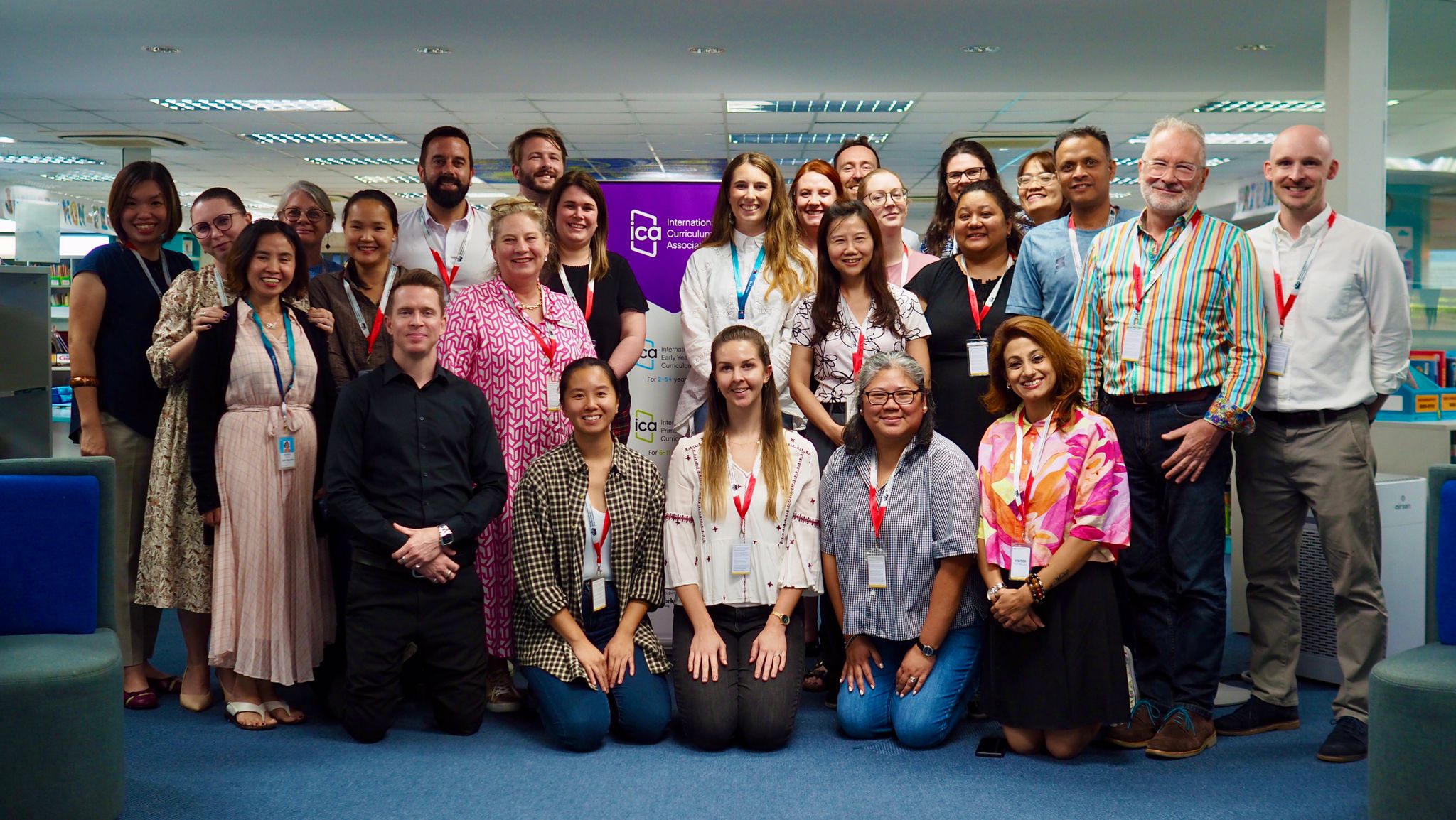
We were delighted to welcome our schools from Nepal, Thailand, Cambodia, Malaysia and Vietnam to our first ICA Regional Event at British Vietnamese International School, Ho Chi Minh last Friday and Saturday! This professional development event marked the return of our face-to-face events, which we know that all our subscriber schools have missed over the past couple of years.

During the two-day event multiple workshops were held on the first and second level of our three curricula (IEYC, IPC and IMYC). After an impressive Learning Walk around BVISHCMC led by our host school’s Deputy Head of Primary, Mr. Darragh Shanahan and the school’s IPC journey shared by Ms. Ruth Bowler, our Head of the ICA, Ms. Sarah Blackmore gave a warm welcome and introduction to our attendees. Then our teachers and school leaders split into their training groups, where each team received workshops on their chosen curriculum of either the International Early Years Curriculum (IEYC), The International Primary Curriculum (IPC) or The International Middle Years Curriculum (IMYC) with each session focusing on how to implement or embed the key knowledge, develop the concept and increase understanding.

The workshops were spread out over two days with 6 training sessions taking place in total for each curriculum. Our participants also enjoyed breaks after each session including a lovely afternoon tea to allow for participants to have a chance to exchange ideas and discuss their workshops with teaching peers.

At the end of the event, we received some wonderful feedback from the first set of trainees. Our school leaders and teachers stated that they felt they were heading back to their respective schools with new insight on how to deliver our international curriculums but also practical ways to make an impact in the classroom. Finally, our teachers commented on how they feel as a part of our ICA family that the event was a great way to make fellow curriculum friends, and create professional links with schools in their region.


View upcoming ICA professional development events, which will be hosted in Malaysia and Nepal.

Back to news

22 February 2023

IPC in bilingual contexts – Part 2

In the IPC lessons, teachers implement various international projects, as the curriculum allows us to adapt the lesson activities to students’ needs and interests. Heritage International School has been involved in the Climate Action project, Plastic Project and SDG projects for many years. Recently the SDG 2023 project started and as we were learning about inventions in IPC and ESL it was very easy to involve the students. We helped them realise how inventions have changed people’s lives and what can potentially be invented, to make the world even better.

Heritage International School has been involved in the Climate Action project, Plastic Project and SDG projects for many years. Recently the SDG 2023 project started and as we were learning about inventions in IPC and ESL it was very easy to involve the students. We helped them realise how inventions have changed people’s lives and what can potentially be invented, to make the world even better.

It was a surprise when on the second day, one of my students entered the room and exclaimed: “This IPC is such an interesting thing. It helps us explore the world”. Students like learning when they understand why they do it.  The projects connect with the famous Benjamin Franklin quote: “Tell me and I forget, teach me and I remember, involve me and I learn.”

Heritage International School has also become a Climate Action school. This means that all the teachers cooperate to involve students in learning activities that awaken their responsibility as global citizens. In order to help learners to achieve a better comprehension of environmental problems, ESL teachers cooperate with homeroom teachers to organize various shared activities. This might be inviting a specialist in the field to explain the problem from a professional point of view, going on a field trip, or leading lessons together.

Last year, within the SDG project we learned about the third global goal “Good Health and Wellbeing”. Students did research into various situations using texts from both their native language and English. They also had online meetings with professionals in the field, such as a nutritionist and psychologist; a field trip to the Botanical Garden and other activities supported the aim to consolidate students’ knowledge and understanding. For trips and meetings, learners would use the English language for communication as the ESL groups are formed of students of the same age, but from the Russian and Romanian classes.  Their common language is English, by mixing the IPC/ESL groups with six students from the Romanian class and six students from the Russian class the children are motivated to use English while being empathetic to the different communication skills. Learners recognize that English is an effective way to present their knowledge and share their projects with our international community.  They can extend research by using English to communicate with their peers from various corners of the world. By understanding the power of the medium, they become more conscious of their learning and more motivated.

For five years, the IPC brought us only positive experiences, when learners engage through the different subjects, they are very happy and willing to learn more and more about the unit topic.  It is of paramount importance that learning from one year to another increases, both within and beyond the IPC. Learners will continue to improve their language proficiency through repetition and reinforcement of previously acquired knowledge and broaden it with fresh information and comprehension from one academic year to the next.

 We are delighted to hear about students’ enthusiasm for learning. They say that they only learn interesting and useful knowledge in the IPC, which will help them in their future life. What can be more rewarding than seeing learners’ inquisitive minds being fulfilled? As Iwan Welton Fitzwater said, and what I also truly believe, “The future of the world is in my classroom today”.


International Primary Curriculum

Enquire now

Find out more about ICA products and services!