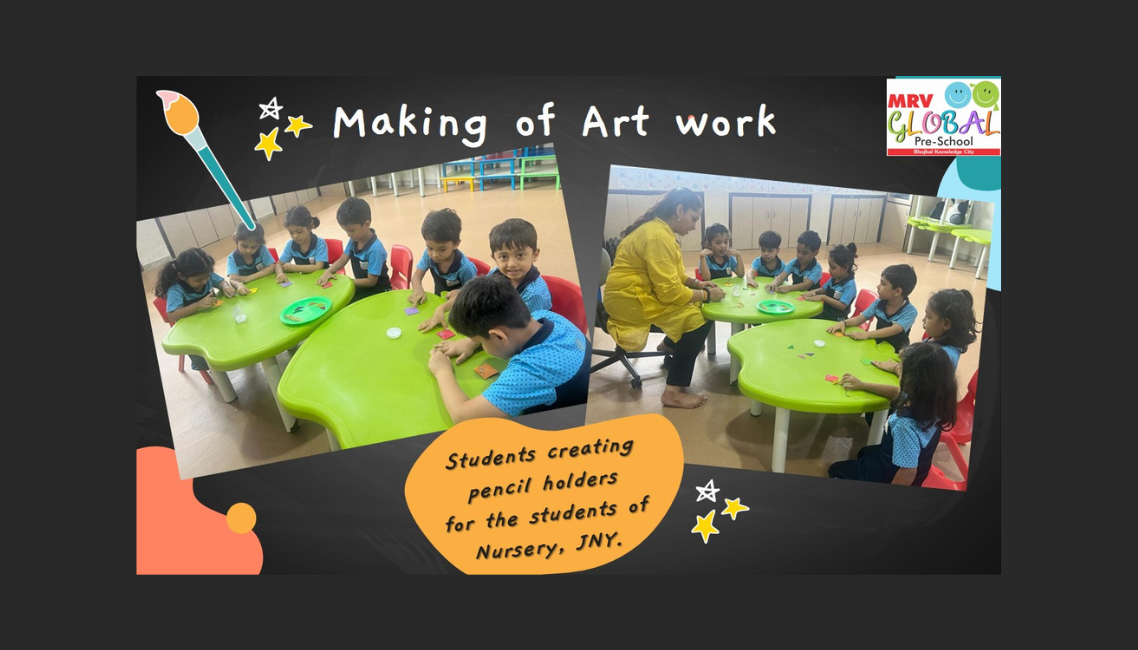
MET Rishikul Vidyalaya had an interactive cross-cultural exchange session with Jakarta Nanyang School, as part of our exiting IEYC Unit – Let’s Have a Party.
The unit is “learning all about celebrations and parties that happen all around the world!” a fun-filled video session was conducted, wherein both schools enjoyed exchanging vibrant traditions and festivities. For the unit’s Learning Block 1: Celebrations Around Me – our students proudly presented and explained the rich cultural heritage of Makar Sankranti, a significant kite-flying celebration of the harvest festival in India. Witnessing their enthusiasm and pride as they shared our country’s traditions was an amazing moment to note.
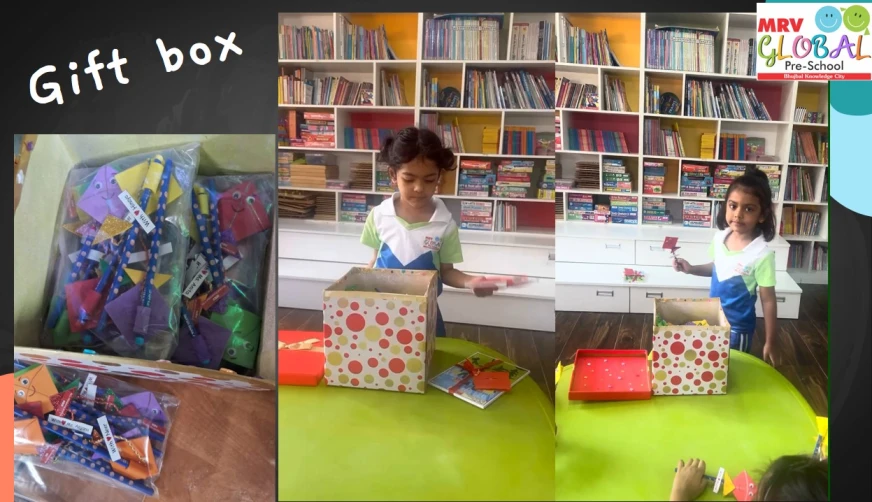
Equally fascinating was the exposure to the unique birthday traditions of the students and teachers from Jakarta Nanyang School. Their distinctive practices added an extra layer of excitement and intrigue to our partnership for learning. The excitement reached new heights as both schools exchanged greetings and souvenirs of super cool pencil cap holders (by MRV) in the form of kites and bead bracelets (by JNY), making the experience even more memorable.
This collaborative experience has left an indelible mark on all participants, creating lasting memories and reinforcing the values of collaboration, cultural exchange, and global learning. We extend our heartfelt thanks to our young ambassadors and the Jakarta Nanyang School for making this cultural journey an incredible success!
The transition from education to employment can be a daunting one. A lot of young people face challenges like unemployment, lack of experience, or are simply not sure what direction to take. The Prince’s Trust, a youth charity founded by His Majesty King Charles III, is here to help bridge that gap and empower young people.
For over 40 years, The Prince’s Trust has been offering young people the support, guidance, and resources they need to thrive. They recognise the unique obstacles young people face in today’s world, and through a variety of programs, they equip them with the confidence, skills, and experience to build successful futures.
Lucy Gray who is a valued part of the International Curriculum Association team, took part in The Prince’s Trust’s Mosaic Mentoring Programme, an initiative designed to connect young people with experienced professionals who can offer invaluable guidance and support. We hear from Lucy about her experience!
1. What initially motivated you to volunteer as a mentor with the Prince’s Trust Programme?
I have always held a strong belief in the possibility and importance of social mobility- knowing that if I had met someone I could look up to at a young age, my journey of upward mobility would have been less scary and more efficient/ effective. My primary motivations were to give back, to do something different/ learn something new, and to utilise my unique skills to help others.
2. What did you do to prepare for your first mentoring session?
Preparing for my mentoring session was enjoyable (22 students – 12ish years old)! As an ESOL teacher (in a past life) I was used to creating lesson plans that were high energy and held attention, this helped me to have a clear plan that was easily followed and impactful. It also meant I was comfortable managing a large class and could monitor/ provide feedback effectively. For the content itself, I utilised the Prince’s Trust recommended materials and adjusted these to fit the classroom dynamics and my style. The session itself focused on personal strengths and why these are important – activities included: definition matching, self-assessment, mentor presentations, and more! Key skills focused on: being sensitive, enthusiastic, brave, creative, adaptable, expressive, curious, gentle, generous, adventurous, spontaneous, and kind.
2. What are some of the biggest challenges you’ve faced as a mentor, and how did you overcome them?
When you’re a new teenager and go to a large co-ed school, there are many social barriers to being true to yourself, courageous about yourself and making the most of a new and unfamiliar programme. The biggest challenge I found was the social unfamiliarity and inability to find group consensus among the students. As the students were chosen across the year by multiple different teachers based on their untapped potential – this meant that many of the students didn’t have a relationship with one another and were very socially withdrawn especially in the first half of the programme – all figuring out their place and what they needed to embody in this new situation. Thankfully time improved this, as trust was built with the mentors and other students week-by-week. We were also able to better personalize our lessons to the needs and temperaments of the students, focusing on more individual tasks, and building up to the group activities instead of jumping right in.
4. What would you say to someone who was thinking about volunteering to mentor?
Making someone feel of value is the name of the game. From this experience, I have realised that the students who get the most out of mentoring are the students who feel seen and know you are interested in them (especially if they haven’t felt like this before). I would recommend having 10+ open questions up your sleeve to facilitate conversation, 100% engagement and a genuine smile.
5. What do you enjoy the most about mentoring with this program?
It has been a unique opportunity to meet young people and hear about how they interpret and interact with the world. I have enjoyed getting to know the mentees, teachers, and fellow mentors who all come from different backgrounds – policewoman, investment banker, software engineer, and psychology student to name a few. It has been great to expand my knowledge of the world and the others who are sharing it with me, especially knowing that the Prince’s Trust Mosaic Programme is shining a light on the possibility and positivity of tomorrow to the young people who need it.
About: The Prince’s Trust, Mosaic Mentoring Programme:
The Prince’s Trust is a leading UK charity founded in 1976 by King Charles III (the then Prince of Wales) and offers vital support for young people aged 11-30 years through multiple initiatives such as the Mosaic Mentoring Programme. The programme itself pairs disadvantaged youth with inspiring mentors, providing guidance and real-world insights together with a focus on employability skills and confidence building. The programme aims to empower students to overcome obstacles, pursue their dreams and reach their potential.
Dive into the Curriculum with our Free Virtual Drop-in Sessions (for subscribers only!)
To help you explore and discover the magic of the International Curriculum, we’re pleased to announce a series of FREE virtual drop-in sessions covering all three International Curriculums:
What to expect
Interactive sessions: Ask questions, share experiences, and connect with other ICA educators from around the world.
Curriculum insights: Gain valuable knowledge from the heads of each curriculum who will guide you through topics you would like to learn more about. If you would like to find out about a specific topic or area of the curriculum, please submit your questions in advance here.
Global timing options: Join live sessions at a convenient time for you.
Who should attend
ICA Subscribers looking for ideas and teaching strategies that work for others.
School leaders interested in learning more about how other schools implement the curriculum.
ICA Subscribers who are passionate about sharing what they know about improving learning.
Ready to join the virtual drop-in sessions? Here’s how:
Click one of the links below. These links will take you through to our Professional Development Hub which is a platform to access a range of free and paid courses to support your implementation of the IEYC. If you haven’t already, you will need to sign up. Don’t worry it’s completely free to register.
Once you have filled out your details, a member of our team will approve your registration. Make sure to sign up ahead of the start time of the drop-in session you want to attend!
You will then receive a confirmation email.
If you belong to a subscriber school, you will find access to the Drop-in Sessions on your ‘HOME’ page, which you can access after logging in to the PD Hub.
You can look for the Drop-in Session in the ‘More Courses to Choose From’ search bar, by selecting keywords ‘IEYC’ or ‘Free’, or by clicking the link in the ‘Upcoming Events’ image carousel at the bottom of the page.
Click on the links below to register for the sessions that interest you:
Are you looking for a comprehensive resource to learn about the Sustainable Development Goals? Look no further than the Sustainable Development Goals Booklet by the International Curriculum Association!
This flipbook, available on Issuu, is a must-read for anyone interested in understanding and striving for the Sustainable Development Goals. But what sets this booklet apart from other resources on the SDGs? Firstly, it is beautifully designed and presented in a flipbook format, making it engaging and easy to navigate. Each page is filled with vibrant images and concise explanations of the SDGs, making it suitable for a wide range of readers – from students to professionals.
The booklet includes real-life examples and success stories of individuals and organisations working towards the SDGs, inspiring readers to take action and make a difference in their communities. Delving into the interconnectedness of the SDGs and how they work together to achieve a sustainable future for all. This holistic approach is crucial in understanding the complexity of sustainable development and how we can all contribute to its attainment.
Whether you are new to sustainable development or a seasoned advocate, this booklet is a valuable resource that will deepen your understanding and spark your passion for a more sustainable world. So, why not take a few minutes to flip through the Sustainable Development Goals Booklet and be inspired to join the global movement toward a better future for all.
We are pleased to share that the International Early Years Curriculum won Early Resource of the Year at the GESS Dubai Awards this October.
During a night filled with celebration, we collected the award with gratitude. We want to thank our school community and the IEYC committee for their continued support. Without their contributions, the IEYC would not be what it is today. We would also like to thank Matthew Silvester (former Head of the IEYC) who poured many hours and hard work into reviewing and improving the curriculum. We look forward to contributions from our new IEYC Curriculum Coordinator Laura James and will continue to strive for an early years curriculum that helps school to improve learning.
Research from several different fields has provided evidence of the criticality of early childhood in the development of the brain and its skills. Ninety percent of the development and growth of the brain occurs by the age of 6 years (Karoly et al., 1998). Blair (2002) called it a period of plasticity owing to its influence on an individual’s personality through his/her life. Doherty (1997) identified certain crucial periods, within the first six years of life, in which brains are wired to respond to appropriate stimuli. If this stimulation is provided, it aids the development of advanced neural structures. Early experiences therefore have been proven to have a far-reaching impact on brain development as well as behaviour. Young (2007) propounded that diverse experiences impact the brain’s wiring and architecture and the physiology of the human body. All these contribute towards the attainment of emotional, cognitive and social outcomes.
In our context, the recently launched National Education Policy (2019) by the Government of India, is based on this brain research and emphasizes the criticality of high-quality early childhood education and its repercussions for the development of human capital in India. Aligning with the new policy, we adopted the International Early Years Curriculum (IEYC) in 2019, intending to aid brain development while children lead their own learning. The IEYC’s units, themes, and activities opened our world to new possibilities. We experienced it as the right blend of structure and flexibility for our contextual needs.
We devised ‘The Healthy Planet Way’ to implement the IEYC seamlessly across curricular areas of each year group. We based our approach on Harvard’s research on brain development (CDC, 2016) which states –
Brains are built over time, from bottom to top.
Brains work in ‘serve and return’ relationships.
Cognitive, Social and Emotional abilities are inextricably intertwined.
The Healthy Planet Way combines the above tenets through –
Learning Circles that help us provide stimulation for neural connections in young children.
Learning Conversations that support ‘serve and return’ during experiences.
Learning Gardens which combine social, emotional, and cognitive wellbeing.
Drawing on social constructivism by Vygotsky (1962) who emphasised that children learn through interactions with others and their environment, our Learning Circles is a classroom setup that has facilitator-supported Anchor Circles, along with independent work on Choice Circles, where peers support each other, without an adult. All the circles engage in different IEYC experiences. While in Choice Circles children choose and move freely between experiences, in Anchor Circles our facilitators choose small groups of children to work with.
This approach allows children to lead their learning while interacting with each other and engaging in experiences of their choice. The adults are referred to as facilitators but essentially, are co-learners in the group, asking questions, and modelling learning behaviours. The process of learning takes precedence and facilitators observe and record children’s journeys.
The Anchor Circles are also useful for integrating literacy and numeracy goals with IEYC activities. Additionally, the entire process of moving through the circles supports the development of the IEYC personal goals.
A whole group discussion of an explore, express, and extend activity starts the Learning Conversations in the class. These conversations provide us with the opportunity to implement IEYC learning links, language opportunities, and reflective questions (Fieldwork Education, 2022). These conversations are intended to pique curiosity, and engagement and make connections to the real world. While children are stationed at the Anchor Circles, facilitators further these Learning Conversations. Involving all children in conversation was previously a challenge, but implementing the IEYC through these flexible Learning Circles has enabled our school to enhance children’s agency and expand the IEYC’s scope to be the foundation of all learning in the early years.
The physical environment of a class is regarded as the third teacher and greatly impacts the quality of early educational experiences (Gandini, 1998). Learning Gardens are our outdoor spaces that provide different settings for the IEYC experiences to extend from knowledge toward skills and understanding. Playing and learning in nature go hand in hand (Chawla, 1998), and free exploration and personal discoveries in nature spark curiosity (Higgins, 2002). Using the IEYC enabling environment guidelines, different outdoor spaces are curated to combine the benefits of outdoor play with the unit’s learning.
In conclusion, the IEYC has solved for us the challenge of ensuring active learning, curiosity, and engagement in our early years’ classrooms. The learning experiences allow for not only play but also enable reflecting, practicing, questioning, experiencing, and evaluating. Such a classroom addresses varying abilities, interests, and needs as well as encourages higher-order thinking in students (Tomlinson, 2000). We hope we are setting the stage for children to begin metacognition. The IEYC helps us move closer to our vision of enabling children to be active agents in their learning.
Blair. C. (2002). School readiness: Integrating cognition and emotion in a neurobiological conceptualization of children’s functioning at school entry. American Psychologist, 57 (2), 111-127. https://doi.org/10.1037/0003-066X.57.2.111
Chawla, L. (1998). Significant life experiences revisited: A review of research on sources of environmental sensitivity. Journal of Environmental Education, 29(3), 11-21.
Cosgrove, M. S. (1992). Inside learning centers. Retrieved October 23, 2022, from ERIC database
Fieldwork Education (2022) International Early Years Curriculum Guide 2022-2026. International Curriculum Association.
Gandini, L. (1998). Educational and caring spaces. In C. Edwards, L. Gandini, & G. Forman (Eds.), The hundred languages of children: The Reggio Emilia approach-advanced reflections (2nd ed., pp. 161-178). Norwood, NJ: Ablex.
Higgins, P. & Nicol, R. (2002). Outdoor education: Authentic learning in the context of landscapes (Volume 2, p.4 foll.). Kisa:Sweden.
Piaget, J. (1977). The Language and Thought of the Child. London: Routledge & Kegan Paul.
Karoly, L. A., Greenwood, P. W., Everingham, S. S., Hoube, J., Kilburn, M. R., Rydell, C. P. & Chiesa, J. (1998). What We Know and Don’t Know About the Benefits of Early Childhood Intervention. Rand Corporation: Santa Monica, CO. Retrieved 21st August 2023, from https://www.rand.org/pubs/monograph_ reports/MR898. html
We embarked on an enthralling journey, delving into the essence of the International Early Years Curriculum’s captivating Entry and Exit Points. A favourite with our children, the entry and exit points routinely transform our classroom into a magical realm of exploration and celebration. Here we share some examples from our “Going Places” and “Weather Wonders” units.
Setting Sail with Entry Points: The Gateway to Curiosity
A gateway that opens up a world of exploration and wonder – that’s the Entry Point in a nutshell. At the heart of every entry point lies a simple yet powerful aim – to nurture curiosity. The open-ended activities in the entry point provide children with the stimulus to start thinking and wondering, and this leads to an enabling environment where questions flow freely, and exploration becomes second nature.
Our adventure thrived on vibrant activities
Teachers set up a travel agency where children saw pictures and selected their destination. As per the distance of their chosen destination, children headed to the setups of either the airport, the railway station, or the boat terminal. Each of these stations stimulated real-life activities from ticket collection and baggage check to snack counters. These enabled children to engage in sensory play, collaboration, and communication, as well as reviewing previously learned concepts in numeracy and literacy.
The Entry Point acted as a treasure map, setting the tone for the big question and the activities that follow but also providing children agency to pick their favourite transport and explore that further.
Celebrating Growth – Exit Stretch and Exit Point
Fast-forward to cherished learning experiences – the Exit Stretch celebrates the Knowledge, Skills, and Understanding that the children developed during the unit. The exit stretch activities provide learners with the opportunity to repeat, revisit, and reflecton their learning, while teachers make decisions about differentiation and plan the next unit accordingly. Some examples from “Weather Wonders” are given below.
The Ongoing Journey Celebration – Reflecting on Progress
The Exit Point serves as a checkpoint of progress. At Healthy Planet, parents and teachers collaborate with children, attending the day in school and participating in activities. The exit stretch spotlights new learning and transforms it into a celebration together. Our “Weather Wonders” Exit Point unfolded captivating chapters, inviting all to hands-on learning across distinct centers.
Interdependence and independence were emphasized as learners collaborated in the Weather Forecast Room, where the weather fairy surprised the children with a quiz on predicting weather. Communication and enquiry were highlighted in the Read in the Rain room when learners asked questions and expressed themselves. Well-being and healthy living were evident in the “Innovatory Room,” which focused on physical vitality and emotional wellness. Understanding and application occurred in the creative Weather Creation room, where children made creative projects.
Families and the school come together at the end of every unit to make this journey. From the captivating entry point of “Going Places” to the awe-inspiring exit point of “Weather Wonders,” we’ve witnessed learners evolve into fearless explorers and proud achievers.
Providing engaging learning experiences for children is important for any early years setting. Every child becomes naturally curious as they begin to grow; they question, explore, and soak up the world around them. Ensuring the children in your school are learning everything needed for later in life while keeping them engaged is a big task all teachers are faced with. By providing them with a child-centered, flexible curriculum children can nurture their natural abilities and teachers have the time to support and guide them.
Find out why the International Early Years Curriculum is the best solution for your school from 5 current IEYC teachers in the video below.
With thanks to Tarra Tanauan from UCSI International School Kuala Lumpur, Harumi Prijono from Sekolah Cita Buana, Katy Freeman from Seoul Foreign British School, Silvia Quiroz from Davy College and Bronwyn Jacobs from Nord Anglia School of Jiaxing.
Find out more about the International Early Years Curriculum

 Español
 Nederlands
 Chinese Mandarin